
Baltimore Day Trip from Washington, D.C.
How to do Baltimore in a day from Washington — the Inner Harbor and historic ships, the National Aquarium, Fells Point and the city's museums and crab houses, plus the easy MARC and Amtrak train ride that makes it one of the simplest escapes from DC.

Photo: Brendan Beale / Unsplash
- ✓Baltimore is Maryland's big harbor city, about 40 miles up the road from DC and easily reached by train — which makes it one of the simplest car-free day trips from the capital.
- ✓Both MARC commuter trains and Amtrak run between DC's Union Station and Baltimore, so you can do the whole day on rails. Verify current schedules and fares before you go.
- ✓The Inner Harbor is the obvious base: a waterfront promenade ringed by the National Aquarium, historic ships, museums and restaurants, all walkable.
- ✓Beyond the harbor, Fells Point and Federal Hill bring cobbled streets, rowhouse charm, pubs and a grittier, more characterful side of the city.
- ✓It's a working city as well as a tourist one, so it pays to plan your route and stick to the harbor and well-trodden neighborhoods on a day visit.
Why Baltimore is the easy big-city day trip
If Annapolis is the pretty colonial escape and Old Town the cobbled riverside one, Baltimore is the proper city day trip — a real, working harbor metropolis with museums, a famous aquarium, distinct neighborhoods and a salty maritime history all its own. It sits about 40 miles north of Washington, close enough that the two cities share a commuter rail line, which is the trip's great advantage: you can do Baltimore entirely without a car, straight out of Union Station and back the same evening.
The character is a world away from DC. Where Washington is monumental and planned, Baltimore — 'Charm City' — is brick, gritty and lived-in: rows of marble-stepped rowhouses, a hard-edged port history, and a waterfront that has been reinvented as the city's front room. For a DC visitor it offers a change of scale and tone, a genuine harbor and a handful of first-rate indoor attractions that make it a good rainy-day or museum-minded alternative to another day on the Mall.
It's also a city with real cultural weight for its size. This is the home town of Edgar Allan Poe and the place Babe Ruth was born; it gave the country 'The Star-Spangled Banner,' written here during the War of 1812 as Francis Scott Key watched the bombardment of Fort McHenry from the harbor. That layered history sits just under the surface of an ordinary working city, and part of the pleasure of a Baltimore day is feeling those threads — maritime, literary, musical — running through the brick streets and the waterfront you're walking. You don't need to chase any of it down to enjoy the place, but knowing it's there gives the day more texture than the polished Inner Harbor alone suggests.

Getting there by train — the easy bit
The reason Baltimore works so well as a day trip is the train. Two services connect DC to Baltimore: MARC, Maryland's commuter rail, which runs from Washington's Union Station up to Baltimore on weekdays and is the cheaper option, and Amtrak, which is faster and runs more broadly across the week. Both deliver you near the centre of Baltimore, and the journey is short — a comfortable ride rather than a slog. Always check current MARC and Amtrak schedules, fares and which days each runs before you plan, as service patterns change and MARC in particular has historically been weekday-focused.
From Baltimore's main rail stations you'll want to reach the Inner Harbor, the natural hub for a visitor's day. Onward connections — the local light rail, a bus, the seasonal harbor connector boats, a rideshare, or simply a walk depending on which station you arrive at — are all options; sort the last leg as part of your planning so you're not improvising on arrival. Driving is, of course, possible too (it's about an hour by car, traffic permitting), but given how clean the train option is, most day-trippers are better off leaving the car behind.
- MARC commuter rail (cheaper, historically weekday-focused) and Amtrak (faster, broader schedule) both link DC Union Station to Baltimore.
- The ride is short; verify current schedules, fares and operating days for both before you go.
- From Baltimore's stations, plan your last leg to the Inner Harbor — light rail, bus, harbor boats, rideshare or a walk.
- Driving is roughly an hour but the train makes a car unnecessary for a harbor-focused day.

The Inner Harbor: the natural base
Almost every Baltimore day starts and centers on the Inner Harbor — the redeveloped waterfront at the heart of the city, wrapped by a brick promenade and lined with attractions, restaurants and ships. It's compact, walkable and squarely aimed at visitors, which on a day trip is exactly what you want: you can park yourself here and reach most of the headline sights on foot.
The promenade itself is the pleasure — a flat loop around the water with boats coming and going, street life, and views back across the harbor to Federal Hill. Historic ships are moored here and open to visitors, including a famous nineteenth-century sailing warship and a lightship, and the maritime collection is one of the harbor's quiet highlights. Around the water you'll find a cluster of museums and family attractions too, so even on a wet day there's plenty under a roof. Treat the Inner Harbor as your base camp, do a loop on arrival to get oriented, and branch out from there.
- The Inner Harbor is the visitor hub — a walkable brick promenade ringed by attractions.
- Historic ships moored at the harbor (including a 19th-century warship and a lightship) are open to tour.
- Museums and family attractions cluster around the water, useful on a rainy day.
- Do an orientation loop on arrival, then branch out — it's all on foot.

The National Aquarium and the harbor's headline sights
The single best-known attraction is the National Aquarium, right on the Inner Harbor — one of the country's premier aquariums, with multi-level habitats, a rainforest exhibit and large tanks that easily fill a couple of hours. It's the anchor of many Baltimore day trips and a sure-fire hit with families. It's also popular, so booking timed tickets in advance is wise; check current admission, hours and ticketing on the aquarium's official site, as prices and timed-entry policies change.
Beyond the aquarium, the harbor area offers a science center with hands-on exhibits and a planetarium, the historic ships, and a rotating mix of museums and attractions within easy reach. You won't do all of it in a day, and you shouldn't try — pick one or two indoor headliners (the aquarium plus a ship tour is a classic pairing), and leave the rest of the day for walking and the neighborhoods. As ever, confirm hours, prices and whether anything needs pre-booking before you go, since these details shift.
- The National Aquarium is the marquee draw — allow a couple of hours and book timed tickets ahead. Verify current admission and hours.
- A harbor science center, planetarium and the historic ships round out the indoor options.
- Pick one or two headliners (e.g. aquarium plus a ship tour) rather than cramming — leave time to walk.
- Confirm hours, prices and pre-booking on official sites; these change.
Fells Point, Federal Hill and the city's character
The Inner Harbor is the polished front of Baltimore, but the city's character lives in the neighborhoods around it. Fells Point, a short way east along the water, is the most rewarding for a visitor: a historic, cobblestoned waterfront district of brick warehouses and rowhouses, with pubs, independent shops and a salty maritime past as a shipbuilding and seafaring quarter. It's walkable, atmospheric and a good place to land for lunch or a drink away from the harbor crowds.
Across the water, Federal Hill rises behind the harbor and offers the postcard view back over the Inner Harbor from its park — worth the short climb on a clear day — along with its own rowhouse streets, pubs and a neighborhood market. Between them, Fells Point and Federal Hill give you the brick-and-cobbles, marble-stepped-rowhouse Baltimore that the harbor alone doesn't show. A connector water taxi has historically linked these waterfront neighborhoods, which can make hopping between them part of the fun — verify current operation. Wandering one of these districts is what turns a Baltimore day from a harbor visit into a real sense of the city.
- Fells Point: cobbled, historic waterfront district with pubs, shops and maritime character — great for lunch or a drink.
- Federal Hill: a short climb to the best view back over the Inner Harbor, plus rowhouse streets and a market.
- A seasonal water taxi has historically connected the waterfront neighborhoods — verify current operation.
- Add one neighborhood to your harbor day to get the real, brick-and-cobbles Baltimore.
Eating in Baltimore: crab, Old Bay and the harbor
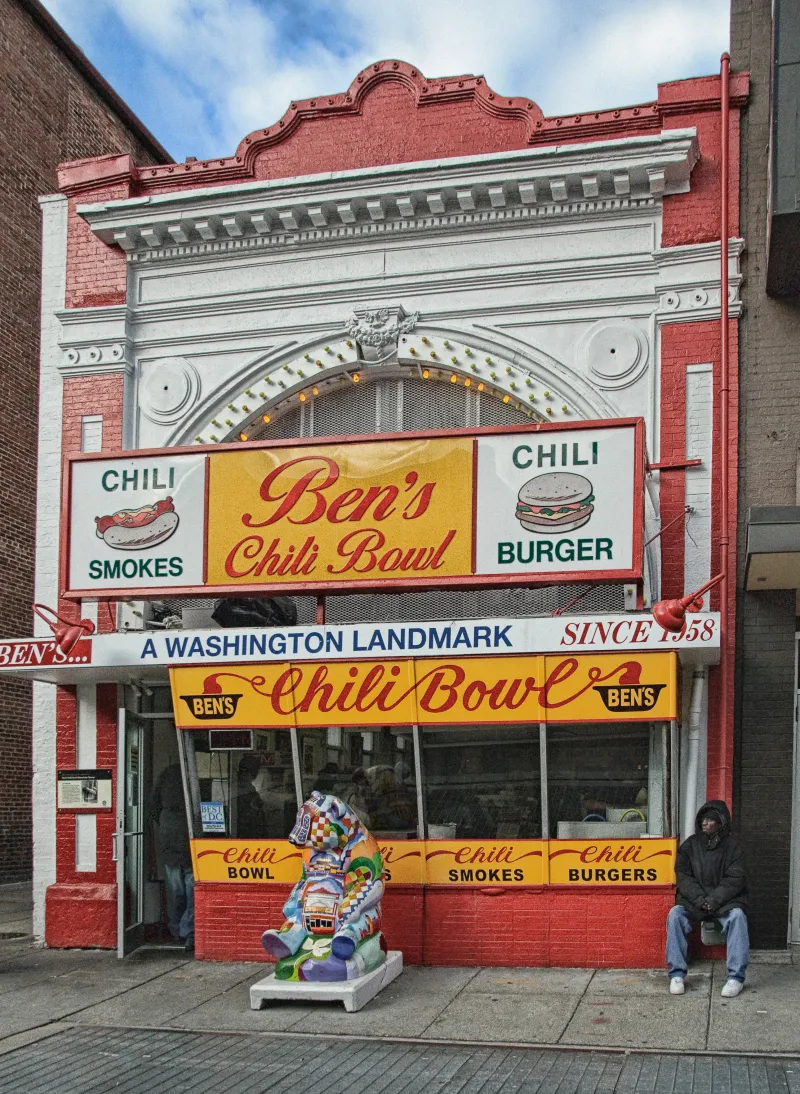
Baltimore is serious crab country, and like its neighbor Annapolis it's a fine place to eat Maryland blue crabs — steamed whole with Old Bay and picked by hand, or in the city's beloved crab cakes, which here are a point of local pride. Cream-of-crab soup and a cold drink round out the classic order. Hard crabs are seasonal and market-priced, so they can be a splurge and aren't always available year-round; crab cakes carry the flavour reliably when they're not.
Where to eat depends on your day. The Inner Harbor has plenty of restaurants but skews toward convenient over characterful; Fells Point and Federal Hill reward you with more interesting, neighborhood-rooted spots and proper pubs. Specific restaurants come and go, so rather than chasing a single famous name, look for a well-reviewed crab house or seafood spot open on your visit. Plan a proper seafood meal into the day — in this part of Maryland, the crab is half the reason to come.
- Maryland blue crabs and crab cakes are the local must-eat; cream-of-crab soup is the classic side.
- Hard crabs are seasonal and market-priced — verify for your dates; crab cakes are the reliable fallback.
- Fells Point and Federal Hill out-eat the Inner Harbor for character — head there for the better meal.
- Restaurants change, so seek a current, well-reviewed crab house rather than a fixed name.
How long to give it, and who Baltimore suits
A full day is the right length. With the train ride each way, aim to arrive mid-morning and head back in the evening; that gives you time for one or two harbor headliners, lunch in a neighborhood, and a wander. Don't try to combine Baltimore with another big day trip — it deserves the day on its own. Plan your route in advance and stick mostly to the harbor and the well-trodden neighborhoods like Fells Point and Federal Hill; as in any large city, it pays to be route-aware rather than wandering aimlessly into unfamiliar areas.
Baltimore suits travellers who want a real city with strong indoor attractions, a great aquarium and a working harbor — families especially, and anyone who'd welcome a museum-and-water day reachable by an easy train ride. It's a particularly good rainy-day pick thanks to all that indoor space. It suits you less if you're after the small, pretty, romantic charm of a colonial town — Annapolis or Old Town Alexandria do that better — or if you've only half a day to spare. Match it to what you want from the day, and Baltimore is one of the most useful and accessible escapes DC has.
- Give it a full day: mid-morning arrival, evening return, one or two indoor headliners plus a neighborhood wander.
- Don't pair it with another major day trip — Baltimore fills the day on its own.
- Plan your route and stick to the harbor and well-trodden neighborhoods; be route-aware as in any big city.
- Best for families, museum-and-water days and rainy weather; less so if you want small-town colonial charm.

Related guides

Union Station Washington, D.C. Guide
A visitor's guide to Washington Union Station — arriving by Amtrak and MARC, transferring to the Metro and buses, luggage and left-luggage, food and the Main Hall, walking to Capitol Hill, and using the station as your launchpad for day trips out of the city.
Read guide
Annapolis Day Trip from Washington, D.C.
How to spend a day in Annapolis, Maryland from Washington — the colonial harbor and City Dock, the U.S. Naval Academy area, a proper Maryland crab meal, and the honest tradeoffs of getting there by car or bus when you have no train.
Read guide
Day Trips from Washington, D.C.
Easy escapes from the District — Mount Vernon and Old Town Alexandria down the Potomac, Arlington across the river, Great Falls in the gorge, plus Annapolis, Baltimore, Harpers Ferry and the Shenandoah, with honest notes on which you can reach without a car.
Read guideMore in Day Trips
6
Arlington National Cemetery from Washington, D.C.
How to visit Arlington National Cemetery respectfully as a half-day from Washington, D.C. — the Tomb of the Unknown Soldier and the changing of the guard, the Kennedy gravesites, Arlington House, getting there by Metro, tram or tour, and the etiquette of an active military cemetery.
Read guide
Beaches near Washington, D.C.
Where to find sand and surf within reach of Washington, D.C. — the calm Chesapeake Bay beaches close to the city, the Atlantic boardwalk towns of Delaware and Maryland a few hours out, and how to judge family fit, traffic and the best summer escapes from the District.
Read guide
Best Day-Trip Tours from Washington, D.C.
When a guided day-trip tour beats going it alone from Washington, D.C. — the case for tours to Mount Vernon, Gettysburg, Shenandoah, the Virginia wineries and nearby cities, what each one solves, and how and when to book without overpaying.
Read guide
Gettysburg Day Trip from Washington, D.C.
How to visit the Gettysburg battlefield from Washington — the National Military Park and museum, ways to tour the field (licensed guide, self-drive or app), driving routes, how much time you really need, and who should make this trip.
Read guide
Great Falls Park from Washington, D.C.
How to visit Great Falls Park as a day trip from Washington, D.C. — the Potomac's dramatic cascades and Mather Gorge, the three Virginia overlooks and easy hikes, the Maryland C&O Canal side, parking, crowds, seasons, and the honest truth about whether it works without a car.
Read guide
Harpers Ferry Day Trip from Washington, D.C.
How to visit Harpers Ferry, West Virginia from Washington — the historic lower town at the meeting of two rivers, the hike up to Maryland Heights and other overlooks, the train and the park shuttle, and why autumn is the season to go.
Read guide