
Where to Stay in Washington, D.C.
A complete, area-by-area guide to where to stay in Washington, D.C. — how to choose a base by Metro access and walkability, the best neighbourhoods for first-timers, families, couples, budgets and luxury, plus when staying across the river makes sense.

Photo: Andra C Taylor Jr / Unsplash
- ✓The single most useful rule in DC: stay within a short walk of a Metro station. The city is more spread out than it looks, and a good rail link matters more than the exact neighbourhood.
- ✓For a first visit, central and walkable wins — Downtown/Penn Quarter, the Mall edge and Foggy Bottom, or Dupont Circle put the monuments and museums closest on foot.
- ✓Match the base to the traveller: families lean to Foggy Bottom, Penn Quarter and quieter upper Northwest; couples to Georgetown, Dupont and Old Town; budgets to Arlington and newer-build areas.
- ✓Georgetown is the prettiest base but has no Metro stop of its own — factor in the walk or the bus before you fall for it.
- ✓Across-the-river options in Virginia (Arlington, Rosslyn, Old Town Alexandria) trade monument-adjacency for value or charm, and still connect by Metro — verify current fares and service on WMATA.
- ✓Rates swing hard with the season and big events, and spike during cherry-blossom weeks — always confirm current prices, breakfast and parking directly with each hotel.
Pick a base before you pick a hotel
Washington is bigger on the ground than it looks on a map, and that single fact should shape how you book. Where you stay influences your trip more than which hotel you choose, because it decides how much of each day you spend getting to the sights versus enjoying them. So the honest first question isn't 'which hotel?' — it's 'which area, and how close to a Metro station?' Get those two right and almost any room in your budget will work; get them wrong and even a lovely hotel can mean a tiring, transit-heavy trip.
There are really only two levers that matter for a base. The first is proximity to the National Mall, where most first-time sightseeing happens. The second is proximity to a Metro station, because the rail network is what stitches the spread-out city together and lets you leave a car out of the equation entirely. Some neighbourhoods give you both; some give you one; a few give you neither but offer charm or value in exchange. This guide walks through the realistic options against those two levers, then matches them to the kind of traveller you are.
A note on prices throughout: DC hotel rates are seasonal and event-driven, climbing in spring and autumn, around major events, and especially during the cherry-blossom weeks, then easing in the depths of summer and winter. Nothing here quotes a nightly figure for that reason — always check current prices, and confirm breakfast, parking and any extra fees directly with the hotel, since those move too.
 Best area for a first DC trip
A simpler, decision-first shortlist if you just want to be told where to book.
 Washington DC travel tips
Metro, SmarTrip, the airports and the city grid — the logistics behind a good base.
 DC neighbourhoods guide
A fuller tour of the District's areas for hotels, dining, nightlife and transit.

The two rules that decide a good DC base
Rule one: stay near a Metro station. The Washington Metro runs six colour-coded lines out from the centre to the Mall, the neighbourhoods and the airports, and a single SmarTrip card covers rail and bus. If your hotel is a short, easy walk from a station, the whole city opens up and you never need a car. If it isn't — if reaching the train means a bus, a long walk or a cab each time — the convenience that justified your choice quietly drains away. Whenever you weigh a hotel, look first at how far it really is from the nearest Metro entrance, and verify current lines and service on WMATA, as these change.
Rule two: decide how much you value walking to the monuments. For a tight first trip, being able to stroll onto the Mall is worth paying for and points you central. For a longer, more relaxed stay, or a return visit, that proximity matters less, and you can trade it for a quieter, more characterful or cheaper base reached by a short ride. Be honest about which trip you're taking. Most disappointing DC stays come from booking a central-priced hotel for a slow trip, or a far-flung bargain for a packed one — matching the base to the pace is the whole game.
- Rule one — proximity to a Metro station: the closer and easier the walk, the more the whole city is yours without a car.
- Rule two — proximity to the Mall: pay for it on a short, sight-packed first trip; trade it away on a slower or repeat visit.
- Use a SmarTrip card for rail and bus; verify current Metro lines, fares and service on WMATA before relying on a connection.
- Price is seasonal and event-driven — confirm current rates, breakfast and parking directly with each hotel.
Central & walkable: Downtown, Penn Quarter and the Mall edge
For most first-timers, the central core is the safe, strong choice. Downtown and the adjoining Penn Quarter put you among museums, theatres, restaurants and Metro lines, with the Mall a short walk south — the best balance of being near the sights and having somewhere lively to eat at night. Penn Quarter in particular is dense with restaurants and bars and sits on multiple Metro lines, so it suits travellers who want sightseeing by day and a real dinner scene in the evening without long journeys either way.
The Mall edge itself — the streets immediately north and west of the lawn — gets you closest to the monuments and museums on foot, which is the point of a first DC trip. Just west of the White House, Foggy Bottom continues that walkable-to-the-Mall theme with a calmer, more residential feel, the Kennedy Center and George Washington University nearby, and its own Metro stop. It's a classic first-timer base for exactly that reason: close to the sights, on the rail network, and quieter at night than the downtown core.
The tradeoff for all of these is price and, in places, a business-district hush after dark — parts of downtown empty out when the offices close. But for a short trip built around seeing the headline sights with the least friction, somewhere central and walkable is hard to beat, and the Metro access means the rest of the city stays within easy reach when you want it.
- Downtown & Penn Quarter: museums, theatres, a strong restaurant scene and multiple Metro lines, with the Mall a short walk away.
- The Mall edge: closest to the monuments and museums on foot — the natural first-timer instinct.
- Foggy Bottom: walkable to the western Mall, calmer and more residential, with its own Metro stop and the Kennedy Center nearby.
- Tradeoff: higher prices and, in pockets of downtown, a quiet after-hours feel once offices empty.

Character & nightlife: Dupont, Logan/14th Street, Adams Morgan, U Street
If you'd rather your base have a personality and an evening life of its own, DC's character neighbourhoods deliver — at the cost of a slightly longer hop to the Mall. Dupont Circle is the most visitor-friendly of them: handsome, central, on the Red Line, with bookshops, restaurants, Embassy Row and a long-standing role at the heart of LGBTQ+ Washington. It manages to be lively and walkable while still being an easy ride to the monuments, which makes it a popular pick for travellers who want more than a hotel district.
North and east, the energy ramps up. The Logan Circle and 14th Street corridor is one of the city's liveliest for dining, drinking and boutiques; Adams Morgan is the late-night, global-food, bar-crawl neighbourhood; and the Shaw/U Street corridor pairs a deep musical and African American cultural history — 'Black Broadway' — with jazz, restaurants and nightlife today. These areas reward travellers who want to eat and go out where Washingtonians actually do, and most sit on or near a Metro line for the daytime run to the sights.
The honest caveats: nightlife cuts both ways, so light sleepers should check how close a hotel sits to the busiest bar blocks, and a few of these areas lean more residential-with-a-strip than full hotel district, so options can be more boutique than abundant. But for character over convenience — without giving up the Metro — this cluster is where to look.
- Dupont Circle: the most visitor-friendly character base — central, on the Red Line, full of restaurants and bookshops.
- Logan Circle / 14th Street: one of DC's liveliest corridors for dining, drinking and boutiques.
- Adams Morgan: late-night bars and global food; U Street / Shaw: 'Black Broadway' history plus jazz and nightlife today.
- Caveat: check noise near bar blocks for light sleepers, and expect more boutique than big-box hotels in places.

Pretty but tricky: Georgetown
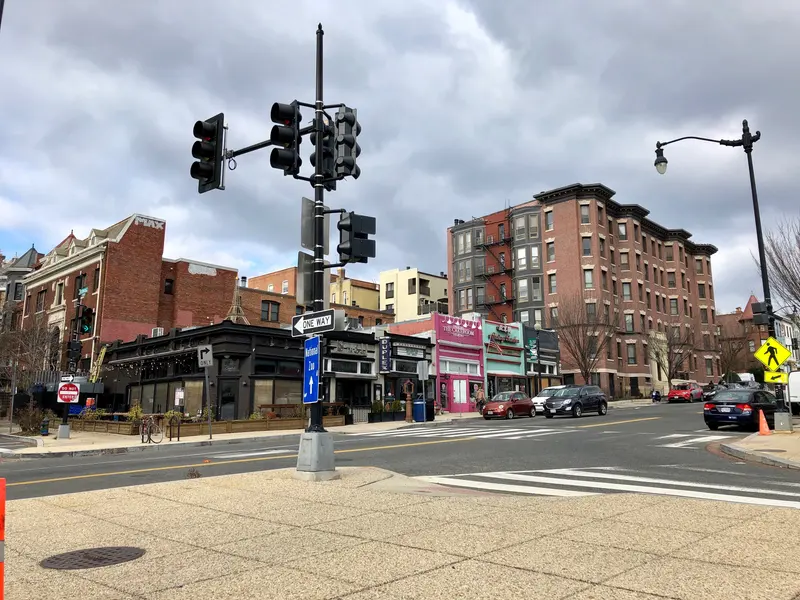
Georgetown is the base that breaks travellers' hearts a little. It is the prettiest neighbourhood in DC — federal row houses, the C&O Canal towpath, a waterfront, smart shopping and some of the city's nicest restaurants — and on looks alone it's everyone's first instinct. The catch is transport: Georgetown famously has no Metro station of its own. Reaching it means a walk from the nearest stops (Foggy Bottom or, across the river, Rosslyn), a bus, or a cab, and that friction repeats every time you head to or from the Mall.
None of which means don't stay there — it means stay there with eyes open. Georgetown rewards travellers on a slower or romantic trip who'll spend real time in the neighbourhood itself and don't mind the walk or bus to the sights. It rewards a sight-packed first-timer less well, because the daily transport tax adds up. If the canal walks, the waterfront and the shopping are central to your trip, Georgetown's charm justifies the inconvenience; if ticking off monuments efficiently is the goal, a Metro-served base will serve you better.
- The prettiest base — row houses, the C&O Canal, a waterfront, smart shops and excellent restaurants.
- The big catch: no Metro station of its own — plan for a walk, bus or cab to and from the sights.
- Best for slower, romantic or repeat trips that linger in the neighbourhood itself.
- Less ideal for a tight first visit focused on efficient monument-and-museum days.

Quieter & newer: Capitol Hill, Navy Yard, The Wharf, upper Northwest
Beyond the obvious cores sit a set of bases that suit specific trips well. Capitol Hill, around the Capitol, the Library of Congress and Eastern Market, is a handsome residential neighbourhood with rowhouse charm, a genuine local feel and good Metro access — strong for travellers who want history and quiet within reach of the sights. Nearby, the modern Navy Yard / Capitol Riverfront district brings ballpark energy, riverfront parks and newer hotels, while The Wharf on the Southwest waterfront offers a lively, purpose-built strip of waterfront hotels, restaurants and music venues that's become a popular, walkable evening base.
Up in leafy upper Northwest, Woodley Park and Cleveland Park trade central buzz for calm, with the National Zoo and Rock Creek Park on the doorstep and larger, often better-value rooms a single Red Line ride from the Mall — a natural family choice. And on the city's changing northern edge, the NoMa / Union Market district pairs a celebrated food hall, big street murals and newer hotels with its own Metro stop and Union Station nearby, for travellers who want a contemporary, food-led base over a monumental one.
These quieter and newer areas share a theme: a short Metro or walk to the sights in exchange for more space, more value, or a more residential, present-day feel. They suit families, return visitors, food-led travellers and anyone who'd rather come home to calm — and they're often where the better-value rooms hide once central rates climb.
- Capitol Hill: rowhouse charm, Eastern Market and the Capitol nearby, with good Metro access and a real local feel.
- Navy Yard & The Wharf: modern, walkable waterfront districts with newer hotels, dining and a lively evening scene.
- Woodley Park & Cleveland Park: calm, leafy upper-NW family bases by the Zoo and Rock Creek, one Red Line ride from the Mall.
- NoMa / Union Market: a contemporary, food-led base with murals, newer hotels and its own Metro stop.

Across the river: Arlington, Rosslyn and Old Town Alexandria
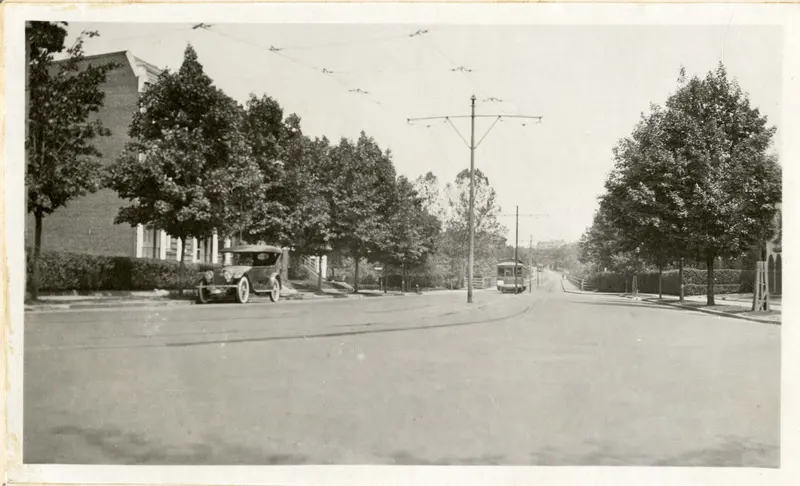
Virginia, just across the Potomac, is the place to look when value or charm matters more than walking to the monuments. Arlington shares DC's Metrorail, so you can base there — often for less than equivalent District rooms — and still reach the Mall by train. Rosslyn is the closest Arlington hub, one quick ride under the river to Foggy Bottom and within walking distance of Georgetown via the Key Bridge; the Orange/Silver corridor west of it (Clarendon, Ballston) adds more liveable, neighbourhood-style stops. Reagan National Airport and Arlington National Cemetery are both in Arlington and both on the Metro, which can make this side especially convenient.
Down the river, Old Town Alexandria offers the opposite of a budget calculation: charm. Its cobbled, eighteenth-century streets, waterfront marina and lamp-lit King Street make it one of the most romantic bases in the region, and it's on the Metro (with seasonal water taxis into DC as a scenic bonus). The catch with both Virginia options is the longer commute into central DC — these are 'commute-in' bases, best for travellers who value the money saved or the evenings gained over stepping straight onto the Mall. As always, compare current Virginia and DC prices for your dates and verify Metro service on WMATA before deciding.
- Arlington / Rosslyn: lower rates than the District, a direct Metro link, and DCA airport plus Arlington Cemetery on the network.
- Old Town Alexandria: cobbled streets, a romantic waterfront and a Metro link — charm over pure value, ideal for couples.
- Both are 'commute-in' bases — best when value or evenings matter more than walking to the monuments.
- Compare current Virginia and DC prices for your dates, and verify Metro service on WMATA before booking.
Decide by traveller type
Once you understand the areas, the easiest way to choose is to start from who you are. First-timers on a short trip should lean central and walkable — Downtown/Penn Quarter, the Mall edge or Foggy Bottom — to spend time at the sights rather than in transit. Families do well in Foggy Bottom and Penn Quarter for walkability, or in calmer, more spacious upper Northwest near the Zoo when room size and quiet matter more than being central; look for suites, breakfast and Metro access.
Couples gravitate to character and romance — Georgetown's canal and waterfront, Dupont's handsome streets, or Old Town Alexandria's cobbles and marina. Budget travellers should weigh Arlington and newer-build areas like NoMa, where rates run lower and the Metro keeps you connected. Luxury seekers will find the grand historic hotels and power addresses clustered around downtown, Foggy Bottom and the West End. And anyone arriving by train should consider NoMa near Union Station; anyone flying into DCA, an Arlington or Old Town base on the Metro. Use the focused guides below to go deeper on whichever profile fits.
- First-timers (short trip): central and walkable — Downtown/Penn Quarter, the Mall edge or Foggy Bottom.
- Families: Foggy Bottom and Penn Quarter for walkability, or quieter upper Northwest near the Zoo for space and calm.
- Couples: Georgetown, Dupont Circle or Old Town Alexandria for romance and character.
- Budget: Arlington and newer-build areas like NoMa, where rates run lower and the Metro keeps you connected.
- Luxury: the grand historic hotels and power addresses around downtown, Foggy Bottom and the West End.
Areas and features that work for families — space, breakfast, pools and Metro access.
Best hotels in Washington DCCurated picks by area, Metro access, family needs, luxury and budget.
Budget hotels in Washington DCValue areas, Metro tradeoffs and how to keep a DC stay affordable.
An at-a-glance comparison of the main bases
If the areas are blurring together, this is the short version — the headline tradeoff for each, so you can scan and shortlist. Read each as 'what you gain / what you give up', then dive into the focused guide for whichever two or three fit your trip. Remember that within every area the exact block and the walk to the Metro matter as much as the neighbourhood name, so use this to narrow the field, not to book blind.
The pattern across the whole list is consistent: the more central and walkable-to-the-Mall a base is, the more you pay and the less neighbourhood character you may get; the further out, quieter or across-the-river you go, the more value, space or charm you gain in exchange for a ride. There's no single 'best' area — only the best fit for your pace, your party and your budget.
- Downtown / Penn Quarter — gain: central, walkable, great dining, multi-line Metro. Give up: higher prices, some after-hours quiet.
- Foggy Bottom / Mall edge — gain: closest to the monuments on foot, calm, own Metro. Give up: a quieter evening scene.
- Dupont Circle — gain: central character, restaurants, Red Line. Give up: a short hop to the Mall rather than a stroll.
- Georgetown — gain: the prettiest streets, canal and waterfront. Give up: no Metro stop of its own.
- Capitol Hill / Navy Yard / The Wharf — gain: local feel or modern waterfront, good access. Give up: not on the Mall itself.
- Woodley Park / NoMa — gain: calm or contemporary, often better value. Give up: a Metro ride into the action.
- Arlington / Old Town (Virginia) — gain: value or romantic charm, Metro-linked. Give up: a longer commute into DC.
Booking smart: timing, prices and the small print
DC's hotel prices are unusually event-driven, so timing is part of the decision. Spring and autumn are peak; the cherry-blossom weeks command the highest rates and book out early; major events, conventions and busy political moments can spike prices across whole districts; and the deepest discounts tend to appear in the heat of high summer and the quiet of winter. If your dates are flexible, shifting them even slightly around the cherry-blossom crush or a big-event weekend can change what your money buys dramatically.
When you compare specific hotels, read past the headline rate. Confirm directly whether breakfast, Wi-Fi and any resort or amenity fee are included, because those add up; check parking costs and whether you even need a car (in a Metro-served base, usually not); and look at exactly how far the hotel sits from the nearest Metro entrance rather than trusting a vague 'near the Metro' claim. Recent guest reviews are worth a scan for the realities a listing won't mention — late-night noise, a long walk to the station, a block that empties after dark. Spend ten minutes on those details and you'll avoid the small frustrations that quietly shape a trip.
- Peak is spring and autumn; cherry-blossom weeks are priciest and book earliest; summer and winter offer the best deals.
- Flexible dates? Shifting around the blossom crush or a big-event weekend can change prices dramatically.
- Confirm breakfast, Wi-Fi, resort/amenity fees and parking directly — the headline rate rarely tells the whole story.
- Check the real walking distance to the nearest Metro entrance, and scan recent reviews for noise and after-dark feel.

Where should I stay in DC? Quick answers
Where's the best area to stay in Washington DC for the first time? Somewhere central and walkable on the Metro — Downtown/Penn Quarter, the Mall edge or Foggy Bottom — so you spend your short trip at the sights rather than in transit.
Where should I stay with kids? Foggy Bottom or Penn Quarter for walkability, or quieter upper Northwest near the Zoo for more space and calm; prioritise suites, breakfast and a short walk to a Metro station.
Where's most romantic? Georgetown, Dupont Circle or Old Town Alexandria — character, good restaurants and a more atmospheric evening than a downtown block.
How do I stay in DC on a budget? Look at Arlington across the river and newer-build areas like NoMa, where rates run lower and the Metro keeps you connected — and travel in summer or winter rather than blossom season.
Is it worth staying in Georgetown? Only if you'll spend real time in the neighbourhood and don't mind that it has no Metro stop of its own; for efficient sightseeing, a Metro-served base is better.
Do I need to stay right on the Mall? No — staying a short Metro ride away is often better value and just as workable; proximity to a station matters more than proximity to the lawn.