
Washington, D.C. Itineraries
Ready-made plans for Washington, D.C. — from a tight one day on the National Mall to a full long weekend, plus tailored routes for families, museum lovers, budgets and the cherry-blossom season.

Photo: Jeffrey Clayton / Unsplash
- ✓The golden rule of planning DC: separate the marble from the museums — monuments are outdoor and best at dawn and dusk, museums are indoor and best at midday.
- ✓One full day covers the Mall's headline monuments and one museum if you keep moving; it's tight but doable.
- ✓Two to three days is the sweet spot — room for a neighbourhood, the Tidal Basin, a proper dinner and a day trip.
- ✓Almost everything that matters is free; the few things that need timed passes or advance tickets are worth sorting before you arrive.
- ✓Stay near a Metro station — the right base shapes the trip more than the exact hotel.
How to plan a trip to DC
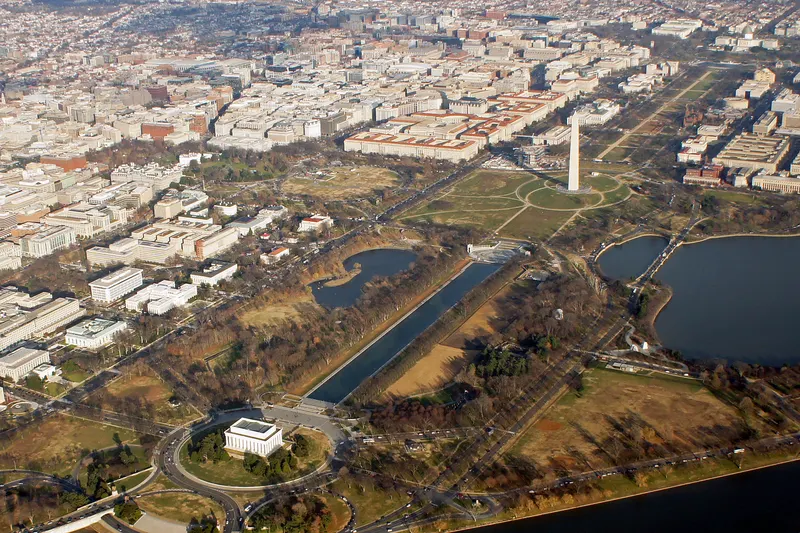
Washington is one of the most plannable cities in the world, because almost everything a first visitor wants is concentrated in one place — on or beside the two-mile National Mall — and tied together by a clean, logical Metro. That density is a gift, but it's also a trap: the city has so much world-class, free stuff packed so tightly that the natural instinct is to cram, and cramming is how people end up exhausted, footsore and underwhelmed by their third museum of the day. The single most useful thing you can do is decide, up front, to see less than you could.
The structural rule that makes everything easier is to separate the marble from the museums. Monuments are outdoor, walkable and at their best at the soft edges of the day — dawn, dusk and after dark, when they're lit and the crowds thin. Museums are indoor, vast and best in the hot, bright middle of the day. Stack both into one relentless push and you'll flag fast; alternate them — monuments early and late, museums midday — and you'll see far more while feeling far better. Every itinerary on this page is built on that rhythm.
From there, the plan scales cleanly with the number of days you have. One day buys the headline monuments and a single museum. Two days adds a neighbourhood, the Tidal Basin and a real dinner away from the lawn. Three days opens up a day trip across the river or a deeper museum dive. Four or more lets the whole thing breathe. Pick the length that matches your trip below, and follow the linked day-by-day plan; the rest of this page is the shared logic that sits underneath all of them.


Pick your itinerary by length
The cleanest way to choose is by how long you have. Each plan below is a complete day-by-day route you can follow as written or adapt; they share the same dawn-and-dusk monument rhythm and build on each other, so a three-day plan is essentially the two-day plan with a day trip and a deeper dinner added. If your trip falls between these, take the next plan down and trim, rather than the next plan up and rush — DC punishes the rush.
A quick rule of thumb on what each length realistically gets you: one day is the headline highlights and nothing spare; two days is comfortable for the essentials; three days is the genuine sweet spot, with room for a day trip and a neighbourhood; and four or more turns a sightseeing trip into a relaxed stay. Whatever the length, leave at least one museum for a return visit — they're free, so there's no need to extract your money's worth in a single marathon.
- One day — the Mall's headline monuments and one museum, kept moving; tight but doable.
- Two days — the essentials at a comfortable pace, plus a neighbourhood and a proper dinner.
- Three days — the sweet spot: add a day trip, the Tidal Basin and a deeper museum or evening.
- Four+ days — room to breathe, with more neighbourhoods, a second day trip or downtime built in.
 One day in DC
A realistic single-day route for the Mall, monuments, one museum and an evening stop.
 Two days in DC
The comfortable essentials plan — monuments, museums, a neighbourhood and a real dinner.
 Three days in DC
The sweet-spot long weekend, with a day trip and the Tidal Basin added in.
 Four days in DC
A relaxed stay with room for more neighbourhoods, a second day trip and downtime.
Itineraries by traveller
Length isn't the only axis. Who you're travelling with — and what you're there for — reshapes the plan as much as how many days you have. A family with young children needs shorter days, more breaks and the Zoo; a couple wants the monuments at dusk and a quiet dinner; a museum lover would happily skip half the monuments for a deeper run through the collections; a tight budget changes nothing about access (almost everything is free) but everything about food and hotels. The plans below take the same core sights and re-sequence them around a particular kind of trip.
Mix and match freely. There's nothing stopping a family from borrowing the museum lover's afternoon, or a couple from following the kids' gentler pacing on a hot day. These are starting points, not rules — the value is in the sequencing and the local logic, which you can lift into your own plan. Pick the one that's closest to your trip and adapt from there.
- Families — shorter days, more breaks, the Zoo and the most kid-proof museums, with food planned in.
- Couples and honeymoons — the monuments at dawn and dusk, Georgetown, a romantic dinner.
- Museum lovers — a deeper, better-paced run through the free collections, monuments trimmed back.
- Budget travellers — the free city in full, with cheap eats, smart transit and value hotels.
- School and group trips — a structured, efficient route built for moving a group through the highlights.


Itineraries by season and theme
Some trips are organised around a moment rather than a length. The biggest is the cherry-blossom season — for one short, shifting window in late March or early April, the Tidal Basin turns pink and the whole city softens, and a blossom-season plan deliberately front-loads the dawn basin walk that makes the trip. A romantic or honeymoon trip rebuilds the day around the monuments at night and a quiet dinner. A rainy or brutally hot day swaps the outdoor route for the museums, the archives and the food halls. The point is to bend the plan to the conditions rather than fight them.
Season matters more in DC than first-timers expect. Spring and autumn are the comfortable seasons for long days outdoors; summer is genuinely hot and humid, so a summer plan leans harder on midday museum time and saves the walking for early and late; winter is quiet and good value, with cosy interiors and holiday lights. Whatever the season, check the forecast the night before and be willing to flip an outdoor day for an indoor one — the museums are the city's all-weather insurance, and they're free.
- Cherry-blossom season — front-load a dawn Tidal Basin walk; book months ahead and watch the NPS forecast.
- Romantic / honeymoon — the monuments at night, Georgetown by day, a special dinner.
- Rainy or too-hot days — swap the outdoor route for museums, archives and food halls.
- Summer — midday museums, early-and-late walks; spring and autumn are the easiest seasons outdoors.
 Cherry-blossom romance
How to time and stage the most romantic week of the DC year around the Tidal Basin.
 DC honeymoon plan
A polished romantic plan — hotels, slow pacing, the Mall at night and an easy day trip.
 Rainy-day DC
The all-weather plan — museums, archives, food halls and theatre for wet or too-hot days.
Book these few things ahead
Most of DC is gloriously walk-in: the Smithsonian museums, the National Gallery, the monuments and the Mall need no ticket at all, which is what makes the city so easy to plan loosely. But a small handful of things release free timed-entry passes online, and those passes go fast — the National Museum of African American History & Culture and the National Air and Space Museum among them. If either is a must-see, check the official site for how and when passes are released and grab them before you arrive; without one you may not get in on the day.
A second set of sights needs advance arrangement of a different kind. Capitol tours run on free reserved passes; White House tours, when available, are requested far in advance through your member of Congress or, for international visitors, your embassy, with no guarantee. The Washington Monument and a few other ticketed attractions release passes on their own schedules. None of this is onerous, but it doesn't happen on the day — so the planning move is to identify your two or three non-negotiable bookings, sort them first, and build the loose, walk-in days around them. Always verify the current process on the official site, as systems and timings change.
- Free timed-entry passes (e.g. African American History museum, Air & Space) release online and go fast — book ahead.
- Capitol tours use free reserved passes; book them in advance.
- White House tours (when available) are requested far ahead via your member of Congress or embassy — no guarantee.
- The Washington Monument and some attractions release passes on their own schedules — check official sites.
- Sort your two or three must-book sights first, then build loose walk-in days around them; verify current rules.

Getting around and where to base yourself
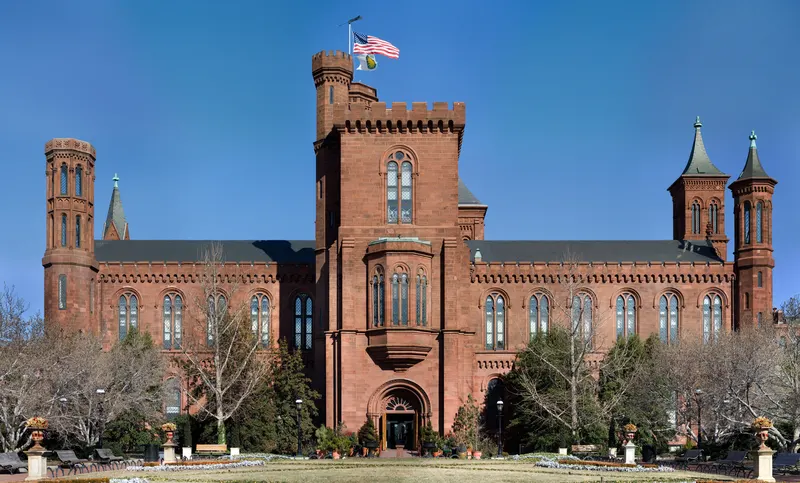
Two things make every DC itinerary run smoothly: the Metro and the grid. Six colour-coded Metrorail lines fan out from the centre to the Mall, the neighbourhoods and the airports, and a single SmarTrip card covers rail and bus, so you can leave the car at home and still reach almost everything easily. The street grid is just as logical once you see it — lettered streets one way, numbered the other, state-named avenues cutting diagonally — but addresses repeat across the four quadrants (NW, NE, SW, SE), so always read the suffix. Get the rails and the grid, and the city opens up.
Where you sleep shapes the trip more than which hotel you pick, because DC is bigger on the ground than it looks. The honest first question is how close to the Mall and how close to a Metro station — get those right and almost any room works. The western Mall edge and Foggy Bottom keep the monuments and museums walkable; Penn Quarter and Dupont Circle trade a little walking distance for restaurants and a livelier evening; Georgetown is the prettiest but has no Metro stop of its own. Match your base to how you actually plan to spend the days, then slot the itinerary on top.
- Six Metrorail lines plus a SmarTrip card cover rail and bus — you don't need a car.
- The grid is logical, but addresses repeat in four quadrants — always check the NW/NE/SW/SE suffix.
- Western Mall and Foggy Bottom = walkable to monuments; Penn Quarter and Dupont = food and nightlife.
- Georgetown is the prettiest base but has no Metro stop — factor in the walk or bus.
- Pick a base by how you'll spend the days, then lay the itinerary on top.


The evening shift — and the day trip
Every good DC itinerary saves something for after dark, because the evening is when the city is at its most atmospheric and least crowded. The monuments on the western Mall — the Lincoln Memorial, the World War II, Korean War and Vietnam memorials — stay open and floodlit through the night, and they empty out, so a self-guided evening walk among them is the most memorable free hour of most trips. The Tidal Basin at blue hour, with the Jefferson Memorial mirrored in the water, is its quieter twin. Plan to be on the Mall as the light goes, not just in the middle of the day.
If your trip runs to three days or more, give one of them to a day trip — the change of register after two days of monuments and museums is restorative, and some of the best trips out of DC are short and easy. Old Town Alexandria is barely a Metro ride to a cobbled riverfront; Mount Vernon sits down the Potomac; Annapolis trades the federal city for a working harbour about an hour out. Slot the day trip into the middle or end of a longer stay, keep the day either side lighter, and you've turned a sightseeing sprint into a proper trip.
- Save the western monuments for dusk and after dark — floodlit, near-empty and the most memorable free hour.
- The Tidal Basin at blue hour, with the Jefferson Memorial reflected, is the quiet alternative.
- On trips of three days or more, add a day trip for a change of pace — Alexandria, Mount Vernon or Annapolis.
- Place the day trip mid- or late-trip and keep the surrounding days lighter.


Working food into the plan
Food is the most-overlooked part of a DC itinerary, and getting it wrong drains a day fast. The cardinal rule is that the Mall itself is a food desert: the cafés inside the museums are convenient but forgettable, and there's little else within easy reach of the lawn. So plan to eat off the Mall whenever you reasonably can — a few blocks north into Penn Quarter, east toward Capitol Hill, or a short Metro ride into a real food neighbourhood — and treat museum cafés as a quick refuel rather than a meal worth seeking out. A little planning here keeps your energy up and your day on schedule.
The smart pattern is a quick, decent lunch and a proper dinner. At midday you want fuel, not a two-hour sit-down that eats your daylight, so grab something fast near wherever your morning ends. Save the real meal for the evening, when you've come off the Mall anyway and can sink into a neighbourhood — Penn Quarter for convenience, 14th Street and Shaw for buzz and the city's deep Ethiopian scene, the Wharf or Georgetown for a table by the water, Eastern Market or Union Market for a food-hall spread that suits groups and families. Reserve ahead for anything popular, especially at weekends, and verify that a place is open and serving for your day, since restaurants change constantly.
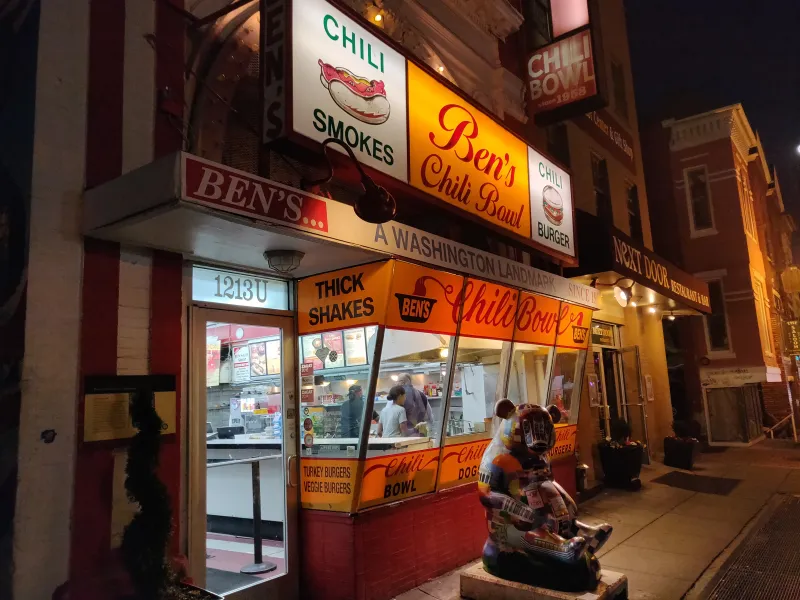
One DC-specific tip: the half-smoke, the city's own coarse, smoky sausage, is the classic local order and an easy, cheap, characterful lunch to work into a sightseeing day. Beyond it, lean into what the neighbourhoods do well rather than chasing food on the Mall — the eating is one of the real pleasures of a DC trip, and it lives in the quadrants, not on the lawn.
- The Mall is a food desert — plan to eat a few blocks off it or a short Metro ride away.
- Quick lunch (fuel, not a sit-down) plus a proper dinner off the Mall is the pattern that keeps a day on track.
- Dinner neighbourhoods: Penn Quarter, 14th Street/Shaw, the Wharf, Georgetown; food halls suit groups and families.
- Try the half-smoke — DC's own sausage — for a cheap, characterful sightseeing-day lunch.
- Reserve popular places ahead (especially weekends) and verify hours for your dates.
Common one-day and weekend mistakes
Most disappointing DC trips fail in the same few ways, and they're easy to design out. The biggest is over-walking the Mall in the heat: people underestimate how far apart the monuments really are and how punishing the open, shadeless lawn is at midday in summer, then run out of energy by mid-afternoon. The fix is the rhythm this whole page is built on — monuments early and late, museums in the middle — plus real shoes, water and a willingness to sit in the shade. The second classic mistake is trying to 'do' a whole museum; these are vast, free buildings, and the move is to pick a few rooms, not to conquer the place.
The other recurring errors are logistical. People skip the evening — the floodlit monuments after dark are the most memorable free thing the city offers, and a plan that ends at dinner with the Mall unseen at night has missed the best of it. People also misjudge the base, booking a cheap hotel far from a Metro station and then losing hours and money to cabs. And people forget to check the few things that need advance booking until it's too late. Read the list below, build the opposite into your plan, and you've avoided the traps that catch most first-timers.
- Don't over-walk the open Mall at midday — alternate monuments (early/late) with museums (midday).
- Don't try to finish a museum — pick a few rooms in one building and leave the rest for next time.
- Don't skip the evening — the floodlit monuments after dark are the trip's best free hour.
- Don't book a hotel far from a Metro station to save a little — you'll lose it back in cabs and time.
- Don't leave timed passes and Capitol/White House requests to the last minute — sort them first.


At a glance
The shared logic behind every plan on this page, in one card. Hours, passes and timings change, so confirm the specifics on official sites before you go.
- Separate the marble from the museums: monuments at dawn and dusk, museums midday.
- One day = highlights only; two days = comfortable essentials; three days = the sweet spot with a day trip.
- Book ahead only the few things that need it (timed passes, Capitol, White House); the rest is walk-in and free.
- Stay near a Metro station — the base matters more than the hotel.
- Save the monuments for after dark, and add a day trip on longer stays.
- When in doubt, do less and linger more — DC rewards a slower pace.