
Washington, D.C. Cherry Blossoms Guide
When the Tidal Basin turns pink — how peak bloom works, the best routes and viewpoints, when to beat the crowds, the festival events, where to stay and the alternate bloom spots beyond the Tidal Basin. The complete guide to the DC cherry blossoms.

- ✓In 1912 the Mayor of Tokyo gave Washington 3,020 cherry trees; their descendants still ring the Tidal Basin and draw well over a million visitors each spring.
- ✓Peak bloom — the day roughly 70% of the Yoshino blossoms open — usually lands in late March or early April, but it shifts every year with the weather. Verify the NPS forecast.
- ✓The full-colour window lasts only about a week, and a hard wind or rain can end it early — so flexibility beats a fixed date.
- ✓Go at dawn: the Tidal Basin loop and the Jefferson Memorial steps are magical and nearly empty at first light, and mobbed by mid-morning.
- ✓The blossoms aren't only at the Tidal Basin — the National Arboretum, Hains Point and the Kenwood neighborhood offer quieter alternatives.
When the Tidal Basin turns pink
The cherry trees are the capital's most-watched calendar event, and unusually for Washington it is botanical, not political. The original 3,020 Yoshino and Kwanzan trees were a 1912 gift from the city of Tokyo — a gesture of friendship between the two nations — and their descendants now ring the Tidal Basin, the tidal inlet just south of the Mall where the Jefferson Memorial stands. For about a week each spring, the water is hemmed by a continuous canopy of pale pink, and over a million people come to walk under it.
It is, at its best, one of the most beautiful free things you can do in any American city: a flat, two-mile loop around the water, blossoms overhead, the Jefferson Memorial mirrored in the basin and the Washington Monument rising beyond. The challenge is entirely one of timing and crowds — get those right and it's transcendent; get them wrong and you're shuffling through a packed path under bare branches. This guide is about getting them right.


How peak bloom works
Bloom timing moves with the weather, so the National Park Service publishes a forecast and tracks the season through a sequence of named stages — green buds, florets visible, extension of florets, peduncle elongation, puffy white, and finally peak bloom — followed by petals falling. 'Peak bloom' is officially the day on which roughly 70% of the Yoshino cherry blossoms around the Tidal Basin are open. The Yoshino are the famous pale-pink mass; the Kwanzan, a deeper pink, bloom a couple of weeks later and extend the season at the edges.
Peak usually lands in late March or early April, but it has arrived as early as mid-March and as late as mid-April in different years, and it moves with that winter's warmth: a mild late winter pulls it forward, a cold snap pushes it back. The NPS revises its forecast through the season as the buds develop. The hard truth is that even a perfect forecast can't protect the bloom once it opens — a single storm of wind or rain can strip the petals in a day. Treat any date as guidance, not a guarantee, and watch the official bloom-watch closely as your trip nears.
The best routes and viewpoints
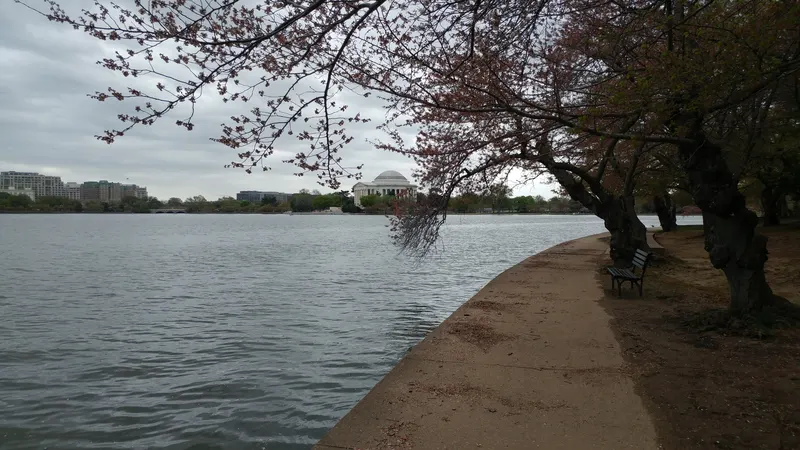
The classic experience is the full loop of the Tidal Basin — a flat, roughly two-mile circuit around the water, dense with blossoms most of the way. Start at the Jefferson Memorial, whose marble steps give the postcard view straight across the bloom-ringed water, then walk the path with the basin on one side and the trees overhead. The stretch along the western and southern edges, looking back toward the Jefferson, is the most photographed for good reason.
From the basin you can extend the walk in either direction: north to the FDR and Martin Luther King Jr. memorials, which sit right on the water amid more trees, or out onto East Potomac Park and Hains Point, a long, quiet finger of land with its own cherries and far fewer people. The combination of memorials and blossoms is what makes the Tidal Basin loop unlike a cherry walk anywhere else — you're moving through the heart of the monumental city while you're under the trees.
Beating the crowds
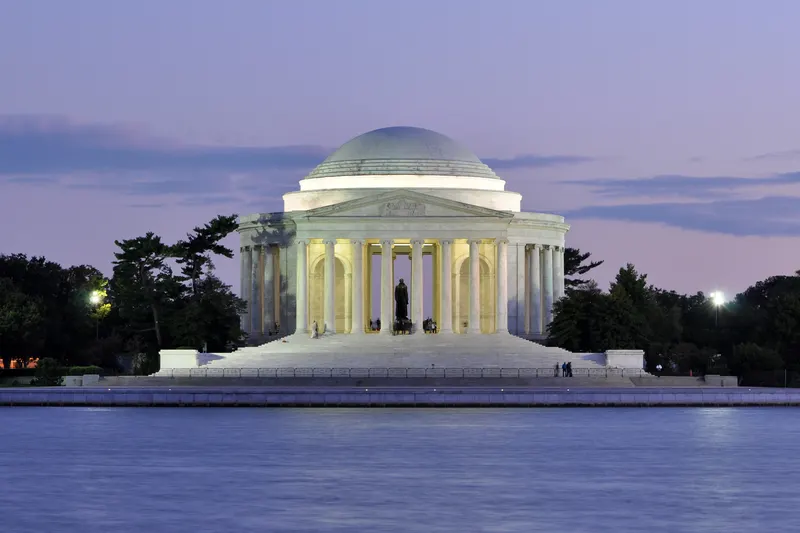
There is one reliable trick: go at dawn. The Tidal Basin in the first light after sunrise is a different place from the same path at noon — soft pink light, mist sometimes rising off the water, the Jefferson Memorial gold-lit, and a path you can almost have to yourself. By mid-morning on a peak-bloom weekend it's shoulder-to-shoulder, and parking near the basin is effectively impossible. The early start is the single best decision you can make.
Weekdays beat weekends, and the shoulders of the bloom — a few days before or after the official peak — are far calmer than the peak weekend itself, while still putting plenty of colour overhead. Skip the car entirely: arrive by Metro (the Smithsonian station is the usual choice, with a walk down to the water) and you sidestep the parking nightmare completely. If you only get a midday window, the quieter alternate spots below are your friend.


The National Cherry Blossom Festival
Wrapped around the bloom is the National Cherry Blossom Festival, a weeks-long programme of events that runs on fixed calendar dates each spring — typically across late March and into April. Highlights usually include the Blossom Kite Festival on the grounds of the Washington Monument, a parade along Constitution Avenue, cultural performances, and a pink-tinted programme of events across the city. Most of it is free to attend.
The crucial thing to understand is that the festival's dates are set in advance and the actual bloom is not — so the two don't always line up. Some years the trees flower early and the parade meets bare branches; other years they're late and the city stays pink well past the festival. If the blossoms themselves are your goal, plan around the NPS bloom forecast first and treat the festival programme as a bonus. Verify the year's festival schedule, which is published ahead of each season.

Beyond the Tidal Basin
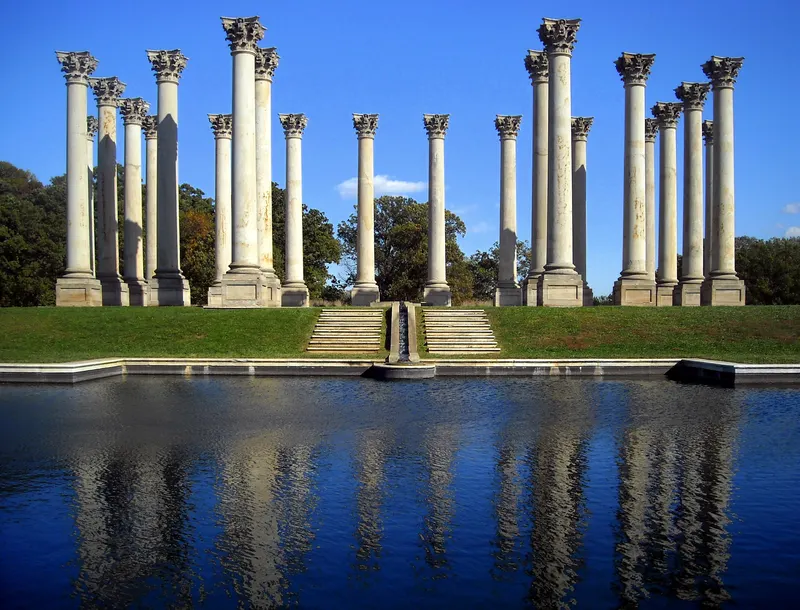
The Tidal Basin gets the crowds, but it isn't the only place the city blooms. The U.S. National Arboretum in northeast DC has its own collection of flowering cherries across a large, calm landscape — a good option if you want blossoms without the crush. Hains Point and East Potomac Park, just south of the basin, share the same bloom with a fraction of the people. And the residential streets of the Kenwood neighborhood, just over the line in Maryland, are famous locally for a dense canopy of cherries — a quieter, leafier alternative, though it's a residential area, so visit respectfully.
Spring also fills the rest of the city with colour beyond the cherries — magnolias, tulips and dogwood across the parks and gardens — so even a trip that narrowly misses the cherry peak can still land squarely in a beautiful Washington spring. If your dates are fixed and the bloom is uncertain, these alternatives and the broader spring bloom are your insurance.
What to bring and what to expect on the day
Bloom season is early spring, and the weather is firmly unsettled: a peak-bloom day can be mild and bright or raw, grey and windy, sometimes both within hours. Dress in layers, bring rain cover, and wear shoes you can walk a flat two-mile loop in comfortably. There's little shade and few places to sit on the path itself, so plan for a walk rather than a lingering picnic unless you stake out a spot early.
Expect crowds to build fast on a peak weekend — the path narrows in places and moves slowly by mid-morning — and expect very limited facilities right at the water. Food and restrooms are easier found back toward the Mall and the Smithsonian museums than on the basin loop. The simplest plan is the best one: come at dawn, walk the loop while it's quiet, then retreat to a warm café or a museum as the crowds arrive and the morning fills in.


Where to stay and the romance of it
Bloom season is the year's tightest for accommodation: rooms near the Mall fill early and rates spike when the dates line up with a predicted peak, so book as far ahead as you can and favour a base within walking distance of the basin or a short Metro ride from it. Foggy Bottom and the western Mall edge put you closest on foot; anywhere on a Metro line works if you're willing to ride in for the dawn walk.
And it is, frankly, the most romantic week of the Washington year. The Tidal Basin at blue hour — the blossoms going lavender in the failing light, the Jefferson Memorial lit and mirrored in the still water — is the city's quietest beautiful moment, and one of its great free pleasures for two. If a proposal or a special evening is in the air, this is the setting people travel across the country for.


Cherry blossom questions, answered
The questions that come up most, with the honest answers — but remember the bloom moves every year, so always verify the current NPS forecast before you lock in dates.
- When do the cherry blossoms peak? Usually late March or early April, but it shifts annually with the weather, from mid-March to mid-April in different years. Watch the NPS bloom-watch.
- How long does peak bloom last? The full-colour window is only about a week, and wind or rain can cut it short — don't bank on a long stay at peak.
- What's the best time of day to visit? Dawn, without question — soft light, fewer people and the basin at its most beautiful before the mid-morning crowds.
- Should I drive? No — parking near the Tidal Basin is effectively impossible at peak. Take the Metro and walk down to the water.
- What if I miss the peak? You'll likely still catch colour at the shoulders, plus the Arboretum, Hains Point and Kenwood — and a broader Washington spring of magnolias and tulips.
- Is the festival the same as peak bloom? No — the festival runs on fixed dates that may not match the actual bloom. Plan around the bloom forecast first.

Related guides

DC Cherry Blossom Peak Bloom Guide
Exactly how peak bloom works in Washington — what 'peak' means, how the National Park Service forecasts it, why the dates move every year, and what to do if you arrive too early or too late. The practical answers to the question every visitor asks.
Read guide
Washington, D.C. Cherry Blossom Itinerary
For one shifting week each spring, the Tidal Basin turns pink and Washington becomes the most beautiful capital in the country. This is a cherry-blossom Washington, D.C. itinerary built around peak bloom — when to come, how to beat the famous crowds at dawn, the alternate blossom spots when the Basin is packed, and how to pace museums, hotels and meals around the season's chaos.
Read guide
Washington, D.C. in March
The month Washington wakes up — unpredictable weather swinging from late-winter chill to early spring, the all-consuming cherry-blossom watch, the first school groups and spring breakers, and the moment hotel rates and timed passes start to tighten. How to read March and plan around the gamble.
Read guideMore in Things to Do
6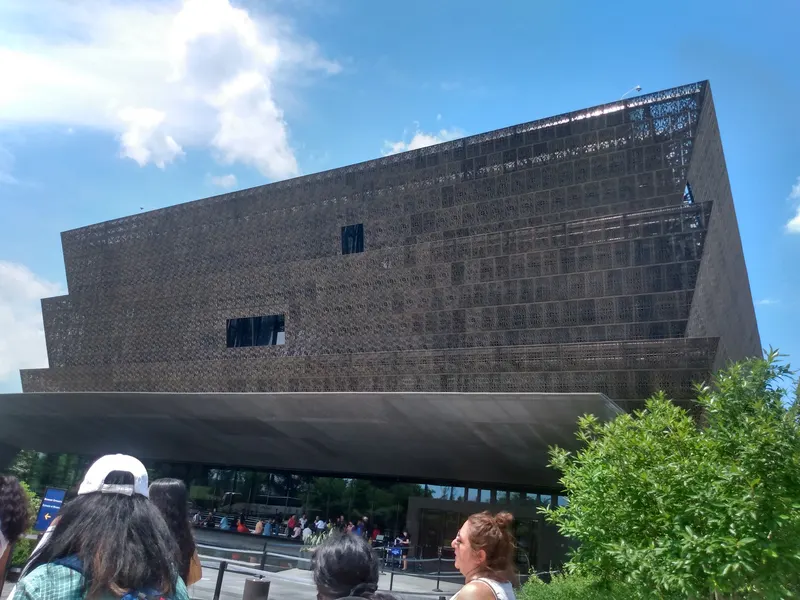
African American History Museum Guide
How to visit the National Museum of African American History & Culture on the Mall — the free timed-entry passes and how to get one, the deep underground history galleries, Sweet Home Café, the lines, how to pace an emotionally heavy visit, and the walk along the Mall.
Read guide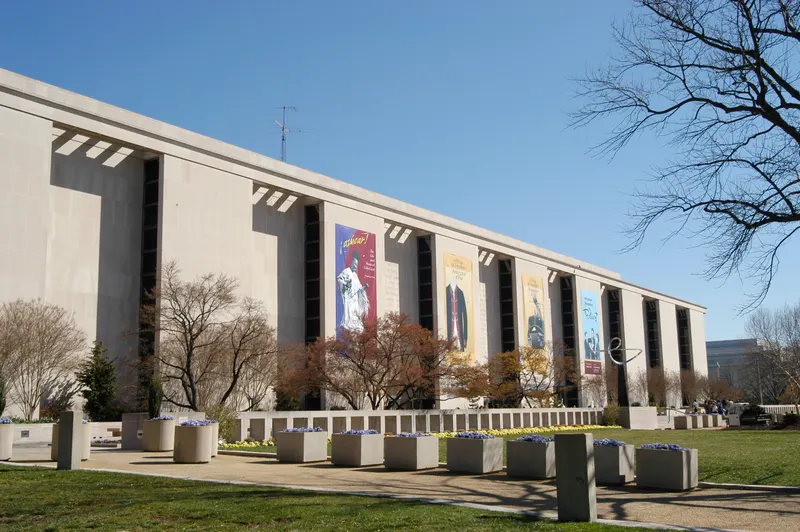
American History Museum Guide
How to visit the National Museum of American History on the Mall — the original Star-Spangled Banner, the First Ladies' gowns, the American presidency, the pop-culture icons, the food-court logistics, and how to time a visit around the school groups.
Read guide
Best Museums in Washington, D.C.
Washington has more world-class museums than any sane trip can hold, and almost all of them are free. This is a guide to the best museums in DC sorted by topic, age, ticket needs, location and rainy-day value — so you can choose two or three with confidence instead of trying to see them all.
Read guide
Best Photography Spots in Washington, D.C.
Where to make great photographs in Washington — the monument reflections, the Tidal Basin blossoms, the Capitol and Lincoln axis, Georgetown's waterfront, hidden rooftops and the golden-hour and blue-hour routes that tie them together.
Read guide
Best Things to Do in Washington, D.C.
A ranked first-trip shortlist of the best things to do in Washington, D.C. — from the National Mall and the free Smithsonian museums to a Capitol tour, the Tidal Basin and Georgetown — built so you can pick a handful and still feel you saw the city.
Read guide
Best Viewpoints in Washington, D.C.
Where to find the best views in Washington — the high monuments and free towers, the rooftop bars and cultural terraces, and the river and hilltop overlooks across the Potomac, ranked by how much effort each one asks.
Read guide