
Best Food Halls & Markets in Washington, D.C.
The best food halls and public markets in Washington, D.C. — Union Market in NoMa, historic Eastern Market on Capitol Hill, the Wharf's Municipal Fish Market and more. The easiest group, family and indecisive-table meals in the city, with what to eat and when to go.
Photo: Robert Hughes / Wikimedia Commons · Public domain
- ✓Food halls are the easiest group and family meal in DC — everyone orders what they want and meets at a shared table, no menu negotiation.
- ✓Union Market in NoMa is the design-forward flagship: a renovated 1930s market turned food hall, surrounded by murals and rooftops.
- ✓Eastern Market on Capitol Hill is the city's oldest continuously operating public market, best on weekends for stalls, crafts and pancakes.
- ✓The Wharf's Municipal Fish Market is the country's oldest open-air fish market — steamed crabs and oysters off the floating barges.
- ✓Markets are budget heroes: you can graze a satisfying meal from a single counter without committing to a full restaurant tab.
- ✓Weekends are liveliest but busiest; go early for the best of the stalls. Verify vendor and market hours close to your trip.
Why food halls win in DC
If you are travelling with a group, a family, or simply a table that can never agree, Washington's food halls and public markets are the easiest meal in the city. The format solves the eternal problem of group dining: everyone wanders off to a different counter, orders exactly what they want, and reconvenes at a shared table — no compromise menu, no waiting on the slowest decider, and an easy exit if a small child reaches the end of their patience.
They are also a genuine pleasure in their own right, not just a fallback. DC's markets range from a renovated industrial food hall to a 19th-century brick market house to a working open-air fish market on the water, and each gives you a slice of the city's food culture in one stop. Add that they tend to be budget-friendly — you can build a good meal from a single counter — and they earn a place on any DC food itinerary, especially for families and larger groups.

Union Market — the flagship food hall
Union Market in NoMa, just north of Union Station, is the city's design-forward flagship. Built inside a renovated 1930s wholesale market, it gathers a rotating cast of local food vendors — oysters, tacos, dumplings, coffee, ice cream, korean, baked goods and more — under one roof, with communal seating and a buzzy, modern feel. It anchors a fast-changing district of murals, rooftops, breweries and newer development, so it pairs naturally with a wander around NoMa.
It is an easy lunch or casual dinner, and a good rainy-day or too-hot-day plan since it is all indoors. Go a little outside peak meal times if you can, since the popular vendors draw lines on weekends. Our dedicated Union Market guide goes deeper on which counters to seek out and how to combine it with the surrounding neighbourhood.
Eastern Market — the historic one
Eastern Market on Capitol Hill is the city's oldest continuously operating public market, housed in a handsome 19th-century brick market hall a few blocks behind the Capitol. Inside, the South Hall holds butchers, fishmongers, bakers and produce stalls plus a lunch counter; on weekends the scene spills outside with farmers, artisans and a craft market that makes Saturday and Sunday the days to come.
The signature order is breakfast — the blueberry-buckwheat pancakes at the market's lunch counter are a genuine Capitol Hill institution, worth getting up for. Eastern Market pairs perfectly with a morning at the Capitol, the Library of Congress or the Supreme Court, giving you a relaxed, local, distinctly un-touristy meal a short walk from the federal buildings. Note that the outdoor weekend energy is the draw; a weekday visit is quieter and more about the indoor stalls.

The Municipal Fish Market at the Wharf
Down on the Southwest Waterfront, the Municipal Fish Market at the Wharf is a working open-air fish market — and a remarkable one, claiming the title of the oldest continuously operating fish market of its kind in the country. From floating barges, vendors sell steamed Chesapeake blue crabs, shucked oysters, shrimp and whole fish, and the air is all Old Bay and salt. It is part shopping, part eating, and entirely of the bay.
You can buy crabs by the dozen to crack at the outdoor tables, grab a paper tray of oysters, or simply soak up the scene before drifting into the surrounding Wharf district for a sit-down seafood dinner or a rooftop drink. It is the most atmospheric of the city's markets and the one most tied to the regional palate — an essential stop for anyone who wants to taste the Chesapeake at the source.

A rainy-day and too-hot-day plan
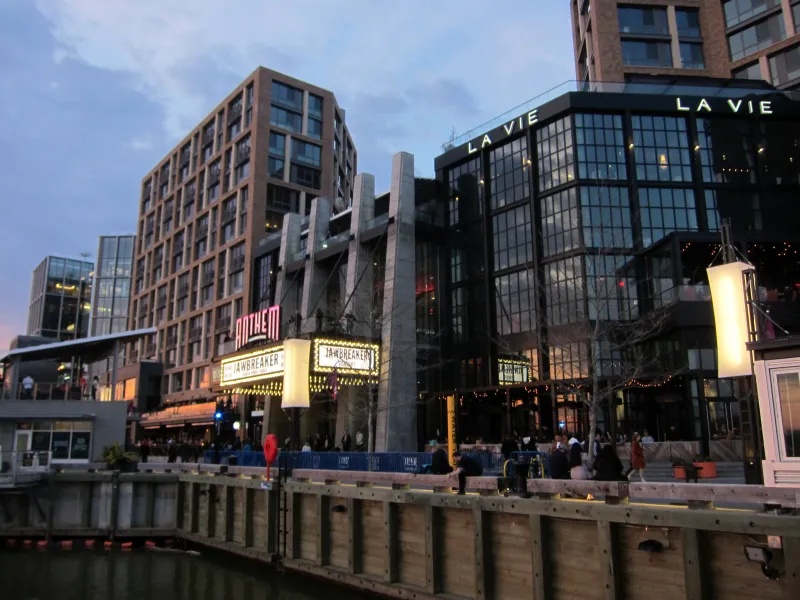
DC's indoor food halls double as weather insurance. When the summer humidity turns brutal or the rain sets in, Union Market and the city's other enclosed halls become cool, dry refuges where a group can graze for an hour or two while the weather passes — far more pleasant than huddling under a museum awning. They pair naturally with the indoor museum days you'd plan for the same conditions, keeping a whole bad-weather afternoon comfortable and varied.
The open-air markets are the opposite — best on a clear day, when the outdoor stalls at Eastern Market and the barges at the Wharf fish market are in full swing. So a simple rule emerges: save the indoor halls for the grim-weather window and the outdoor markets for the bright one, and you'll always have a good food plan whatever the forecast does.

More halls and markets worth knowing
Beyond the big three, the city keeps adding to its hall scene. Just across from Union Market, La Cosecha is a contemporary Latin American marketplace — pupusas, Mexican cooking, Panamanian coffee and Latin American shops under one roof — and a natural pairing with a Union Market visit. In Foggy Bottom, the small Western Market food hall gathers a dozen counters near the university and the Kennedy Center. Across the newer neighbourhoods you'll find more halls in the same mould — handy clusters of quick, varied options near the museums and offices. Seasonal and weekend farmers' markets pop up across the city too, from Dupont Circle to neighbourhood corners, good for grazing and people-watching even if you are not cooking.
The throughline is that DC has leaned hard into the hall-and-market format over the past decade, which is excellent news for visitors: wherever you are based, there is usually a group-friendly, budget-friendly, all-tastes-covered option within reach. When a specific hall or vendor matters to your plan, check its current status before you go — halls reshuffle their vendors and the smaller markets keep seasonal hours.

Food halls vs sit-down restaurants
It helps to be clear-eyed about what a food hall is and isn't. The trade-off you make for the variety and flexibility is that you are eating counter food at a shared table, not being waited on in a dining room — which is exactly right for a casual lunch, a group that can't agree, or a family with restless kids, and exactly wrong for a special romantic dinner or a leisurely tasting menu. Match the format to the occasion and you will never be disappointed.
There is also a quality spectrum within the halls themselves. The best vendors at Union Market or the fish market at the Wharf are genuinely excellent — chefs and producers using the hall as a low-overhead launchpad — while a few stalls anywhere are simply convenient. Ask which counters the locals queue for, and you will usually eat very well. For a full, sit-down DC meal, our restaurant guides are the better starting point; for everything fast, varied and group-friendly, the halls win.
Food halls for families and groups
For families, food halls are close to a cheat code. Picky eaters get their own counter; adults get something more interesting; nobody waits on a single kitchen; and the casual, noisy, shared-table setting forgives the chaos of dining with children. Eastern Market on a weekend morning and Union Market for an indoor lunch are both especially family-tested. The same logic helps any larger group, a multigenerational trip, or a table with one vegetarian, one carnivore and one who only eats pizza.
A couple of practical notes make a visit smoother. Go a little before or after the peak lunch and dinner rushes to dodge the longest lines and find a table. Bring a card and some cash, since not every stall takes the same payment. And treat the markets as a flexible base rather than a fixed plan — they are the perfect place to land when half your party is hungry and nobody can agree on what for.


Making the most of a market visit
Put it together and the food-hall play is one of the best, lowest-stress moves in DC eating. Match the market to where you already are: Union Market with a NoMa or Union Station morning, Eastern Market with a Capitol Hill day, the Wharf fish market with a Southwest Waterfront evening. Aim for weekends if you want the fullest stall scene at Eastern Market and the most life everywhere, but go early to beat the crush and catch the best of the produce and prepared food.
Above all, lean into the format's freedom: graze widely, share plates, and let everyone in your party eat exactly what they want for once. It is the cheapest, easiest, most crowd-pleasing way to eat in the capital — and a genuinely good time. As ever, vendor line-ups and market hours shift, so confirm anything specific on the official site before you build a day around it.

Related guides
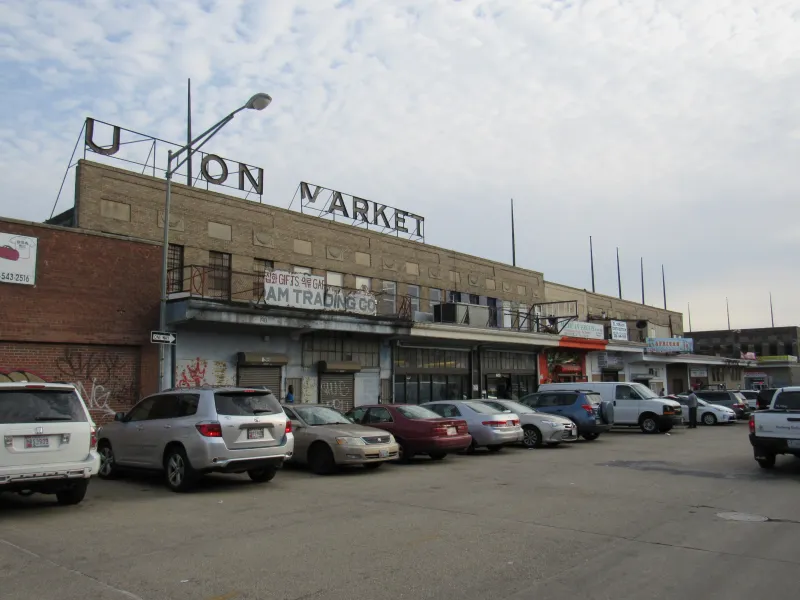
Union Market Food Guide
How to eat your way through Union Market in NoMa, Washington — the city's original modern food hall in a converted warehouse, what to order, when to go to dodge the weekend crush, the murals and rooftops nearby, and how to combine it with Union Station and the rest of NoMa.
Read guide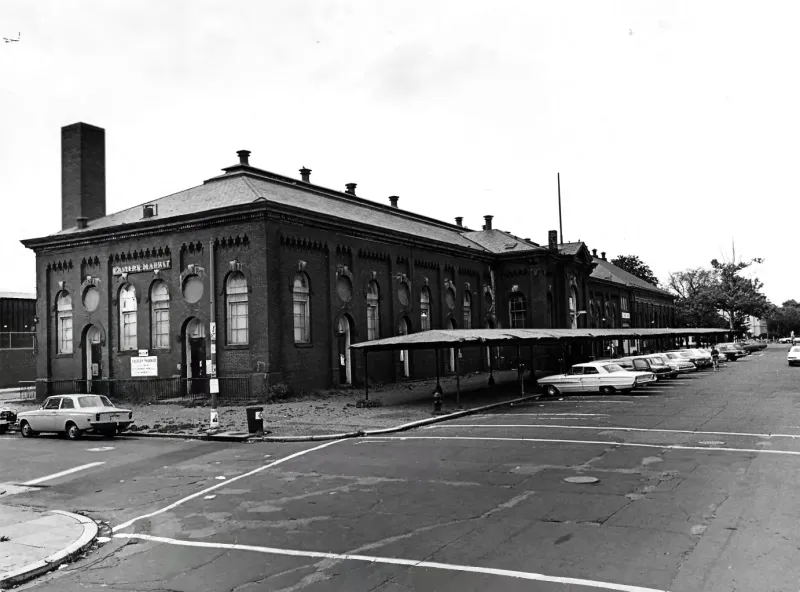
Eastern Market Food Guide
How to eat and browse Eastern Market on Capitol Hill — Washington's oldest continually operating public market, the indoor South Hall food merchants, the famous weekend pancakes, the outdoor farmers' and arts-and-crafts markets, and how to pair it all with a Capitol Hill day.
Read guide
Food & Drink in Washington, D.C.
The complete guide to eating and drinking in Washington, D.C. — the half-smoke and mumbo sauce, the Ethiopian restaurants of Shaw, Chesapeake crab, food halls and markets, rooftop bars with monument views, brunch, coffee and food tours, all sorted by neighbourhood and mood.
Read guideMore in Food & Drink
6
Adams Morgan & U Street Nightlife
How to have a great night out in Washington, D.C. — comparing the two big going-out districts, Adams Morgan and the U Street / Shaw corridor: live music and jazz, cocktail bars and dives, rooftops, late-night food, and how to get home safely by Metro, bus and ride-hail.
Read guide
Best Brunch in Washington, D.C.
Where to brunch in Washington, D.C. — the best brunch neighbourhoods, how reservations and bottomless deals work, family-friendly picks and the smartest way to plan a slow weekend morning around the city's sights.
Read guide
Best Cocktail Bars in Washington, D.C.
Where to drink well in Washington, D.C. — the city's craft cocktail bars by mood and neighbourhood, from date-night rooms and grand hotel bars to speakeasy-style hideaways, with advice on reservations, timing and dressing the part.
Read guide
Best Coffee & Cafés in Washington, D.C.
A guide to coffee in Washington, D.C. — the local specialty roasters, the work-friendly cafés, the museum-adjacent stops near the Mall, and which neighbourhoods have the densest coffee clusters, plus how to find a good cup on a sightseeing day.
Read guide
Best Ethiopian Food in Washington, D.C.
Why Washington is one of America's great Ethiopian eating cities — where to find it in Shaw and on U Street, how to order injera and shared platters, the vegan fasting feast, and how to fit an Ethiopian dinner into a DC trip.
Read guide
Best Restaurants in Washington, D.C.
A traveller-ready guide to the best restaurants in Washington, D.C., sorted by neighbourhood, mood, budget, reservation need and sightseeing route — from the city's defining half-smoke and Ethiopian feasts to José Andrés's flagships and the rooms worth booking weeks ahead.
Read guide