
Georgetown, Washington, D.C.
Washington's prettiest and oldest neighbourhood — the cobbled streets and federal row houses of Georgetown, the C&O Canal towpath, the Potomac waterfront, the shopping spine of M Street and Wisconsin Avenue, and the honest trade-off of staying somewhere with no Metro of its own.

Photo: Sara Cottle / Unsplash
- ✓Georgetown predates the city around it — founded in 1751, decades before Washington existed — and keeps the cobbled streets and federal row houses to prove it.
- ✓It is the most charming and most romantic neighbourhood in the District: canal towpaths, brick alleys, a riverside boardwalk and bookshops, all away from the federal crowds.
- ✓The shopping is the best in the city, spread along M Street and up Wisconsin Avenue, from chain flagships to independent boutiques and the Georgetown Park area.
- ✓The catch is transit: Georgetown has no Metro station of its own — reach it by Metrobus, rideshare, or a walk down from Foggy Bottom or Dupont.
- ✓Stay here for atmosphere, dining and walks rather than convenience to the Mall; verify hours, prices and seasonal waterfront activities before you plan around them.
The oldest, prettiest part of Washington
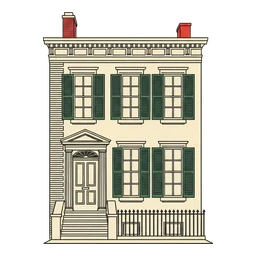
Georgetown is older than the capital it sits inside. Founded as a Maryland tobacco port in 1751 — four decades before the District of Columbia was laid out — it was a thriving river town long before Pierre L'Enfant ever drew a plan for Washington, and was only later absorbed into the city. That history shows in every block: the cobbled side streets, the tightly packed federal and Georgian row houses, the gas-lamp glow and the leafy gardens behind brick walls. It is, by common agreement, the most beautiful neighbourhood in the District, and the one that feels least like a federal capital and most like a place where people simply live.
For a visitor, Georgetown is the antidote to monument fatigue. After a few days of marble and museums, an afternoon here is a change of register entirely — a wander among shops and cafés, a walk along the water, a slow drink with no agenda. It works beautifully as a base if you value charm over convenience, and just as well as a half-day excursion from anywhere else in the city. Either way, it rewards aimless wandering more than a checklist.



The canal, the waterfront and the romantic walks
Georgetown's two best walks both follow water. The Chesapeake & Ohio Canal — the C&O — begins here and runs northwest for 184 miles, but you only need the first stretch: a leafy, level towpath that threads behind the shops past old lock-keepers' houses and brick warehouses, one of the loveliest and most unhurried walks in the city. It is free, shaded, and almost always quieter than the streets a block away. The canal is managed by the National Park Service, and seasonal features and any boat programmes change year to year, so check current status before planning around them.
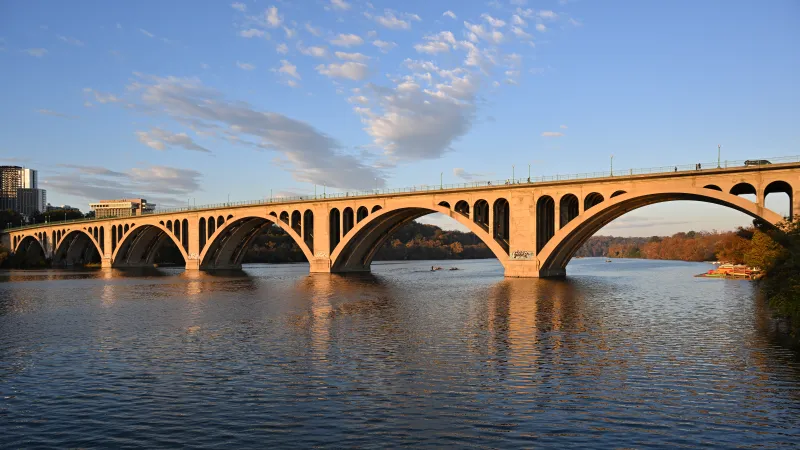
Down at the river, the Georgetown Waterfront Park gives you a boardwalk along the Potomac with the Key Bridge and the Virginia shore beyond, a fountain plaza that draws families in summer, and benches made for watching the rowers and the light on the water. At dusk it is one of the most romantic spots in Washington, and it connects by a riverside path toward the Kennedy Center and the monuments. Pair the canal and the waterfront into a single loop and you have an afternoon that has nothing to do with politics at all — exactly the point of Georgetown.
- The C&O Canal towpath — a flat, leafy, free walk behind the shops; managed by the National Park Service.
- Georgetown Waterfront Park — a Potomac boardwalk with the Key Bridge view and a summer fountain plaza.
- Wisconsin Avenue climbs north to quieter residential streets and the gardens of upper Georgetown.
- Dumbarton Oaks (a ticketed historic estate with famous gardens) sits up the hill for a calmer afternoon; verify hours and admission.

Shopping, dining and sweets
Georgetown is the city's premier shopping district, and the trade is concentrated along two streets that meet at its busiest corner: M Street, running east–west, and Wisconsin Avenue, climbing north from the river. Between them you'll find national flagships, well-known fashion names, independent boutiques and homeware shops, plus the indoor stretch around Georgetown Park. It is the rare DC neighbourhood where shopping is a genuine activity rather than an afterthought, and a rainy afternoon here passes easily under cover.
The food and drink are just as much of a draw. Georgetown's restaurants run from long-established institutions to of-the-moment newcomers, and the neighbourhood has a particular reputation for sweets and coffee — the cupcake shops that drew lines around the block, the bakeries, the ice-cream counters and the café terraces that make a M Street stroll dangerously easy on the wallet. Tables at the better-known restaurants book up, especially on weekends, so reserve ahead and check current menus and hours; the scene turns over quickly.
- M Street and Wisconsin Avenue — the city's densest run of shops, from flagships to independents.
- A standout sweets-and-coffee scene — cupcakes, bakeries, ice cream and café terraces along the spine.
- Restaurants from old-guard institutions to new openings; reserve ahead at weekends.
- Verify hours and book popular tables in advance — the dining scene changes fast.
The transit trade-off — and how to live with it
Here is the one thing every guide to Georgetown has to be honest about: it has no Metro station. When the original system was planned, the line ran elsewhere, and the neighbourhood was never given a stop of its own. That single fact shapes everything about staying or visiting here. You will not step off a train into Georgetown the way you do into Penn Quarter or Dupont; you'll arrive instead by Metrobus, by rideshare, or on foot.
The good news is that the walk is short and pleasant. From the Foggy Bottom–GWU Metro station (Blue, Orange and Silver lines) it is roughly a fifteen-minute stroll down to the heart of M Street; from Dupont Circle it is a slightly longer but agreeable walk down through residential streets. Metrobus serves Georgetown heavily, with frequent routes linking it to Union Station, Dupont and Rosslyn. If you base yourself here, factor that first and last leg into every plan — and consider whether you'd rather stay somewhere with a station and visit Georgetown as a day out instead. Verify current bus routes, which are subject to change.
- No Metro station in Georgetown — the defining practical fact of the neighbourhood.
- Walk in from Foggy Bottom–GWU Metro (roughly 15 minutes) or down from Dupont Circle.
- Metrobus serves Georgetown well; verify current routes before relying on them.
- Rideshare and taxis are easy but can be slow on busy M Street evenings and weekends.

Staying in Georgetown: the verdict
Georgetown makes the most sense as a base for travellers who are not in a rush to tick off monuments — couples on a romantic trip, repeat visitors who have already done the Mall, or anyone who values a beautiful, walkable, restaurant-rich neighbourhood over proximity to a train. The hotels here range from grand historic properties to intimate boutiques, several with river views, and the atmosphere after dark — quieter and more residential than downtown — is part of the appeal. It is the kind of place where the evening walk home is as good as the dinner.
If your priority instead is to see as much as possible in two or three days, be honest with yourself about the transit: the daily walk or bus to a Metro station adds up. Many visitors get the best of both worlds by staying in a connected neighbourhood like Penn Quarter, Dupont or the Mall edge, and giving Georgetown a full unhurried afternoon and evening as a highlight of the trip. However you fit it in, no visit to Washington feels complete without an hour on the towpath and a wander up the cobbled hill. Verify hotel prices for your dates, which, like everywhere in DC, move with the season and the events calendar.
- Best for: couples, repeat visitors, slow travellers and anyone who prizes charm and walks over Metro access.
- Less ideal for: tight first-time itineraries built around the Mall and the museums.
- A common compromise: stay near a Metro station and spend a long afternoon and evening in Georgetown.
- Verify hotel rates for your specific dates and book popular restaurant tables ahead.

Georgetown at a glance
Georgetown is the neighbourhood you choose for beauty and atmosphere, accepting the transit trade-off in exchange — or the half-day excursion you should not skip even if you base yourself elsewhere. Either way, an hour on the towpath and a wander up the cobbled hill belong on every Washington trip. The quick reference below sums up the practical case; verify hours, prices and any seasonal waterfront features close to your visit.
- Best for: couples, repeat visitors and slow travellers who prize charm, dining and walks over Metro access.
- The catch: no Metro station — arrive by Metrobus, rideshare, or a walk from Foggy Bottom or Dupont.
- Headline draws: the C&O Canal towpath, the Potomac waterfront, M Street and Wisconsin Avenue shopping.
- Character: cobbled, historic and residential — the District's oldest and prettiest neighbourhood, founded 1751.
- Romantic notes: the waterfront at dusk and the leafy towpath are among the city's loveliest walks for two.
- Verify before you go: restaurant reservations, shop and museum hours, and hotel rates for your dates.
Related guides
Georgetown Restaurants Guide
Where to eat in Georgetown, Washington — waterfront dining at Georgetown Harbour, candlelit date-night restaurants on the historic side streets, cafés and bakeries for a shopping break, student-friendly eats, and how to handle reservations and the no-Metro logistics.
Read guide
Romantic Walks in Washington, D.C.
The best walks for two in Washington, D.C. — the Georgetown C&O Canal towpath and waterfront, the Tidal Basin loop, the monuments by night, Dupont Circle and Embassy Row, and the riverfront trails — with distances, timing, terrain and the quiet hours to walk them.
Read guide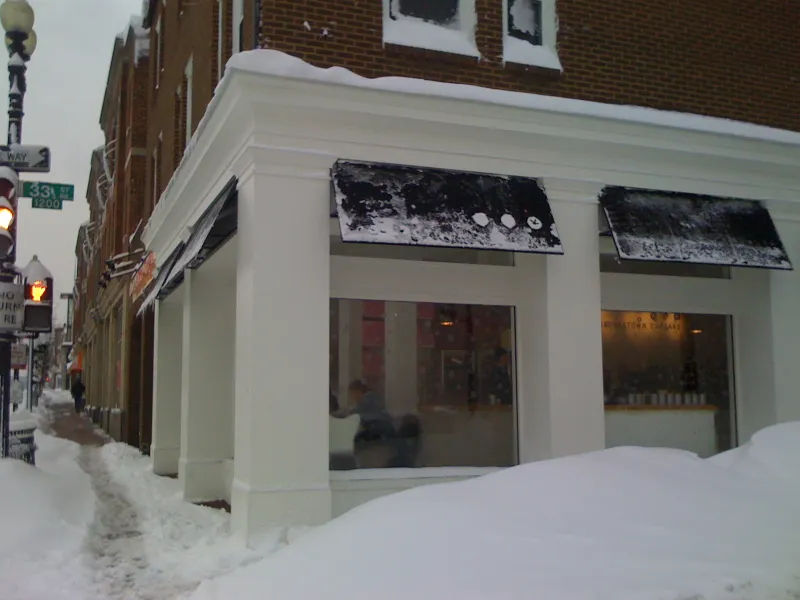
Georgetown Sweets, Bakeries & Coffee
A dessert-and-coffee walk through Georgetown — the famous cupcake shops, the historic bakeries, the specialty cafés and the waterfront sugar stops, plus how to time the queues and pair sweets with a canal stroll.
Read guideMore in Washington, D.C. Neighbourhoods Guide
6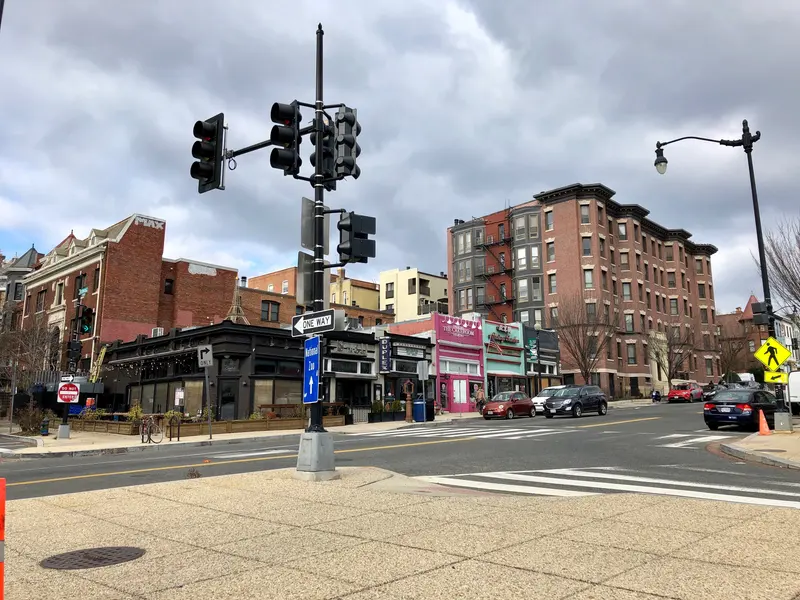
Adams Morgan Guide
How to enjoy Adams Morgan in Washington — the city's most diverse, nightlife-heavy neighbourhood: the 18th Street bar strip, global and late-night food, big weekend brunches, murals and rowhouses, boutique stays, and when it's the right base for visitors.
Read guide
Capitol Hill, Washington, D.C.
The neighbourhood behind the dome — Capitol Hill's pastel rowhouses, the U.S. Capitol and Library of Congress, the weekend bustle of Eastern Market, the Barracks Row restaurants and the family-friendly, residential character that makes it one of the best bases in the city.
Read guide
Downtown & Penn Quarter, Washington, D.C.
The most central place to stay in Washington — Penn Quarter and the surrounding downtown, where the free museums, the big theatres, the arena, the restaurants and four Metro lines all sit within a few walkable blocks of the National Mall.
Read guide
Dupont Circle, Washington, D.C.
Washington's most characterful and convenient base for visitors who want a real neighbourhood — Embassy Row, the Phillips Collection, the bookshops and cafés around the fountain, the city's historic LGBTQ+ heart, and a Metro-connected nightlife that doesn't depend on the Mall.
Read guide
Foggy Bottom Guide
How to use Foggy Bottom as a Washington base — the Kennedy Center, George Washington University, the Potomac riverfront, walkable access to the White House and west end of the Mall, hotels and the Metro logic of staying just west of the federal core.
Read guide
Logan Circle & 14th Street, Washington, D.C.
One of Washington's liveliest evenings out — the restored Victorian townhouses of Logan Circle and the restaurant, bar, boutique and theatre corridor of 14th Street, with the honest trade-offs of staying in a buzzing nightlife district just north of downtown.
Read guide