
Downtown & Penn Quarter, Washington, D.C.
The most central place to stay in Washington — Penn Quarter and the surrounding downtown, where the free museums, the big theatres, the arena, the restaurants and four Metro lines all sit within a few walkable blocks of the National Mall.

Photo: Sonder Bridge Photography / Unsplash
- ✓Penn Quarter is the most walkable base in the city — the National Mall, the Smithsonian museums, the National Archives and a dozen restaurants are all within ten or fifteen minutes on foot.
- ✓Four Metro lines (Red, Yellow, Green and the Blue/Orange/Silver trio nearby) converge here at Gallery Place and Metro Center, the best-connected transit knot in Washington.
- ✓It is the city's theatre and big-event district — Capital One Arena, Ford's Theatre, the Shakespeare Theatre Company and the Warner all sit within a few blocks.
- ✓The free National Portrait Gallery and Smithsonian American Art Museum share one landmark building here, with one of DC's loveliest covered courtyards inside.
- ✓It is busy and central rather than quaint — choose it for convenience and energy, not for cobblestones; verify hotel rates, which swing hard with conventions and events.
Why stay in Penn Quarter
If Washington has a true downtown, this is it. Penn Quarter and the blocks around it — sometimes lumped together as Downtown, the East End, or the old Chinatown — form the dense, walkable centre of the city, wedged between the White House to the west, the Capitol to the east and the National Mall a few blocks south. For a first-time visitor weighing where to book, the case for this neighbourhood is simple: nowhere else puts the monuments, the museums and a real restaurant-and-theatre scene within such an easy walk of one another.
This is not the prettiest part of Washington — you will not find Georgetown's cobbles or Capitol Hill's pastel rowhouses here. What you get instead is convenience at a level the rest of the city can't match, plus an evening life that keeps going after the federal workday ends. By day you can be at the Smithsonian in minutes; by night you are surrounded by theatres, sports crowds, rooftop bars and some of the city's best-known restaurants. For travellers who want to do a lot in a short time and rely on their own two feet, Penn Quarter is the most efficient base in the District.



Getting around: the best-connected corner of the city
The single biggest reason to base yourself here is transit. Two of Washington's busiest interchanges sit inside the neighbourhood: Metro Center, where the Red, Orange, Blue and Silver lines meet, and Gallery Place–Chinatown, where the Red, Yellow and Green lines cross. Between them you can reach almost anywhere in the system — the airports, the upper-northwest neighbourhoods, the suburbs — without a transfer that takes you out of your way. A single SmarTrip card covers rail and bus, and most of what a tourist wants is a short ride or a flat walk.
On foot, the geography works in your favour too. The National Mall begins only a few blocks south, so the Smithsonian museums, the Washington Monument and the long lawn toward the Capitol are all genuinely walkable. The White House and its visitor center lie a short stroll west. That walkability is the quiet luxury of the neighbourhood: you can leave the hotel in the morning, see two museums and a monument, come back to change, and be out at dinner and a show, all without ever waiting for a cab.
- Metro Center — Red, Orange, Blue and Silver lines; the system's central interchange.
- Gallery Place–Chinatown — Red, Yellow and Green lines, beside Capital One Arena.
- National Mall and the Smithsonian museums — a few blocks south on foot.
- Reagan National (DCA) airport — a direct, easy Metro ride; verify current service.

Museums and history within a few blocks
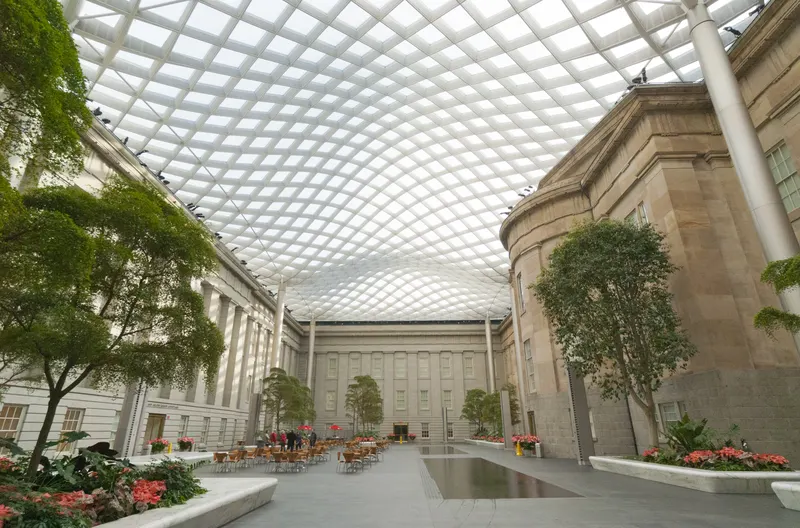
Penn Quarter quietly holds some of the best museums in a city full of them — and crucially, several are away from the Mall crowds. The Donald W. Reynolds Center, a grand Greek Revival building that once housed the U.S. Patent Office, is shared by two free Smithsonian museums: the National Portrait Gallery and the Smithsonian American Art Museum. At its heart is the Robert and Arlene Kogod Courtyard, a glass-canopied indoor square that is one of the most peaceful places to sit in central Washington — a free, climate-controlled refuge in summer heat or winter cold.
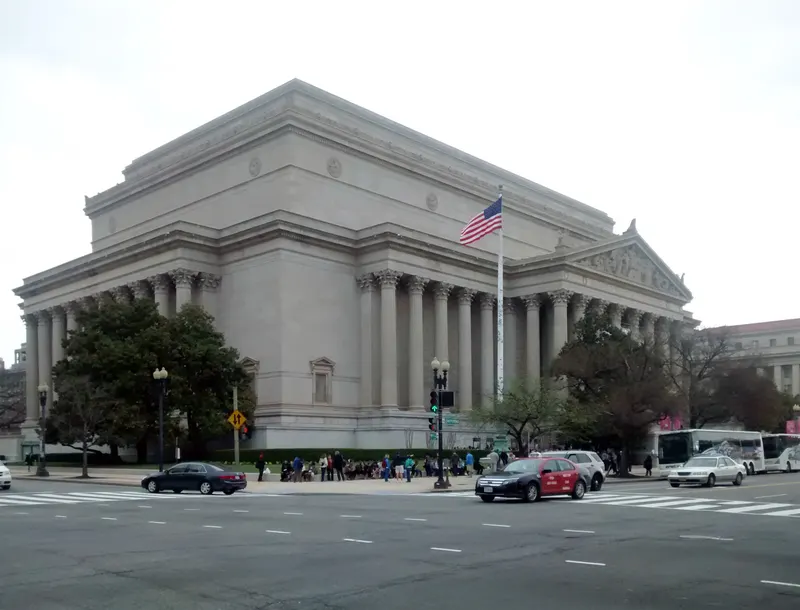
A few blocks away, the National Archives displays the founding documents of the United States — the Declaration of Independence, the Constitution and the Bill of Rights — in its rotunda. Ford's Theatre, where President Lincoln was assassinated in 1865, still operates as a working playhouse and a National Park Service site, with the preserved theatre and the Petersen House across the street where Lincoln died. For a different register, the International Spy Museum (a paid, privately run museum near the Wharf area) and several smaller galleries round out the district's history-heavy character. Smithsonian sites are free; independent museums charge admission and some use timed entry, so verify hours and tickets before you go.
- National Portrait Gallery & Smithsonian American Art Museum — two free museums in one landmark, with the glass-roofed Kogod Courtyard inside.
- National Archives — the Declaration, Constitution and Bill of Rights in the rotunda.
- Ford's Theatre & the Petersen House — the Lincoln assassination site, still a working theatre.
- The neighbourhood's old Chinatown gate (the Friendship Archway) marks the historic heart of the area at H and 7th Streets.
Theatres, the arena and the evening scene
After dark, Penn Quarter is one of the few parts of central Washington that genuinely buzzes. Capital One Arena anchors it: home to the NHL's Capitals and the NBA's Wizards, plus a steady run of concerts and events, the arena empties thousands of people onto the surrounding streets on game nights, and the bars and restaurants are built around that rhythm. If you are staying nearby, check the events calendar — an arena night fills the neighbourhood with energy but also pushes up hotel demand and noise.
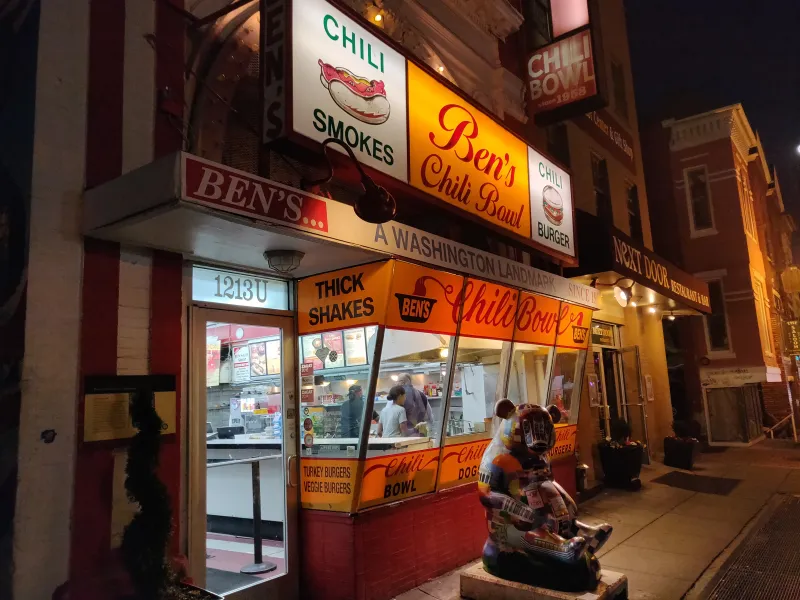
The theatre scene is just as strong. The Shakespeare Theatre Company, the historic Warner Theatre, the National Theatre and Ford's Theatre all sit within walking distance, making this the most concentrated stretch of stages in the city outside the Kennedy Center. Add a dense layer of restaurants — from the long-running Jaleo and other big-name spots to rooftop bars with monument glimpses — and you have a base where dinner and a show require nothing more than a short walk. Programmes, schedules and prices change constantly, so check each venue's current listings.
- Capital One Arena — Capitals (NHL), Wizards (NBA), concerts and events; check the calendar before you book.
- Shakespeare Theatre Company, Warner Theatre, National Theatre and Ford's Theatre — all within walking distance.
- Restaurants from the National Mall edge to Chinatown — a deep, walkable dinner scene.
- Rooftop bars downtown, several with a glimpse of the Washington Monument; verify which are open seasonally.
Practical planning and the honest trade-offs
The trade-offs of Penn Quarter follow directly from what makes it good. It is central, busy and commercial — closer to a big-city downtown than to a charming village — so if your idea of a perfect trip is leafy streets and quiet mornings, Georgetown, Capitol Hill or Dupont Circle will suit you better. Many of the office blocks empty out at weekends, and a few corners feel quieter than the weeknight crowds suggest. But for sheer access to everything a first visit wants to do, nothing beats it.
On cost and timing: this is a convention and business district, so hotel rates swing widely with the events calendar — an arena concert or a big conference can double a nightly rate, while a quiet weekend can be a bargain. Always check current prices for your exact dates rather than trusting a seasonal average. The neighbourhood is well served by hotels at every level, from full-service convention properties to boutique stays, and almost all are within a flat walk of a Metro station. Get the dates right and Penn Quarter gives you the most city for your time of anywhere in Washington.
- Best for: first-time visitors, walkers, theatre and sports fans, and anyone who wants maximum access in minimum time.
- Less ideal for: travellers seeking quiet, cobbled charm or a residential feel — try Georgetown or Capitol Hill instead.
- Cost note: rates move sharply with conventions and arena events — verify prices for your specific dates.
- Transit: among the best-connected neighbourhoods in DC, with two major Metro interchanges.

Penn Quarter at a glance
If you are weighing where to base a short, busy trip and walkability is your priority, this is the shortlist's likely winner. Penn Quarter trades quaintness for the best access in the city — to the museums, the monuments, the theatres and the trains — and for a first visit that's usually the right trade. The quick reference below summarises the case; verify anything time-sensitive, such as the arena calendar and hotel rates, close to your dates.
- Best for: first-time visitors, walkers, theatre and sports fans, and tight, do-a-lot itineraries.
- Metro: Metro Center (Red/Orange/Blue/Silver) and Gallery Place–Chinatown (Red/Yellow/Green) — the system's hub.
- Headline sights: the National Portrait Gallery, the National Archives, Ford's Theatre, Capital One Arena.
- Character: dense, central, commercial and lively after dark — a true downtown, not a village.
- Walk to: the National Mall and Smithsonian museums (a few blocks south) and the White House (west).
- Verify before you go: arena and theatre schedules, museum hours, and hotel rates, which swing with events.
Related guides
Portrait Gallery & American Art Museum Guide
How to visit the National Portrait Gallery and the Smithsonian American Art Museum in Washington — the presidential portraits, the glass-roofed Kogod Courtyard, the late-afternoon hours that suit a Penn Quarter dinner, and why this pair is one of DC's most romantic museum stops.
Read guide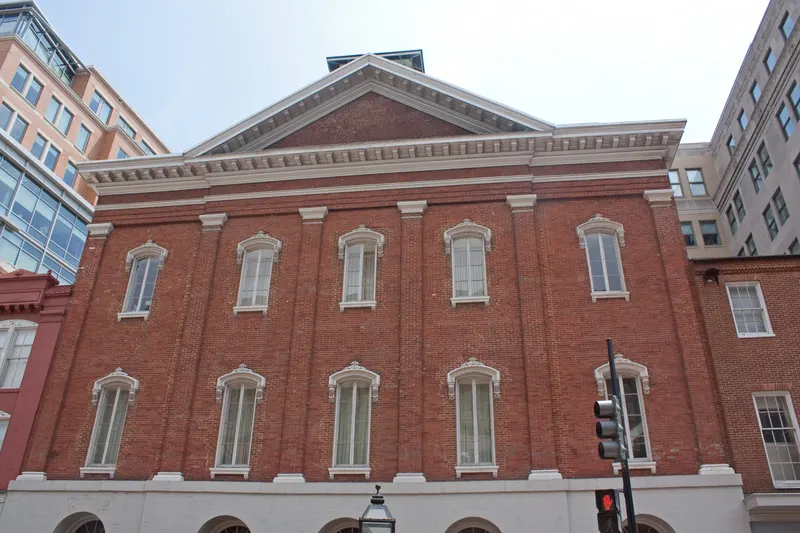
Ford's Theatre Guide
How to visit Ford's Theatre in downtown Washington — the site of Lincoln's assassination — with the timed tickets, the museum, the theatre and Presidential Box, the Petersen House across the street, and how it fits a downtown DC day.
Read guide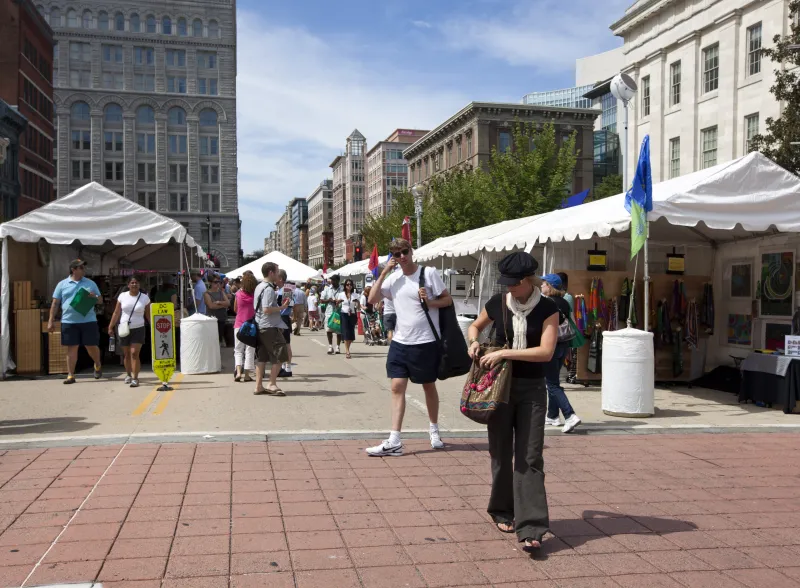
Penn Quarter Restaurants Guide
Where to eat in Penn Quarter and downtown Washington — the city's most central, sightseeing-friendly dining district near the Portrait Gallery, Ford's Theatre, the arena and the National Mall: pre-show and pre-game strategy, fine dining, casual bites, Chinatown and reservation advice.
Read guideMore in Washington, D.C. Neighbourhoods Guide
6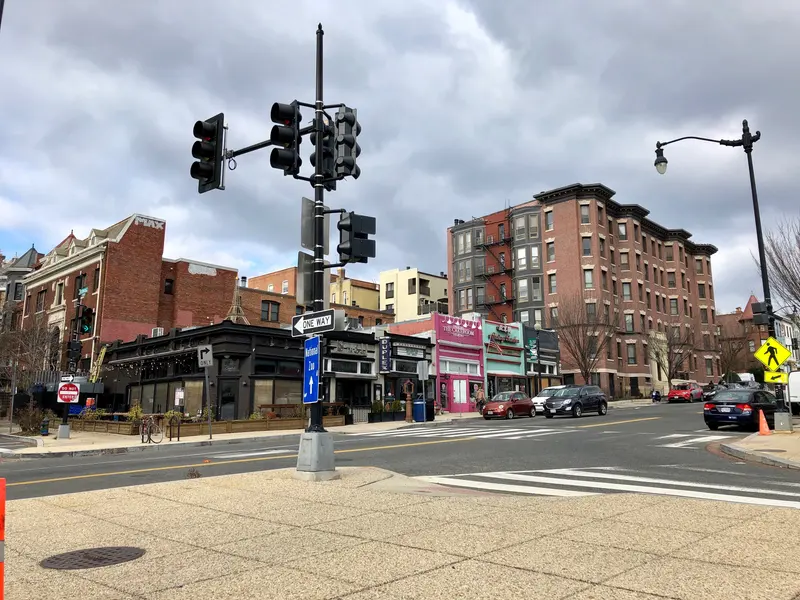
Adams Morgan Guide
How to enjoy Adams Morgan in Washington — the city's most diverse, nightlife-heavy neighbourhood: the 18th Street bar strip, global and late-night food, big weekend brunches, murals and rowhouses, boutique stays, and when it's the right base for visitors.
Read guide
Capitol Hill, Washington, D.C.
The neighbourhood behind the dome — Capitol Hill's pastel rowhouses, the U.S. Capitol and Library of Congress, the weekend bustle of Eastern Market, the Barracks Row restaurants and the family-friendly, residential character that makes it one of the best bases in the city.
Read guide
Dupont Circle, Washington, D.C.
Washington's most characterful and convenient base for visitors who want a real neighbourhood — Embassy Row, the Phillips Collection, the bookshops and cafés around the fountain, the city's historic LGBTQ+ heart, and a Metro-connected nightlife that doesn't depend on the Mall.
Read guide
Foggy Bottom Guide
How to use Foggy Bottom as a Washington base — the Kennedy Center, George Washington University, the Potomac riverfront, walkable access to the White House and west end of the Mall, hotels and the Metro logic of staying just west of the federal core.
Read guide
Georgetown, Washington, D.C.
Washington's prettiest and oldest neighbourhood — the cobbled streets and federal row houses of Georgetown, the C&O Canal towpath, the Potomac waterfront, the shopping spine of M Street and Wisconsin Avenue, and the honest trade-off of staying somewhere with no Metro of its own.
Read guide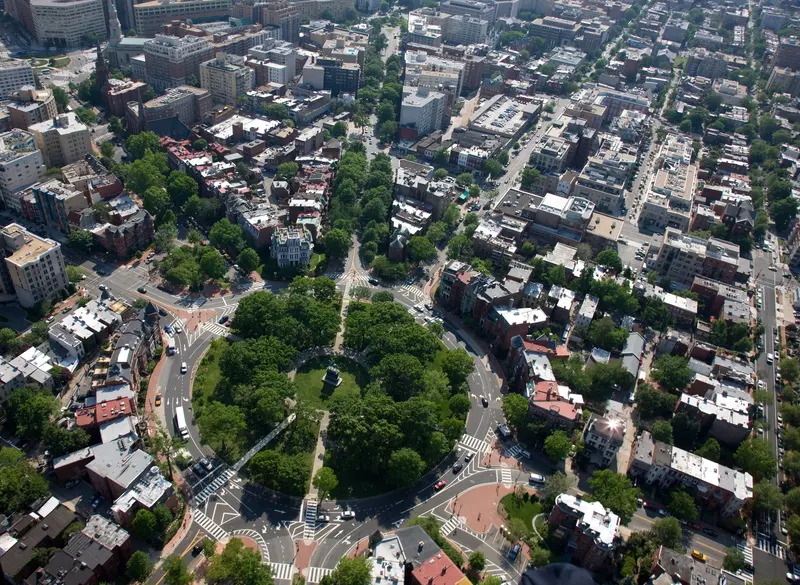
Logan Circle & 14th Street, Washington, D.C.
One of Washington's liveliest evenings out — the restored Victorian townhouses of Logan Circle and the restaurant, bar, boutique and theatre corridor of 14th Street, with the honest trade-offs of staying in a buzzing nightlife district just north of downtown.
Read guide