
Supreme Court Visitor Guide
How to visit the U.S. Supreme Court — when the building is open to the public, hearing arguments, the courtroom lectures, the ground-floor exhibits, security, and the easy Capitol Hill walk that links it to the Capitol and the Library of Congress.
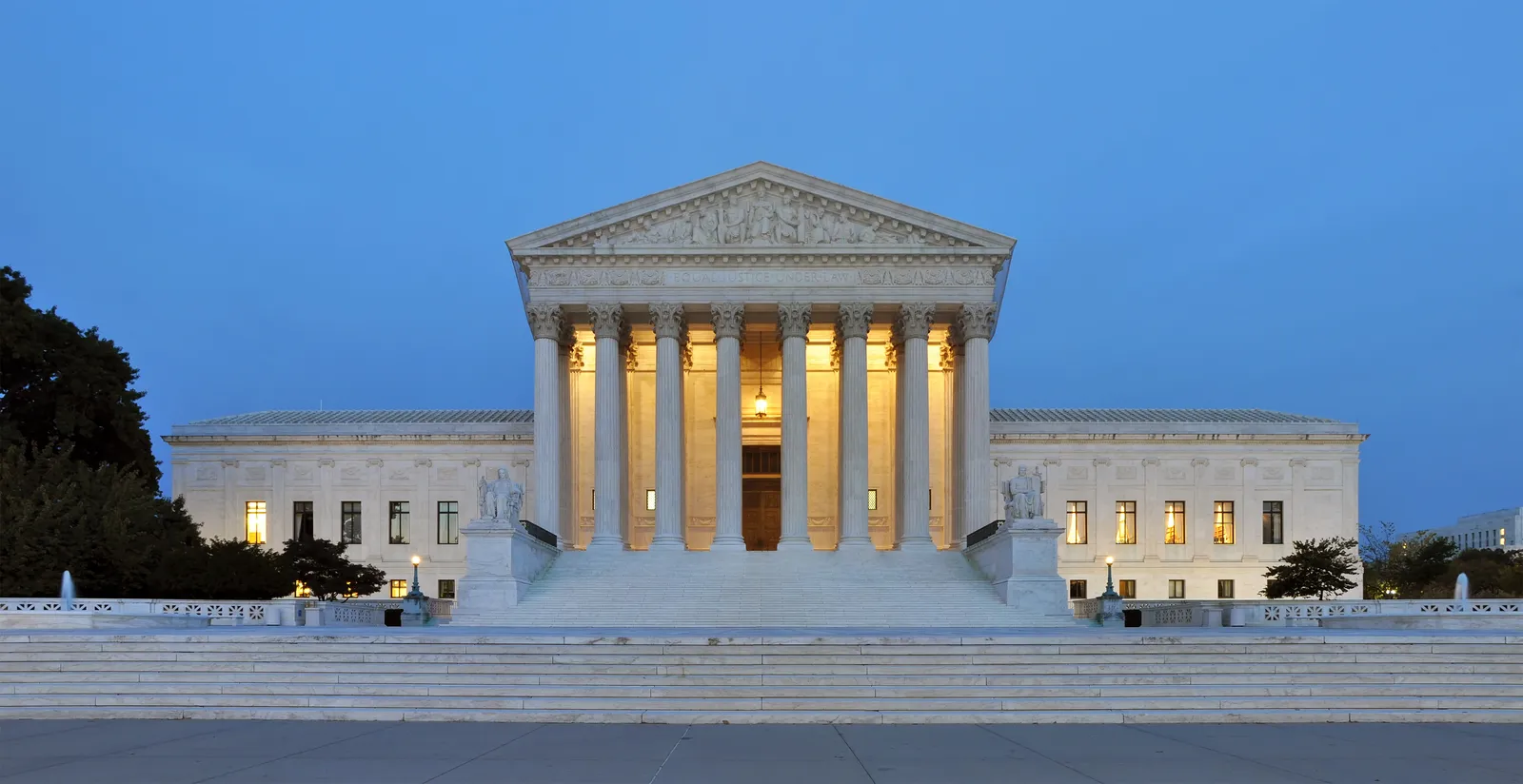
Photo: Joe Ravi / Wikimedia Commons · CC BY-SA 3.0
- ✓The Supreme Court Building is open to the public on weekdays and is free to enter — no ticket and no reservation needed for the public areas.
- ✓When the Court is hearing arguments, a limited number of seats are open to the public on a first-come, first-served basis — and the line can form very early.
- ✓On non-argument days, the Court offers free courtroom lectures and you can explore the exhibits, the great marble halls and the famous spiral staircases.
- ✓The west front's 'Equal Justice Under Law' inscription and the broad steps are one of the most photographed civic facades in the country.
- ✓It sits directly across from the U.S. Capitol and next to the Library of Congress, so all three of Capitol Hill's great institutions are within a short, flat walk.
The third branch, in marble
The Supreme Court Building completes Capitol Hill's trio of great institutions: the Capitol for the legislature, the Library of Congress, and, across First Street, the gleaming white temple of the judiciary. It is a relatively young building for so old an institution — the Court only got its own home in the 1930s, having sat inside the Capitol for well over a century before that — and the architect gave it the full classical treatment to match its neighbours: a Corinthian portico, a broad sweep of steps, and the carved promise 'Equal Justice Under Law' across the pediment.
For visitors, the building rewards both the quick photograph and the longer stop. From outside it is one of the cleanest civic facades in Washington, especially when the marble catches low sun. Inside, it is genuinely open to the public on weekdays and free, with grand halls, exhibits on the Court's history, and — depending on the day — the chance either to watch the Court in session or to sit in the empty courtroom for a lecture on how it works.

When you can go in
The building is generally open to the public on weekdays and closed at weekends and on federal holidays — verify the current days and hours on the Court's official site before you plan around it, as the schedule shifts with the Court's calendar. Entry to the public areas is free and needs no ticket or reservation. You simply arrive, clear security, and walk in.
What you can do inside depends heavily on whether the Court is sitting. The Court hears oral arguments only on certain days during its term, which runs from autumn into the following summer; on those days the building has a very different rhythm, with the public line for courtroom seats and far more activity. On the many days when the Court is not hearing arguments, the courtroom is open for short lectures and the building is calmer and easier to explore at your own pace. Checking the argument calendar in advance tells you which kind of visit you're in for.
- Open to the public on weekdays; closed weekends and federal holidays — verify current hours.
- Free entry to the public areas, no ticket or reservation required.
- The experience differs greatly on argument days versus non-argument days.
- The term runs roughly autumn to early summer; check the argument calendar before you go.
Watching an argument
On days the Court hears oral arguments, a limited number of seats are made available to the public, free, on a first-come, first-served basis. There is no ticket to buy and no reservation — the only currency is patience. Two lines typically form: one for visitors who want to watch an entire argument, and a separate 'three-minute line' for those content to rotate through and observe briefly. Demand for high-profile cases is intense, and people queue outside, sometimes for hours and occasionally overnight, so this is a dawn commitment, not a casual drop-in.
Inside the courtroom the rules are strict and the atmosphere formal: no photography, no electronics, and a dress-respectfully expectation. Arguments are a remarkable thing to witness — the give-and-take between the justices and the advocates is sharp and fast — but the unpredictability of the line means you should treat catching one as a bonus rather than the backbone of your plan. Check the argument calendar, decide whether a specific case is worth an early start, and have the lecture-and-exhibits visit as your reliable fallback.
- Public seating on argument days is free, first-come, first-served — no tickets.
- Expect a 'full argument' line and a shorter 'three-minute' rotation line.
- High-profile cases draw very long, very early queues; plan to arrive at dawn or before.
- No photography or electronics in the courtroom, and dress respectfully.
- Treat catching an argument as a bonus, with the non-argument visit as your dependable plan.
Lectures, exhibits and the building itself
On non-argument days the building turns into one of Washington's most rewarding free stops. The Court offers regular courtroom lectures: you sit in the actual chamber, beneath the carved friezes and the red drapery, while a staff member explains the Court's history, its procedures and the room around you. It is the closest most visitors get to understanding how the institution works, and it costs nothing.
Beyond the courtroom, the ground floor holds exhibits on the history of the Court and its justices, portrait busts of former chief justices, and a film about the institution. Don't miss the building's two self-supporting marble spiral staircases — elegant feats of engineering that are among the architectural highlights of the whole structure. The Great Hall, lined with its columns and busts, is a photograph in itself. Together the lectures and exhibits make for a substantial visit of an hour or more, with no queue and no ticket.
- Free courtroom lectures run on non-argument days — sit in the chamber and learn how the Court works.
- Ground-floor exhibits cover the Court's history, its justices and its landmark cases, plus a short film.
- Seek out the two self-supporting marble spiral staircases and the columned Great Hall.
- Allow an hour or more for the lecture and exhibits on a quiet, non-argument day.
Security and practicalities
The Supreme Court is screened like the federal building it is: you pass through security with metal detectors and bag X-ray on the way in, so travel light and allow time for the line. The public entrance and the screening arrangements can change, and there are restrictions on what you can bring inside — particularly into the courtroom, where electronics and cameras are not permitted — so check the current rules on the Court's site before you arrive.
Photography is fine outside and in much of the building, but not in the courtroom itself. There is a cafeteria and a gift shop on the lower level, useful on a long Capitol Hill day. As with everything in the federal core, schedules and access can shift for events, holidays and security, so the official visiting page is the source of truth for the day you actually go.
- Airport-style security on entry — pack light and allow time for the line.
- No photography or electronics inside the courtroom; photos are fine outside and in public halls.
- A cafeteria and gift shop sit on the lower level for a break on a long day.
- Hours, the public entrance and prohibited items can change — verify on the official site.
The facade, the steps and the best photographs
Even if you never go inside, the Supreme Court is one of Washington's most satisfying buildings to photograph, and it's worth a few minutes on the plaza out front. The west facade is the famous one: sixteen marble columns, the great bronze doors, and the sculpted pediment above carrying the motto 'Equal Justice Under Law' — three words that have become shorthand for the institution itself. Flanking the steps are two seated marble figures, the Contemplation of Justice and the Authority of Law, that reward a closer look.
Light makes the difference here. The white marble takes a warm glow in the late afternoon and at sunset, and because the building faces the Capitol across the street, you can frame the columns cleanly against open sky. Mornings are quieter for an unobstructed shot of the steps. The broad plaza in front is public and free to linger on, so even on a day you can't or don't go in, the exterior alone earns its place on a Capitol Hill walk.
- The west front — columns, bronze doors and the 'Equal Justice Under Law' pediment — is the classic shot.
- Look for the two seated marble figures flanking the steps: Contemplation of Justice and Authority of Law.
- Late-afternoon and sunset light warms the marble; mornings give the cleanest, quietest steps.
- The plaza out front is public and free, so the exterior is worth a stop on its own.
The Capitol Hill walk
The Supreme Court's greatest practical virtue is its position. It stands on First Street directly across from the east front of the U.S. Capitol, and immediately beside the Library of Congress's Jefferson Building. That means the three institutions that anchor American government — legislature, judiciary and the national library — are all within a couple of minutes' flat walk of one another, with the leafy Capitol grounds tying them together.
The sensible plan is to treat the Hill as a single morning or afternoon. Pair the Court with the Library of Congress, whose ornate Jefferson Building is connected to the Capitol Visitor Center by tunnel, and if you've arranged a Capitol tour in advance, the three slot together into one of the richest free half-days in the city. Save the Court for a non-argument day if you want the calm version, or build the morning around an argument line if a particular case draws you.
Common questions
Can you visit the Supreme Court? Yes. The building is open to the public on weekdays and is free to enter, with no ticket or reservation needed for the public areas.
Do you need tickets? No. There are no tickets. Public seating on argument days is free and first-come, first-served; the rest of the building is simply walk-in.
Can I watch a Supreme Court argument? Yes, on argument days, via a free first-come line — but seats are limited and queues for big cases can start very early or overnight. Check the argument calendar first.
What is there to do on a non-argument day? Free courtroom lectures, exhibits on the Court's history, the marble Great Hall and the famous spiral staircases — an hour or more without any queue.
Is it close to the Capitol? Yes — it stands directly across from the Capitol and next to the Library of Congress, so all three are an easy walk apart.
Are the hours reliable? They change with the Court's calendar and for holidays; always verify the current days and hours on the official visiting page before you go.

Related guides

U.S. Capitol Tour Guide
How to tour the United States Capitol — booking a free pass through the Capitol Visitor Center or your member of Congress, what the guided tour covers (the Rotunda, the old Hall, the Crypt), how to clear security, and how to add the Library of Congress and a House or Senate gallery visit.
Read guide
Library of Congress Guide
How to visit the Library of Congress — the free timed-entry passes for the magnificent Thomas Jefferson Building, the Great Hall and Main Reading Room views, the Gutenberg Bible and Jefferson's library, and the easy Capitol Hill walk that links it to the Capitol and the Supreme Court.
Read guide
Capitol Hill, Washington, D.C.
The neighbourhood behind the dome — Capitol Hill's pastel rowhouses, the U.S. Capitol and Library of Congress, the weekend bustle of Eastern Market, the Barracks Row restaurants and the family-friendly, residential character that makes it one of the best bases in the city.
Read guideMore in Things to Do
6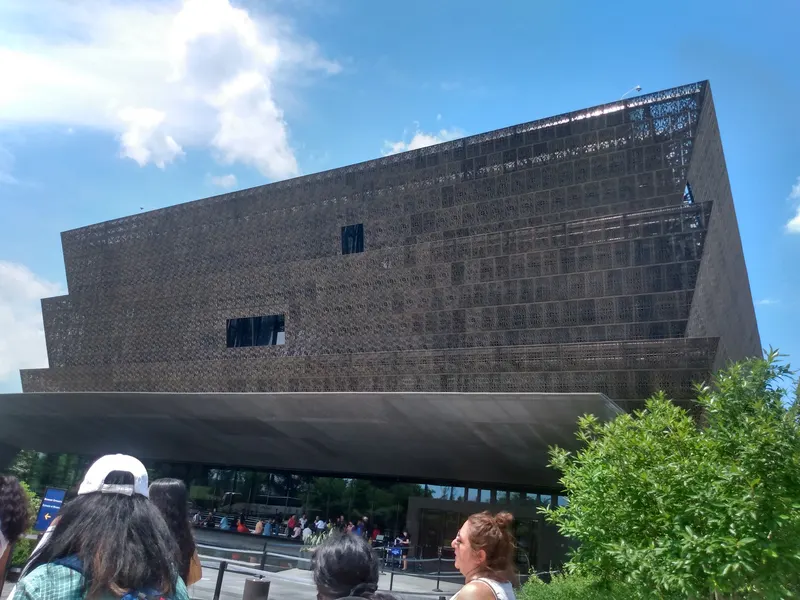
African American History Museum Guide
How to visit the National Museum of African American History & Culture on the Mall — the free timed-entry passes and how to get one, the deep underground history galleries, Sweet Home Café, the lines, how to pace an emotionally heavy visit, and the walk along the Mall.
Read guide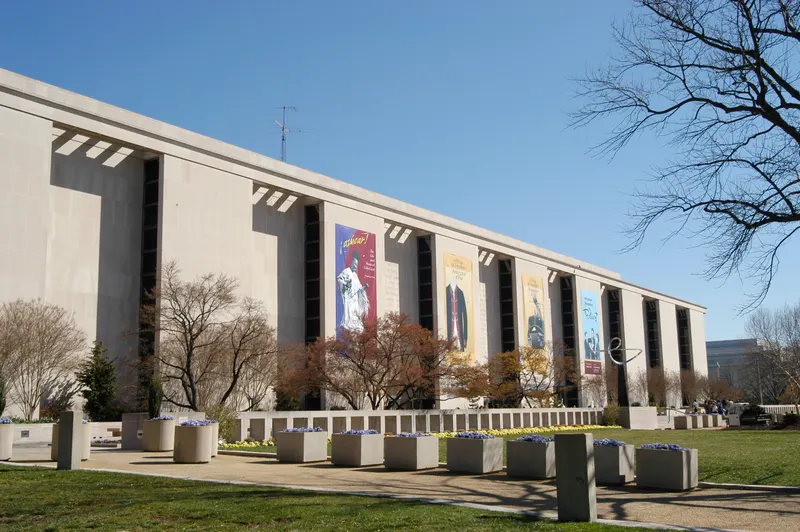
American History Museum Guide
How to visit the National Museum of American History on the Mall — the original Star-Spangled Banner, the First Ladies' gowns, the American presidency, the pop-culture icons, the food-court logistics, and how to time a visit around the school groups.
Read guide
Best Museums in Washington, D.C.
Washington has more world-class museums than any sane trip can hold, and almost all of them are free. This is a guide to the best museums in DC sorted by topic, age, ticket needs, location and rainy-day value — so you can choose two or three with confidence instead of trying to see them all.
Read guide
Best Photography Spots in Washington, D.C.
Where to make great photographs in Washington — the monument reflections, the Tidal Basin blossoms, the Capitol and Lincoln axis, Georgetown's waterfront, hidden rooftops and the golden-hour and blue-hour routes that tie them together.
Read guide
Best Things to Do in Washington, D.C.
A ranked first-trip shortlist of the best things to do in Washington, D.C. — from the National Mall and the free Smithsonian museums to a Capitol tour, the Tidal Basin and Georgetown — built so you can pick a handful and still feel you saw the city.
Read guide
Best Viewpoints in Washington, D.C.
Where to find the best views in Washington — the high monuments and free towers, the rooftop bars and cultural terraces, and the river and hilltop overlooks across the Potomac, ranked by how much effort each one asks.
Read guide