
Ford's Theatre Guide
How to visit Ford's Theatre in downtown Washington — the site of Lincoln's assassination — with the timed tickets, the museum, the theatre and Presidential Box, the Petersen House across the street, and how it fits a downtown DC day.
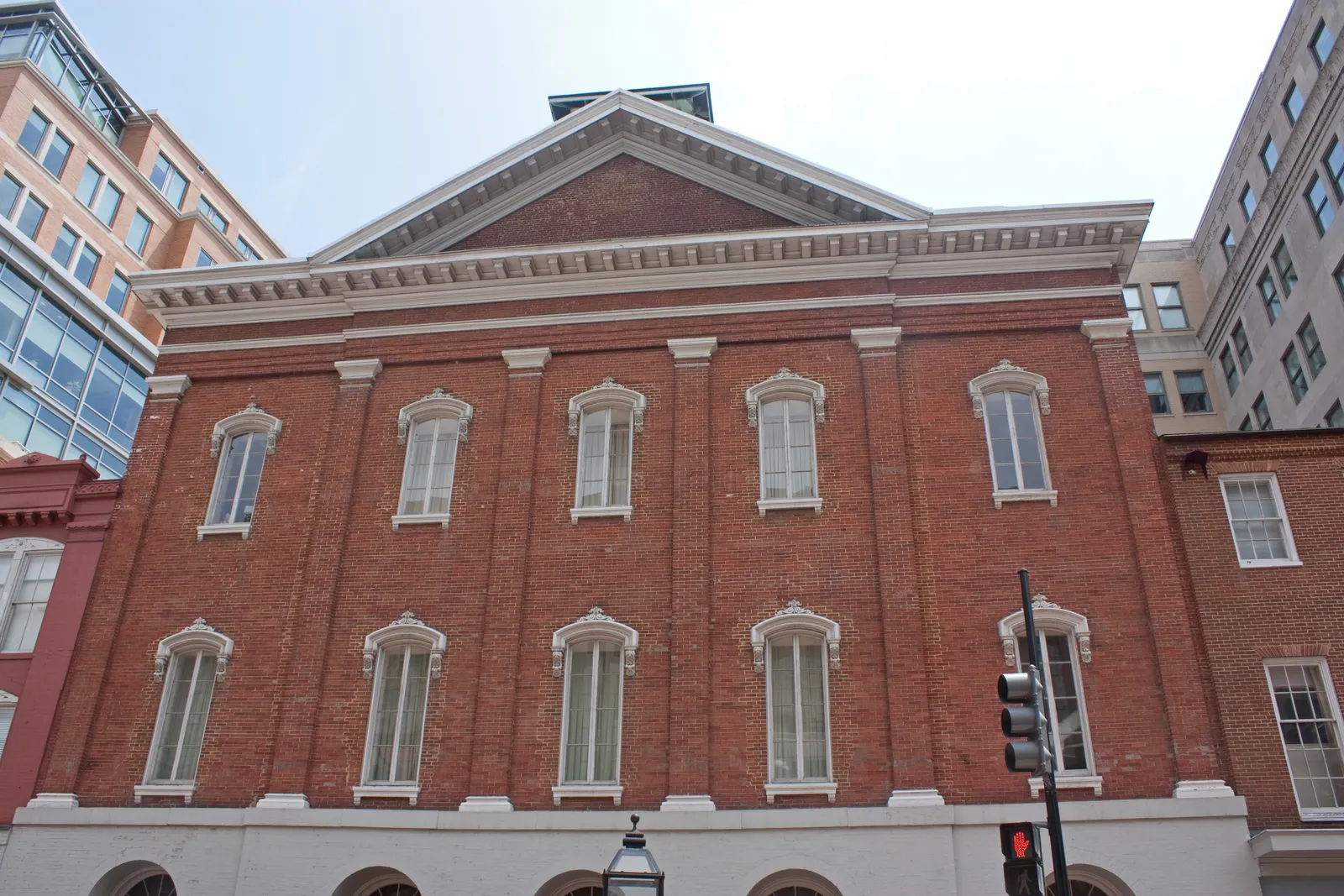
Photo: Wknight94 / Wikimedia Commons · CC BY-SA 3.0
- ✓Ford's Theatre is where President Abraham Lincoln was shot by John Wilkes Booth on April 14, 1865 — a working theatre, museum and National Historic Site in one.
- ✓A standard visit is free but uses timed-entry tickets; you can reserve them online in advance for a small per-ticket fee, or try for same-day tickets in person. Verify the current ticketing before you go.
- ✓The visit has several parts: the basement museum, the historic theatre with the draped Presidential Box, and the Petersen House across the street where Lincoln died.
- ✓It remains an active performance venue, so the theatre interior may be closed to daytime visitors when a show is in production — check the day's access before you plan.
- ✓It sits in Penn Quarter / downtown, walkable from the National Mall museums and a short hop from the National Archives — easy to fold into a city day.
Where a president was shot
Few buildings in America carry their history as directly as Ford's Theatre. On the evening of April 14, 1865 — only days after the Civil War's effective end — President Abraham Lincoln was watching a play from the theatre's Presidential Box when the actor John Wilkes Booth slipped in behind him and fired. Lincoln was carried across 10th Street to a boarding house, the Petersen House, where he died the next morning. The theatre on that quiet downtown street is therefore not a reconstruction or a plaque but the actual room where one of the defining moments of American history unfolded, and standing in it is a genuinely sobering experience.
Today the site is run as a National Historic Site in partnership with a theatre society, and it works on three levels at once: a museum that sets the scene, the historic theatre itself with the box preserved as it was, and the Petersen House across the road. It is also, remarkably, still a living theatre that stages productions — so the building hums with present-day life as well as carrying its weight of the past. That layering, the everyday and the historic in the same walls, is part of what makes a visit here linger.


Tickets and how a visit works
A daytime visit to Ford's Theatre is, in essence, free, but it runs on timed-entry tickets to manage the flow of people through a small and historic space. The simplest approach is to reserve a timed ticket online in advance, which typically carries a small per-ticket convenience fee; a limited number of same-day tickets are also usually released in person at the box office, which can work if you're flexible and arrive early. Because the exact system, fees and what's included can change — and because some enhanced tour options are sold separately — check the official site close to your visit and book your slot rather than assuming you can simply walk in.
Your timed ticket generally covers the core experience: the museum, the theatre and the Petersen House (subject to access on the day). Plan for airport-style security screening on entry, as at many federal-adjacent DC sites, and allow a little buffer time around your slot. Budget around ninety minutes to two hours to see everything without rushing, and arrive a few minutes before your entry time so you don't lose part of the window. If specific elements matter to you — a particular tour, the theatre interior — confirm they're available on your date before you commit.
- A standard visit is free but uses timed-entry tickets — reserve online ahead (small per-ticket fee) or try same-day in person.
- Tickets typically cover the museum, theatre and Petersen House, subject to day-of access — verify the current offer.
- Expect security screening on entry; arrive a few minutes before your timed slot.
- Allow roughly 90 minutes to 2 hours to take in all three parts at an unhurried pace.
The museum and the theatre
Most visits begin in the basement museum, which sets up the story before you enter the theatre itself. Its exhibits trace Lincoln's presidency and the closing months of the Civil War, the conspiracy that Booth led, and the assassination and its aftermath — including artifacts connected to that night. It gives the events context and emotional weight, so that by the time you climb up into the theatre you understand exactly what you're looking at. Don't skip it for the sake of time; it's what turns the theatre from a pretty room into a place you feel.
The theatre itself is the heart of the visit. Restored to look much as it did in 1865, it draws every eye upward to the Presidential Box, draped in flags and bunting and preserved as the spot where Lincoln sat. A talk or program is often given in the auditorium to explain what happened and where, though exactly what's offered varies and the theatre may be partly inaccessible when a show is in technical production. Whatever the format, the moment of standing in that room, looking up at that box, is the one most visitors remember — quiet, direct, and far more affecting than any photograph suggests.
- The basement museum sets the scene — Lincoln's presidency, the war's end, Booth's conspiracy and the night itself.
- The restored theatre centres on the draped Presidential Box, preserved as it was in 1865.
- A ranger talk or program is often given in the auditorium; the format varies by day.
- See the museum first so the theatre lands with full context — don't skip it to save time.
The Petersen House, across the street
The story does not end inside the theatre. After he was shot, the dying Lincoln was carried across 10th Street to the Petersen House, a boarding house, where he was laid in a back bedroom and died the following morning surrounded by family, officials and doctors. The house is preserved as part of the site, and walking through the rooms — including the small bedroom where the president died — completes the arc that began across the road. It is a hushed, intimate space, and after the drama of the theatre it lands as the quiet, human end of the tragedy.
Access to the Petersen House is usually included in your visit, but it can be subject to its own timing and capacity, so check whether it's open on your day and how it's sequenced with the theatre — sometimes you do the theatre first, then cross the street. The two-building experience, theatre then house, is what makes Ford's more than a single stop: it walks you through the event in the actual places it happened, in the order it happened. Treat the crossing of 10th Street as part of the visit, not an afterthought.
- Lincoln was carried to the Petersen House across 10th Street and died there the next morning.
- The preserved house, including the back bedroom, completes the story begun in the theatre.
- Access is usually included but subject to its own timing and capacity — confirm it's open on your day.
- Doing the theatre and house in sequence is what makes Ford's a full, place-based experience.
A living theatre, and access caveats
Ford's Theatre is not a frozen relic — it is a working performance venue that stages plays and musicals through its season, which is part of its character but also the main thing to check before you visit. When a production is loading in, in technical rehearsal, or performing a matinee, the theatre interior may be closed or restricted to daytime visitors even though the museum and Petersen House stay open. That's not a flaw so much as a feature of a building that has been brought back to life, but it does mean the one room everyone wants to see is the most likely to be unavailable on a given day.
The practical takeaway is simple: if seeing the auditorium and the Presidential Box is the point of your visit, check the day's access on the official site before you go, and consider that evenings during a show run, or busy matinee days, are the times most likely to limit daytime access. If you're flexible, picking a day with no production constraint is the surest way to see everything. And if you love theatre, catching an actual performance in the room where Lincoln was watching a play is an experience all its own.
- Ford's is an active theatre; the auditorium may be closed to daytime visitors during productions and rehearsals.
- The museum and Petersen House generally stay open even when the theatre interior is restricted.
- Want the auditorium and box? Check day-of access first and favour a day with no production constraint.
- Catching an actual show in the historic theatre is a memorable alternative way to experience it.
Where it sits, and fitting it into a downtown day
Ford's Theatre stands on 10th Street NW in the heart of downtown, in the museum-and-restaurant density of the Penn Quarter area — which makes it one of the easier 'serious' sights to slot into a city day. It's a short walk from the National Mall museums and the National Archives, and close to the National Portrait Gallery, so a natural plan is to pair a sobering hour or two at Ford's with the lighter pleasures nearby: the founding documents at the Archives, the presidential portraits a few blocks away, or simply a good lunch in Penn Quarter afterwards. Verify the nearest Metro station and any service changes on WMATA — several downtown lines put you within a few minutes' walk.
Because it's indoors and ticketed to a set time, Ford's also works well as the anchor of a downtown or rainy-day plan: book your timed slot, build the rest of the afternoon around it, and you have a structured, weatherproof half-day in central DC. The contrast — a quiet, weighty historic site set among the cafés and theatres of a busy modern neighbourhood — is very much part of how the city wears its history, hidden in plain sight on an ordinary downtown street.
Common questions
Is Ford's Theatre free? A standard daytime visit is free but uses timed-entry tickets; reserving online carries a small fee, and limited same-day tickets are usually available in person. Verify current ticketing.
Do I need to book ahead? It's strongly advisable, especially in peak season, since the timed slots and the historic spaces have limited capacity. Same-day works if you're flexible and early.
What's included? Typically the basement museum, the historic theatre, and the Petersen House across the street — subject to day-of access. Confirm before you go.
Will the theatre be open? Not always — it's a working venue and the auditorium may be closed during productions and rehearsals. Check the day's access first.
How long should I plan? Around 90 minutes to 2 hours to see the museum, theatre and Petersen House without rushing.
Where did Lincoln die? Across the street at the Petersen House, the morning after he was shot — it's part of the site and usually included in a visit.

Related guides

Downtown & Penn Quarter, Washington, D.C.
The most central place to stay in Washington — Penn Quarter and the surrounding downtown, where the free museums, the big theatres, the arena, the restaurants and four Metro lines all sit within a few walkable blocks of the National Mall.
Read guide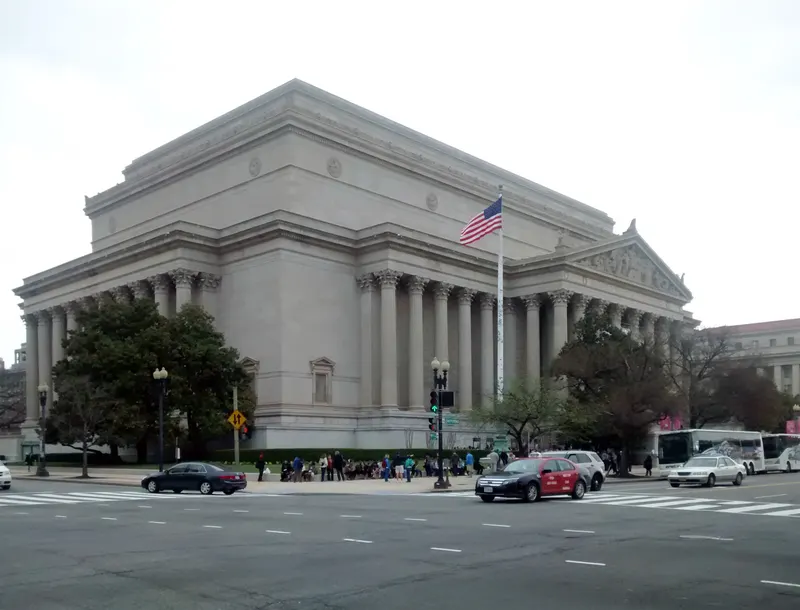
National Archives Museum Guide
How to see the Declaration of Independence, the Constitution and the Bill of Rights at the National Archives in Washington — free entry, the timed-reservation option, the best times to beat the crowds, and what else is in the museum.
Read guide
Rainy Day in Washington, D.C.
A wet or punishingly hot day is no disaster in Washington — this is a city of free indoor wonders. From the Smithsonian halls and the National Gallery to the National Archives, food halls, galleries and the Kennedy Center, here is a full plan for a rainy day in DC that keeps you dry, warm and barely spending a cent.
Read guideMore in Things to Do
6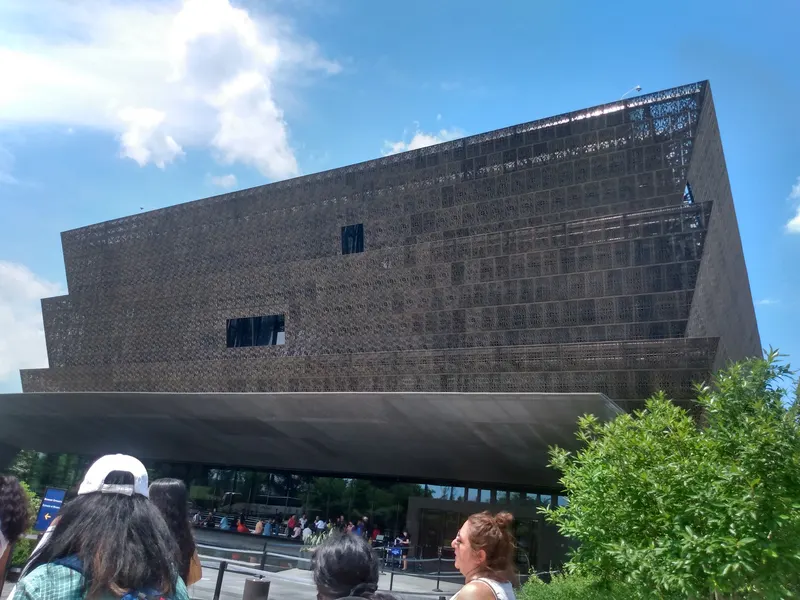
African American History Museum Guide
How to visit the National Museum of African American History & Culture on the Mall — the free timed-entry passes and how to get one, the deep underground history galleries, Sweet Home Café, the lines, how to pace an emotionally heavy visit, and the walk along the Mall.
Read guide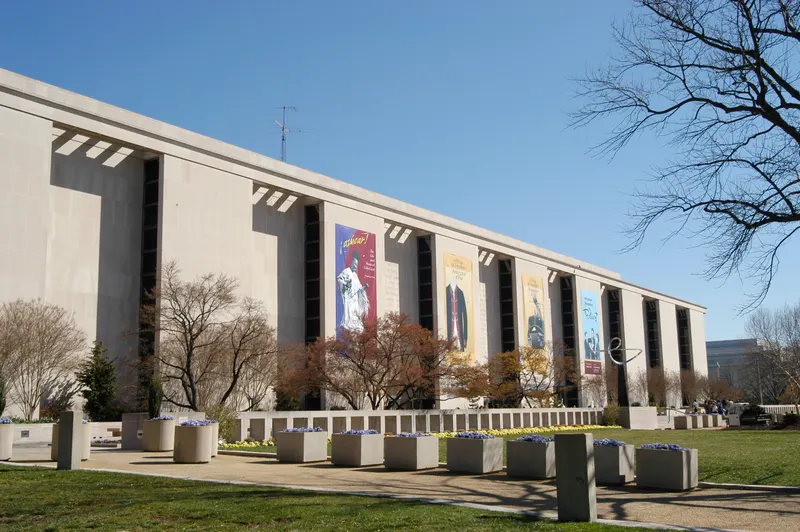
American History Museum Guide
How to visit the National Museum of American History on the Mall — the original Star-Spangled Banner, the First Ladies' gowns, the American presidency, the pop-culture icons, the food-court logistics, and how to time a visit around the school groups.
Read guide
Best Museums in Washington, D.C.
Washington has more world-class museums than any sane trip can hold, and almost all of them are free. This is a guide to the best museums in DC sorted by topic, age, ticket needs, location and rainy-day value — so you can choose two or three with confidence instead of trying to see them all.
Read guide
Best Photography Spots in Washington, D.C.
Where to make great photographs in Washington — the monument reflections, the Tidal Basin blossoms, the Capitol and Lincoln axis, Georgetown's waterfront, hidden rooftops and the golden-hour and blue-hour routes that tie them together.
Read guide
Best Things to Do in Washington, D.C.
A ranked first-trip shortlist of the best things to do in Washington, D.C. — from the National Mall and the free Smithsonian museums to a Capitol tour, the Tidal Basin and Georgetown — built so you can pick a handful and still feel you saw the city.
Read guide
Best Viewpoints in Washington, D.C.
Where to find the best views in Washington — the high monuments and free towers, the rooftop bars and cultural terraces, and the river and hilltop overlooks across the Potomac, ranked by how much effort each one asks.
Read guide