
National Archives Museum Guide
How to see the Declaration of Independence, the Constitution and the Bill of Rights at the National Archives in Washington — free entry, the timed-reservation option, the best times to beat the crowds, and what else is in the museum.
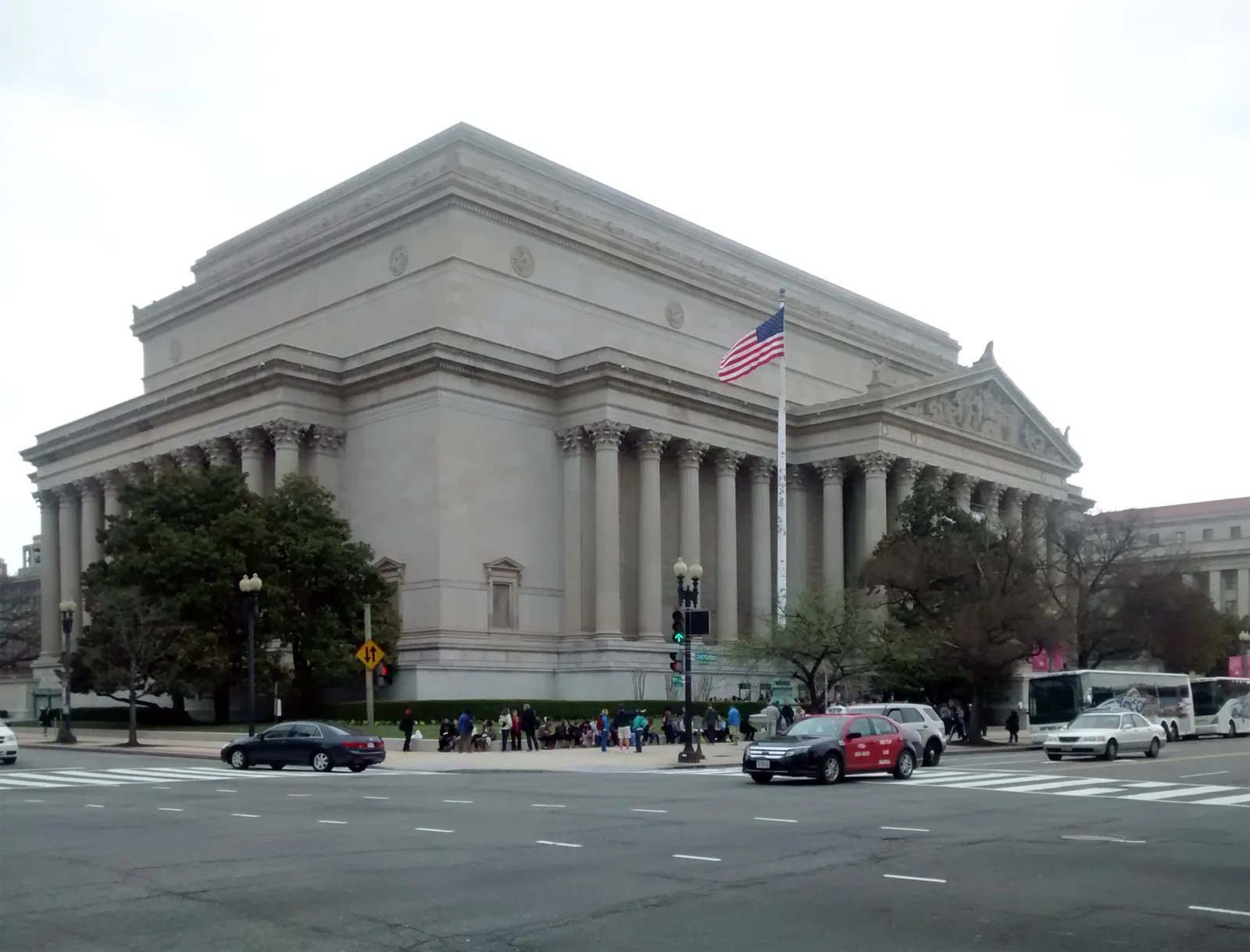
Photo: Gunnar Klack / Wikimedia Commons · CC BY-SA 4.0
- ✓The National Archives Museum holds the Declaration of Independence, the U.S. Constitution and the Bill of Rights — the original 'Charters of Freedom' — on display in its grand domed Rotunda.
- ✓Admission is free. Entry is walk-in, but you can pay a small fee to reserve a timed slot online and skip much of the general line — verify the current price.
- ✓Lines build through the middle of the day in peak season; arriving at opening is the simplest way to see the documents without a long wait.
- ✓Beyond the Charters, the Public Vaults and rotating exhibits draw on billions of records — from a 1297 Magna Carta to letters, photographs and film.
- ✓It sits on the National Mall's north edge between the Smithsonian museums and the National Gallery of Art, so it slots easily into a museum day.
Where the founding documents live
Some sights in Washington are about scale and others about a single, quiet object. The National Archives is the second kind. Behind the long Corinthian colonnade on Constitution Avenue, in a hushed, domed marble hall called the Rotunda, sit the three documents on which the United States is built: the Declaration of Independence, the Constitution and the Bill of Rights. Together they are known as the Charters of Freedom, and seeing the actual parchment — the real ink, the real signatures, faded but present — is a genuinely moving few minutes that no photograph quite prepares you for.
The Archives is the nation's record-keeper, the official home of the United States government's permanently valuable documents, and the building was designed to look the part: a temple to the written record, with these three charters as its sacred objects, sealed in protective cases beneath low light. For a visitor, the appeal is simple and rare — you can stand a few feet from the founding documents of a country, for free, in a building that treats them with the reverence of a cathedral.

Free entry and the reservation option
Admission to the National Archives Museum is free, and you can simply walk in. There is, however, a second route worth knowing: for a small per-ticket fee you can reserve a timed-entry slot online in advance, which lets you use a separate, faster entrance rather than joining the general walk-in line. In quiet periods the walk-in line moves fine and the reservation isn't necessary; in peak season — spring, summer and around the cherry blossoms — the reserved slot can save you a long wait. Verify the current fee and whether reservations are needed when you plan, as both can change.
Either way, the documents themselves are free to see; the only cost is the optional convenience charge for skipping the line. If you'd rather not pay, simply come at opening time. The first hour of the day is reliably the calmest, the Rotunda is at its quietest, and you can stand with the Charters without the midday crush. Check the museum's hours before you go — they vary by season and the building closes on certain federal holidays.
- Admission is free; the documents themselves cost nothing to see.
- Optional: pay a small fee to reserve a timed slot online and use the faster entrance — verify the current price.
- Walk-in works well off-peak; reservations help in spring and summer crowds.
- Free or not, arriving at opening is the simplest way to beat the lines.
- Hours vary by season and the museum closes on some federal holidays — verify before you go.
Beating the crowds
The National Archives is one of the Mall's most popular stops, and the bottleneck is almost always the line outside and the slow shuffle through security, not the Rotunda itself. The fix is timing. In the busy months, lines lengthen steadily from mid-morning and peak around the middle of the day, so the single best move is to be there when the doors open. Late in the afternoon can also thin out, though you risk bumping against closing.
If a long wait is likely and you'd rather not gamble, the paid timed reservation is the insurance policy — it routes you through a separate entrance and removes most of the uncertainty. Whichever way you come, allow time for airport-style security screening on entry, and travel light: large bags slow everyone down, and there are restrictions on what you can bring in. Photography rules apply in the Rotunda specifically, so check the current policy and follow the staff's direction around the documents.
- Arrive at opening to beat the midday lines — the calmest hour of the day.
- The wait is the line and security, not the Rotunda; timing solves it.
- A paid timed reservation routes you through a faster, separate entrance.
- Pack light for security, and check the current photography policy in the Rotunda.
Beyond the Charters
Many visitors come only for the three big documents and leave within half an hour — which is a fine plan if your day is full — but the museum has more to reward a longer stay. The Public Vaults take you into the breadth of the Archives' holdings, which run to billions of records: letters and photographs, maps and patents, film and sound, the paper trail of a nation. It turns the abstract idea of 'the national archive' into something you can browse and handle through interactive displays.
The building also displays one of the surviving 1297 copies of Magna Carta, the medieval English charter whose ideas echo through the American founding documents a few rooms away — a quietly powerful pairing. Rotating special exhibitions draw on the collection to tell focused stories, so there is usually something new on. If you have an hour rather than thirty minutes, the museum repays it; if you have only the half-hour, head straight for the Rotunda and save the rest for another day.
- The Public Vaults bring the Archives' billions of records to life through interactive displays.
- A 1297 Magna Carta is on display — the ancestor of the ideas in the founding documents nearby.
- Rotating special exhibitions mean there's usually a fresh story to see.
- Short on time? The Rotunda alone is worth the visit; come back for the rest.
The Rotunda, and how to make the most of it
The Rotunda is the heart of the visit, and it has its own etiquette. The three Charters are displayed under low light in sealed cases for their protection — the parchment is centuries old and fragile, and the dimness is part of the experience rather than a flaw. Give your eyes a moment to adjust and read the documents slowly; the Declaration is the most faded, so look closely for John Hancock's famous signature. Above the cases, two large murals depict the presentation of the Declaration and the Constitution, setting the scene for what you're looking at.
Because it is a small, reverent space and a hugely popular one, the Rotunda can feel rushed when it's busy, with staff gently keeping people moving. That's the strongest argument for arriving at opening: in the first quiet half-hour you can actually linger with each document instead of shuffling past. Treat it less like a museum exhibit to tick off and more like a brief, deliberate visit to three remarkable objects — that's where the quiet power of the place comes from.
- The Charters sit under low light in sealed cases to protect the fragile parchment — let your eyes adjust.
- Look for Hancock's signature on the much-faded Declaration, and the two murals above the cases.
- It's a small, busy space where staff keep people moving — arrive at opening to linger.
- Approach it as a short, deliberate visit to three objects rather than a tick-box exhibit.
Where it sits, and planning the day
The National Archives stands on the north edge of the National Mall along Constitution Avenue, roughly midway between the Capitol and the Washington Monument, with the Smithsonian museums just across the lawn and the National Gallery of Art two minutes east. That central position makes it one of the easiest sights to fold into a museum day: see the founding documents first thing while you're fresh and the lines are short, then drift into the free Smithsonians and the National Gallery as the Archives fills up.
The closest Metro stop is a short walk away — verify the current best station and any service changes on WMATA — and the whole cluster is comfortably walkable. Because the Archives, the American History museum and the National Gallery all tell pieces of the same national story, a planned museums day on the Mall's north side ties them together neatly. Lead with the Archives at opening, and the rest of the day falls into place.
Common questions
Is the National Archives free? Yes — admission is free and you can walk in. You can optionally pay a small fee to reserve a timed slot and use a faster entrance; verify the current price.
Do I need a reservation? No, walk-in is fine, especially off-peak and at opening. In busy season a paid timed reservation helps you skip the line. Confirm current options before you go.
What can I see there? The original Declaration of Independence, U.S. Constitution and Bill of Rights in the Rotunda, plus a 1297 Magna Carta and the Public Vaults exhibits.
When is it least crowded? Right at opening is the calmest. Lines build through mid-morning and peak around midday in busy months.
Can I take photos of the documents? Photography rules apply specifically in the Rotunda — check the current policy and follow staff direction around the Charters.
How long should I plan? Half an hour for just the Rotunda; an hour or more if you want the Public Vaults, Magna Carta and any special exhibition.

Related guides
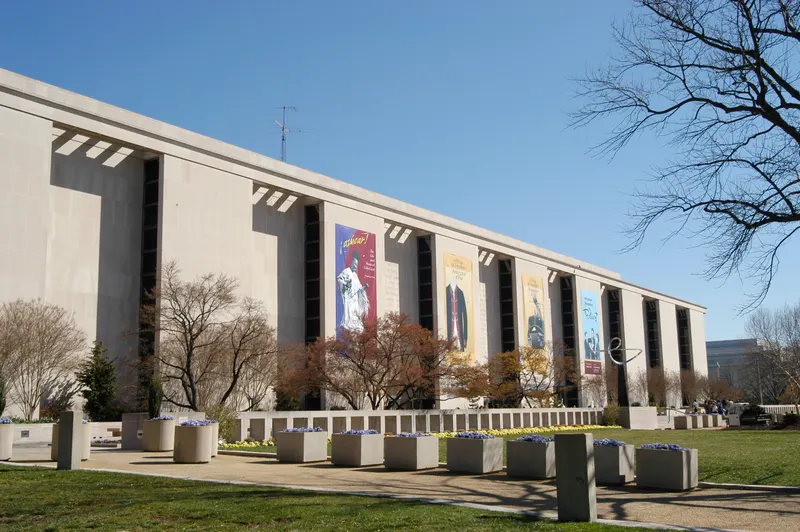
American History Museum Guide
How to visit the National Museum of American History on the Mall — the original Star-Spangled Banner, the First Ladies' gowns, the American presidency, the pop-culture icons, the food-court logistics, and how to time a visit around the school groups.
Read guide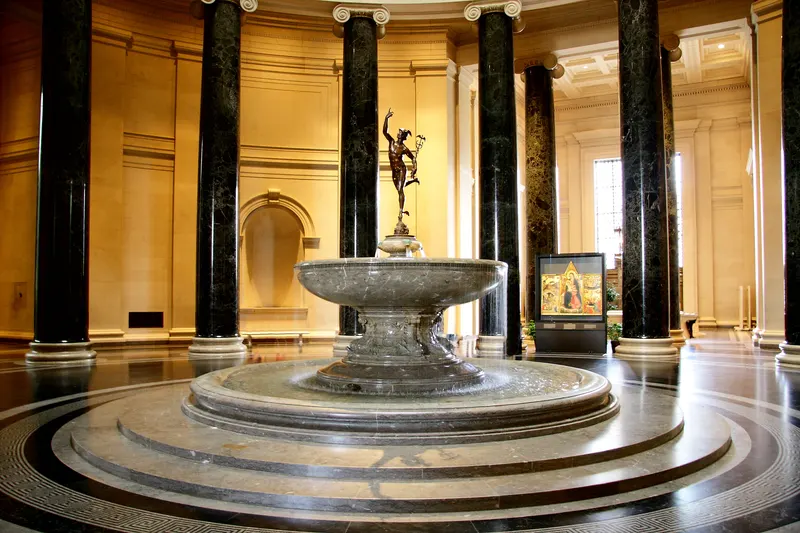
National Gallery of Art Guide
How to plan an art-focused day at the National Gallery of Art in Washington — the neoclassical West Building, I. M. Pei's modern East Building, the Sculpture Garden, the cafés between them, free admission, and how to see the highlights without burning out.
Read guide
Washington, D.C. Museums Itinerary
How to plan a museum-heavy day in Washington, D.C. without fatigue, duplicated themes or a missed timed pass — a strategy for pacing the world's densest concentration of free museums. Pick two or three buildings, go deep on a few rooms each, book the passes that need booking, and leave the rest for next time, because the museums are free and trying to 'do' them all is the fastest way to ruin the trip.
Read guideMore in Things to Do
6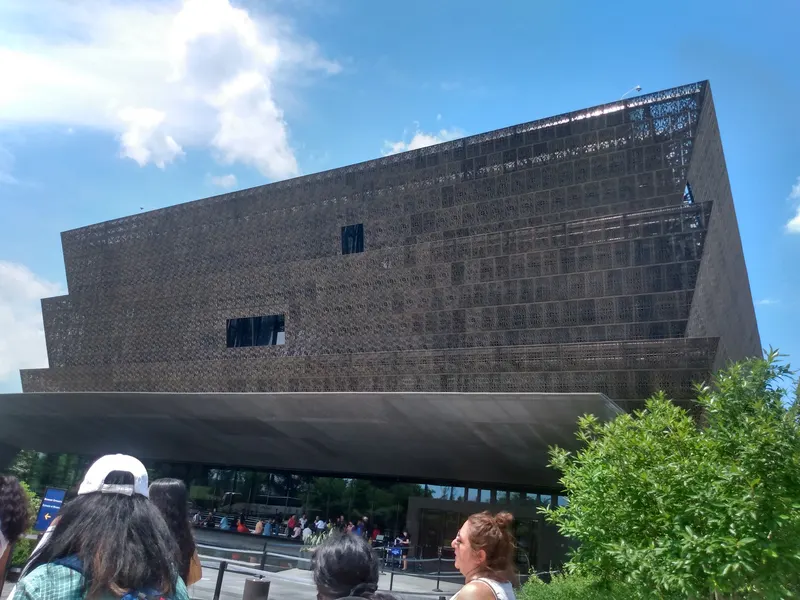
African American History Museum Guide
How to visit the National Museum of African American History & Culture on the Mall — the free timed-entry passes and how to get one, the deep underground history galleries, Sweet Home Café, the lines, how to pace an emotionally heavy visit, and the walk along the Mall.
Read guide
Best Museums in Washington, D.C.
Washington has more world-class museums than any sane trip can hold, and almost all of them are free. This is a guide to the best museums in DC sorted by topic, age, ticket needs, location and rainy-day value — so you can choose two or three with confidence instead of trying to see them all.
Read guide
Best Photography Spots in Washington, D.C.
Where to make great photographs in Washington — the monument reflections, the Tidal Basin blossoms, the Capitol and Lincoln axis, Georgetown's waterfront, hidden rooftops and the golden-hour and blue-hour routes that tie them together.
Read guide
Best Things to Do in Washington, D.C.
A ranked first-trip shortlist of the best things to do in Washington, D.C. — from the National Mall and the free Smithsonian museums to a Capitol tour, the Tidal Basin and Georgetown — built so you can pick a handful and still feel you saw the city.
Read guide
Best Viewpoints in Washington, D.C.
Where to find the best views in Washington — the high monuments and free towers, the rooftop bars and cultural terraces, and the river and hilltop overlooks across the Potomac, ranked by how much effort each one asks.
Read guide
Best Washington, D.C. Tours
When a tour is genuinely worth it in Washington and when the city is better free and self-guided — monument night tours, bike and Segway loops, food and neighbourhood walks, official Capitol and government-building tours, and the day trips that need a coach.
Read guide