
Hirshhorn Museum Guide
How to visit the Hirshhorn Museum and Sculpture Garden in Washington — the Smithsonian's free home for modern and contemporary art, the cylindrical building, the immersive installations that need timed passes, and who should make time for it.
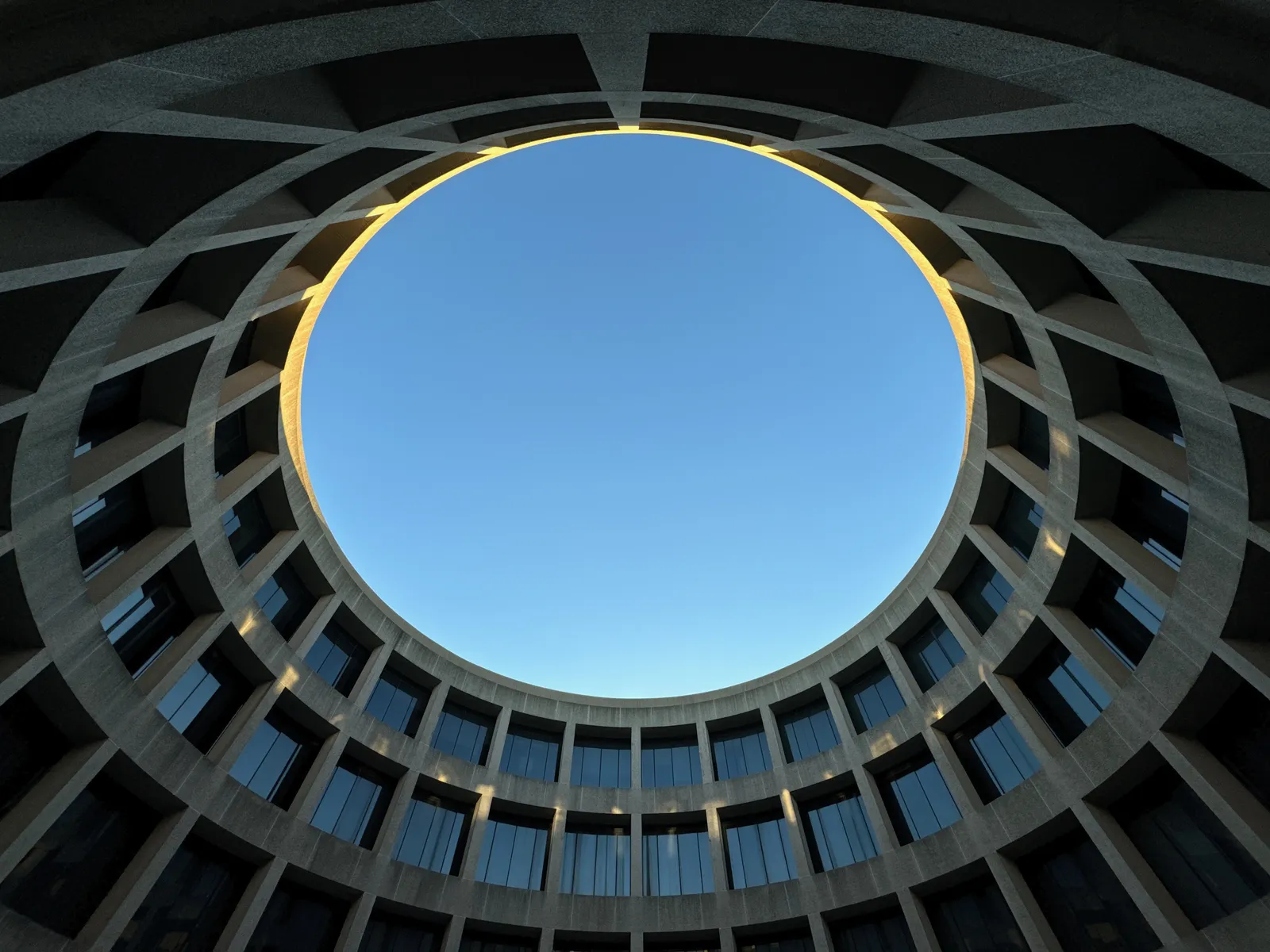
Photo: Bravodelnorte / Wikimedia Commons · CC BY-SA 4.0
- ✓The Hirshhorn is the Smithsonian's museum of modern and contemporary art — free, like all the Smithsonians, with no general ticket required.
- ✓Its building is a landmark in itself: a raised concrete cylinder by Gordon Bunshaft, hovering on piers above a fountain courtyard — locals call it 'the doughnut'.
- ✓The circular galleries wrap around the central court, so the collection unfolds as a loop with the Mall framed through the windows along the way.
- ✓High-demand immersive works — Yayoi Kusama's Infinity Mirror Rooms among them — often require free timed passes that go quickly; verify what's on and how to book.
- ✓It sits on the Mall's south side beside the Air and Space Museum, with its own Sculpture Garden across the lawn — easy to fold into a museum day.
Modern art in a building like no other
Among the classical temples of the National Mall, the Hirshhorn looks like a spacecraft that landed and decided to stay. It is the Smithsonian's home for modern and contemporary art — a great open cylinder of concrete, designed by Gordon Bunshaft and opened in 1974, raised on four massive piers above a sunken plaza with a fountain at its heart. Washingtonians affectionately call it 'the doughnut', and once you've seen it you'll understand why. It is the most architecturally daring building on the Mall, and it is free to enter, every open day.
The collection began with the gift of Joseph H. Hirshhorn, a self-made financier who amassed thousands of modern paintings and sculptures and gave them to the nation. Today the museum is the Smithsonian's most forward-looking, given over to art of the last hundred-odd years and the present moment — which makes it a deliberate change of register from the marble and the founding documents elsewhere on the Mall. For anyone who loves contemporary art, or simply wants a jolt of something different between the monuments, it is one of the city's most rewarding free stops.

How the museum works inside
The Hirshhorn's circular plan makes it one of the easiest big museums to navigate: you simply walk the loop. The galleries wrap all the way around the central courtyard on each level, so a visit becomes a single continuous circuit rather than a maze of rooms — and at intervals the inner windows open onto the fountain courtyard while the outer galleries frame slices of the Mall. The collection and special exhibitions rotate frequently, so rather than a fixed list of masterpieces, expect a changing display drawn from a deep holding of modern painting, sculpture and new media. Check what's currently on before you go.
Because the museum leans into installation and time-based work — film, light, immersive environments — a single visit can swing from a quiet room of canvases to a darkened space you step bodily inside. That variety is the point. It is a smaller museum than the Air and Space or Natural History giants beside it, which is a virtue: you can see it properly in an hour or two without the fatigue the Mall's mega-museums induce, then walk back out feeling you've seen something whole.
Don't rush past the building's outdoor circle on your way in or out. The plaza around the base of the cylinder is part of the museum's design, with the fountain at its heart and the great raised drum overhead framing the sky; in recent years the Hirshhorn has used these outdoor spaces for large temporary commissions and projections, so there is sometimes art before you even reach the door. The inner courtyard, glimpsed through the gallery windows as you walk the loop, gives the museum its quiet centre — a still point at the middle of all that bold concrete. Take a minute to stand in it. It is one of the more unexpectedly peaceful spots on the whole Mall.
- The circular galleries form a single loop — easy to navigate, with courtyard and Mall views along the way.
- Collection and special exhibitions rotate often; check the current programme rather than chasing a fixed highlight.
- Expect a mix of painting, sculpture, film, light and immersive installation.
- Smaller and more manageable than the Mall's mega-museums — an hour or two sees it well.
Timed passes for the high-demand works
Here is the one piece of planning the Hirshhorn can require. While general admission is free and walk-in, the museum's most sought-after experiences — most famously Yayoi Kusama's Infinity Mirror Rooms, the mirrored chambers that produce the endless-reflection photographs all over the internet — are often managed with free timed passes because demand far outstrips the few people who can enter at once. When such a work is on view, passes are typically released online (and sometimes a limited number in person) and can vanish within minutes of going live. If a specific installation is your reason for coming, this is the thing to check and book first.
The catch is that what's on, and whether it needs a pass, changes with the exhibition calendar — so don't assume the famous Kusama rooms will be there on your dates, and don't assume you can simply walk up. Verify the current programme and the exact pass system on the museum's website before you build a day around it. If you miss a pass, the rest of the Hirshhorn is still free and walk-in, and worth the visit on its own; treat the headline installation as a bonus rather than a guarantee.
- General admission is free and walk-in; the headline immersive works are what may need a pass.
- Kusama's Infinity Mirror Rooms, when on view, use free timed passes that go almost instantly — book the moment they release.
- What's on (and whether it needs a pass) changes with the calendar — verify your exact dates before relying on it.
- Miss the pass? The rest of the museum is still free and well worth it.

The Sculpture Garden, and who should make time
Across the Mall from the building, the Hirshhorn's own Sculpture Garden sits in a sunken bed below the lawn — a free outdoor gallery of large modern sculpture, including works by Rodin, with shaded benches and a contemplative quiet. It has been undergoing a major redesign, so its layout, access and what's on view may differ from older guides; verify the current state of the garden before you go. Even mid-transformation, the pairing of indoor cylinder and outdoor garden gives the Hirshhorn two distinct moods in one stop.
So who should prioritise it? If you love modern and contemporary art, the Hirshhorn is essential and probably your favourite museum on the Mall. If you're chasing a specific viral installation, plan around the passes. And even if neither describes you, the building itself — that audacious concrete doughnut among the marble — is worth ten minutes of your time and a photograph. It is not the museum for someone who only wants dinosaurs and old masters; it is the museum for someone who wants the Mall to surprise them.
- The Sculpture Garden across the lawn is a free outdoor gallery — verify its current state, as it has been redesigned.
- Essential for modern-and-contemporary art lovers; a quick architectural detour for everyone else.
- Plan around timed passes only if a specific installation is your goal.
- The building alone — the concrete cylinder on the Mall — earns a stop and a photo.
Where it sits, and planning the day
The Hirshhorn stands on the south side of the National Mall, immediately west of the National Air and Space Museum and across the lawn from the National Gallery of Art and the Natural History Museum — so it slots into a museum day with almost no walking. A sensible rhythm pairs it with its neighbours: tackle whatever needs a timed pass while you're fresh, then dip into the Hirshhorn for an hour of modern art and the courtyard, which makes a bracing contrast to the surrounding history.
The nearest Metro stops are a short walk away — verify the current best station and any service notices on WMATA — and the building is fully on the museum-day circuit. As with every Smithsonian, check the current hours before you go; they can vary and the museum closes on certain holidays. Lead with the passes, keep the Hirshhorn flexible, and you'll have seen the Mall's most surprising building without rearranging your whole plan around it.

At a glance
A quick planning summary. The Hirshhorn Museum and Sculpture Garden sits on the south side of the National Mall, immediately west of the National Air and Space Museum, with its Sculpture Garden in a sunken bed across the lawn to the north. It is a free Smithsonian museum — no ticket to walk in — but the headline immersive works can require free timed passes that release online and go fast. Always verify the current programme, pass system and hours, which vary by season; the museum closes on certain holidays.
Allow an hour or two to see the museum well; it's smaller and more manageable than its mega-museum neighbours, which is a virtue on a long Mall day. The nearest Metro stations are a short walk away — verify the best station and service on WMATA. Pair it with the south-Mall museums for a low-walking museum block, lead with anything that needs a timed pass while you're fresh, and treat the Hirshhorn as the day's jolt of something modern and unexpected.
- What: the Smithsonian's free museum of modern and contemporary art, in a landmark cylindrical building.
- Where: south side of the Mall, just west of Air and Space; Sculpture Garden across the lawn.
- Cost: free admission; headline immersive works may need a free timed pass — verify.
- Time needed: an hour or two — smaller and more manageable than its neighbours.
- Metro: a short walk from several stations — verify on WMATA.
- Good for: modern-art lovers, architecture fans, and anyone wanting the Mall to surprise them.
Common questions
Is the Hirshhorn free? Yes — general admission is free, like all the Smithsonian museums, with no ticket required to walk in. Specific immersive works may need a free timed pass; verify what's on.
Do I need a timed pass? Only for high-demand installations such as Kusama's Infinity Mirror Rooms when they're on view. The rest of the museum is walk-in. Check the current programme.
What's it like inside? A circular building you walk as a loop, with rotating modern and contemporary art — painting, sculpture, film and immersive installations.
How long should I spend? An hour or two sees the museum well; add time if a major installation or the Sculpture Garden draws you.
Is the Sculpture Garden open? It has been redesigned, so verify its current state and access before relying on it.
Is it worth it if I'm not into modern art? The collection may not be for everyone, but the building itself is the Mall's boldest — worth a short detour and a photo regardless.

Related guides
National Gallery of Art Guide
How to plan an art-focused day at the National Gallery of Art in Washington — the neoclassical West Building, I. M. Pei's modern East Building, the Sculpture Garden, the cafés between them, free admission, and how to see the highlights without burning out.
Read guide
Smithsonian Museums Guide
How to plan a sane day across Washington's free Smithsonian museums — which to prioritise by interest and age, which need free timed-entry passes, how long each really takes, where to eat, and how the buildings line up along the National Mall.
Read guide
Washington, D.C. Hidden Gems
The Washington beyond the Mall — the marooned Capitol Columns, the Gothic cathedral on the hill, the wooded valley of Rock Creek, off-radar museums, walled gardens and the quiet neighbourhoods that most first-time visitors never reach.
Read guideMore in Things to Do
6
African American History Museum Guide
How to visit the National Museum of African American History & Culture on the Mall — the free timed-entry passes and how to get one, the deep underground history galleries, Sweet Home Café, the lines, how to pace an emotionally heavy visit, and the walk along the Mall.
Read guide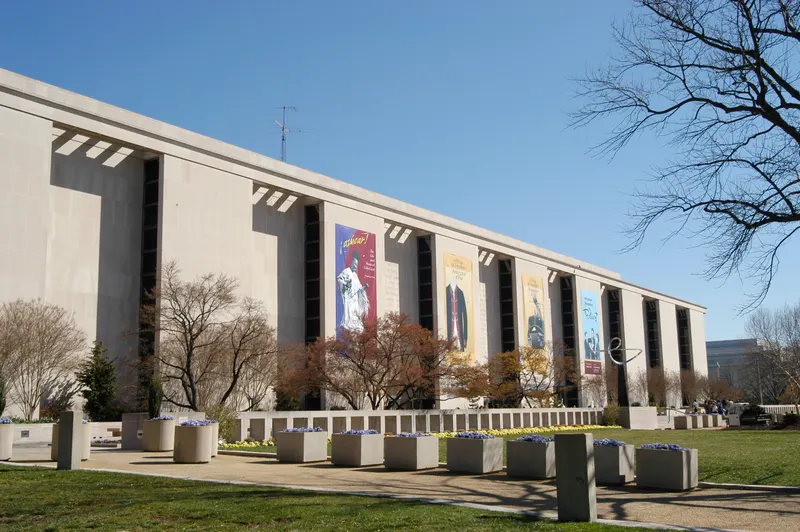
American History Museum Guide
How to visit the National Museum of American History on the Mall — the original Star-Spangled Banner, the First Ladies' gowns, the American presidency, the pop-culture icons, the food-court logistics, and how to time a visit around the school groups.
Read guide
Best Museums in Washington, D.C.
Washington has more world-class museums than any sane trip can hold, and almost all of them are free. This is a guide to the best museums in DC sorted by topic, age, ticket needs, location and rainy-day value — so you can choose two or three with confidence instead of trying to see them all.
Read guide
Best Photography Spots in Washington, D.C.
Where to make great photographs in Washington — the monument reflections, the Tidal Basin blossoms, the Capitol and Lincoln axis, Georgetown's waterfront, hidden rooftops and the golden-hour and blue-hour routes that tie them together.
Read guide
Best Things to Do in Washington, D.C.
A ranked first-trip shortlist of the best things to do in Washington, D.C. — from the National Mall and the free Smithsonian museums to a Capitol tour, the Tidal Basin and Georgetown — built so you can pick a handful and still feel you saw the city.
Read guide
Best Viewpoints in Washington, D.C.
Where to find the best views in Washington — the high monuments and free towers, the rooftop bars and cultural terraces, and the river and hilltop overlooks across the Potomac, ranked by how much effort each one asks.
Read guide