
National Gallery of Art Guide
How to plan an art-focused day at the National Gallery of Art in Washington — the neoclassical West Building, I. M. Pei's modern East Building, the Sculpture Garden, the cafés between them, free admission, and how to see the highlights without burning out.
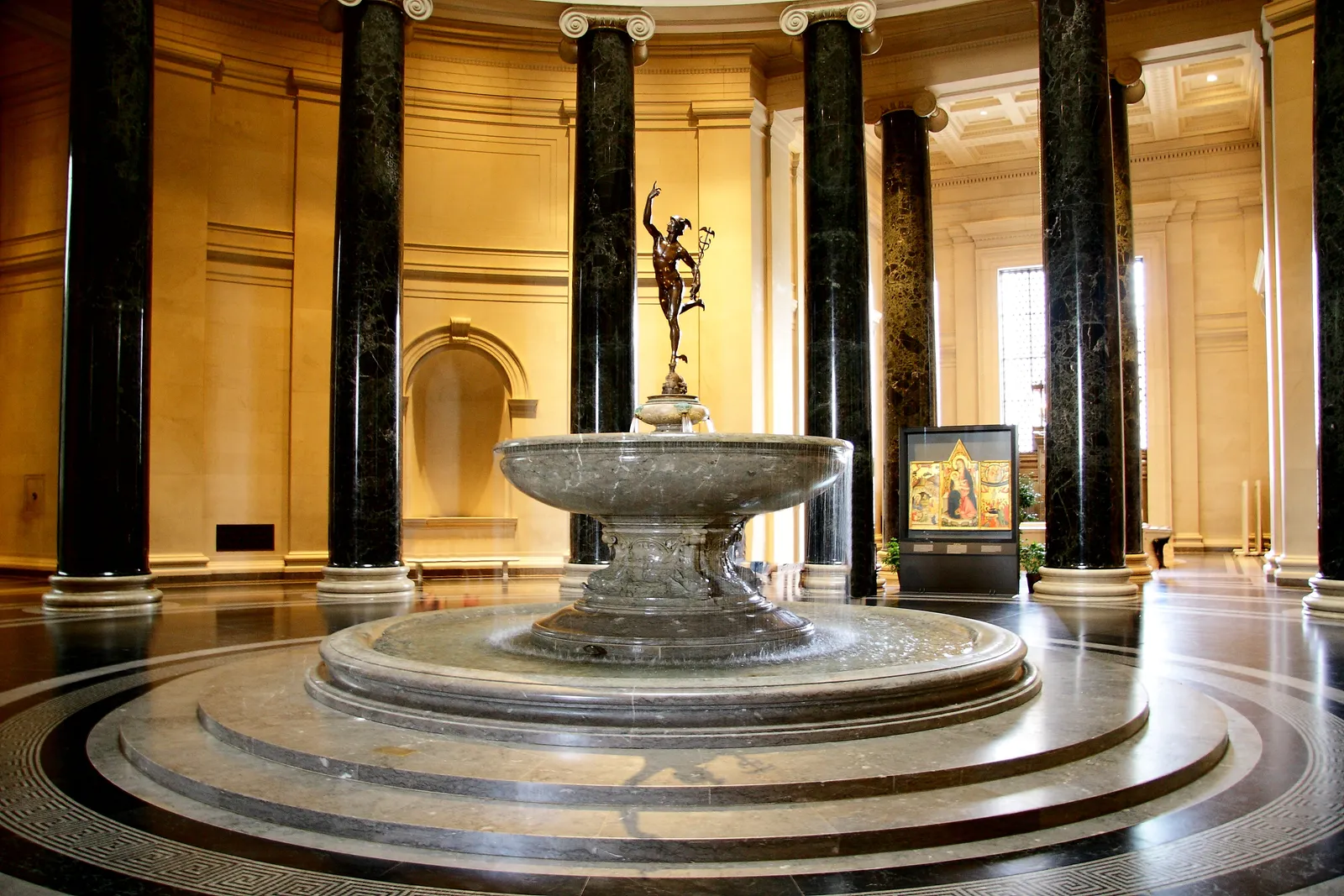
Photo: John Menard / Wikimedia Commons · CC BY-SA 2.0
- ✓Admission is free, every day — the National Gallery is the nation's art museum, given to the people and run at public expense, with no general ticket required.
- ✓It is two buildings linked by an underground concourse: the neoclassical West Building (older European and American masters) and I. M. Pei's angular East Building (modern and contemporary art).
- ✓The West Building holds the only Leonardo da Vinci painting in the Americas — the small portrait 'Ginevra de' Benci' — alongside Vermeer, Rembrandt, Monet and a deep American collection.
- ✓The Sculpture Garden across 7th Street is a free outdoor room with a central fountain that becomes an ice rink in winter and a Friday-evening jazz spot in summer — verify the current season schedule.
- ✓It is not a Smithsonian museum but sits right among them on the Mall's north side, between the Archives and the Capitol, so it folds easily into a museum day.
The nation's art museum, free by design
Washington gives its visitors an unusual gift: the country's pre-eminent art collection, hung in two landmark buildings on the National Mall, and free to walk into on any open day. The National Gallery of Art was founded in 1937 when the financier and collector Andrew W. Mellon offered his paintings and the funds to build a home for them to the nation, on the condition that it carry no one man's name and charge no admission. That founding bargain still holds. There is no general ticket, no membership wall, no 'suggested donation' at the door — you simply walk in off the Mall and stand in front of some of the greatest paintings in the world.
What makes the Gallery special is not only the depth of the collection but the romance of the encounter: a quiet, light-filled marble hall, a Vermeer the size of a sheet of paper, almost no one between you and it on a weekday morning. For a couple, for a solo wanderer, for anyone who wants an hour of beauty that costs nothing, this is one of the most rewarding rooms in the capital. The trick — as with every great DC museum — is not to try to see it all. Pick a few rooms, see them slowly, and leave wanting more.

Two buildings, two moods
The Gallery is really two distinct museums joined beneath the ground. The West Building, opened in 1941, is the grand neoclassical one — a long, domed marble palace by John Russell Pope (who also designed the Jefferson Memorial), built around a planted rotunda with a fountain and Mercury at its centre. This is where the older art lives: Italian, Dutch, Flemish, Spanish, French and British masters, and one of the finest American collections anywhere. It is calm, symmetrical and easy to lose an afternoon in.
The East Building, opened in 1978, is the opposite in temperament: I. M. Pei's bold geometry of triangles and razor-edged pink marble, built to hold modern and contemporary art on an awkward trapezoidal plot. Inside, a vast atrium is hung with a mobile by Alexander Calder, and the galleries climb around it with works by Picasso, Matisse, Pollock, Rothko and their contemporaries. The two buildings are linked by an underground concourse — with a moving walkway under a glittering ceiling and a casual café — so you can cross from old masters to modern art without going back outside.
- West Building — neoclassical, 1941: European masters from the medieval period to the 19th century, plus a deep American collection. Calm and grand.
- East Building — I. M. Pei, 1978: modern and contemporary art, a Calder mobile in the soaring atrium, sharp light and bold geometry.
- An underground concourse links the two, with a café and a moving walkway beneath a sparkling 'light' ceiling — cross without going outdoors.
- Pick one building if you have an hour; do both, slowly, if you have a half-day.
What to make time for
In the West Building, the single most famous object is Leonardo da Vinci's 'Ginevra de' Benci' — the only painting by Leonardo on public display in the Americas, and far smaller than people expect. Near it hang Raphael, Botticelli and the Italian Renaissance rooms. Elsewhere you will find Vermeer (the Gallery holds several, a remarkable share of the few that survive), Rembrandt, the great French Impressionists — Monet, Renoir, Degas — and American giants from Gilbert Stuart's George Washington to the luminous landscapes of the Hudson River School. The Gallery's collection rotates and travels, so confirm a specific painting is on view before you make a special trip for it.
In the East Building, head first for the atrium and its Calder mobile, then choose a thread — the early-20th-century moderns, the Abstract Expressionists, or whatever major exhibition is on. The rooftop terrace, with its blue Roof Terrace sculpture and Mall views, is a fine place to pause. Don't try to absorb both buildings end to end; a handful of rooms seen well will stay with you far longer than a forced march past everything.
- West Building must-sees: Leonardo's 'Ginevra de' Benci', the Vermeers, Rembrandt, the Impressionist rooms, and the American galleries.
- East Building: the Calder mobile in the atrium, the modern and contemporary galleries, and the rooftop terrace with Mall views.
- Collections rotate and individual works travel — verify a specific painting is on display before a special trip.
- Aim for two or three rooms per building, not the whole thing.
The Sculpture Garden, the cafés and a quiet break
Across 7th Street from the West Building lies the Sculpture Garden — a free, six-acre outdoor room of large-scale modern sculpture arranged around a circular pool and fountain, shaded by canopy trees. It is one of the most pleasant places on the Mall simply to sit. In winter the central pool is frozen into a popular ice rink, and on summer Friday evenings the garden hosts a long-running free jazz series that turns it into one of the city's nicest after-work scenes — both are seasonal, so verify the current dates and any skating fee before you count on them.
For food, the Gallery is unusually well served for a Mall museum. The underground concourse between the buildings has a casual café, the West Building has the elegant Garden Café, and the Sculpture Garden has its own pavilion café in season. Any of them makes a civilised pause without leaving the art behind. If you want a proper meal, though, the restaurants of Penn Quarter are only a few blocks north — handy for a lunch that isn't museum fare.
- The Sculpture Garden is free, with a central fountain, shaded benches and large modern sculptures — a lovely place to rest.
- Winter: the pool becomes an ice rink (fee likely — verify). Summer: free Friday-evening jazz in the garden — verify the season's dates.
- Cafés sit in the concourse, the West Building (Garden Café) and the Sculpture Garden pavilion — verify which are open.
- For a non-museum meal, Penn Quarter's restaurants are a few blocks north.

Where it sits, and planning the day
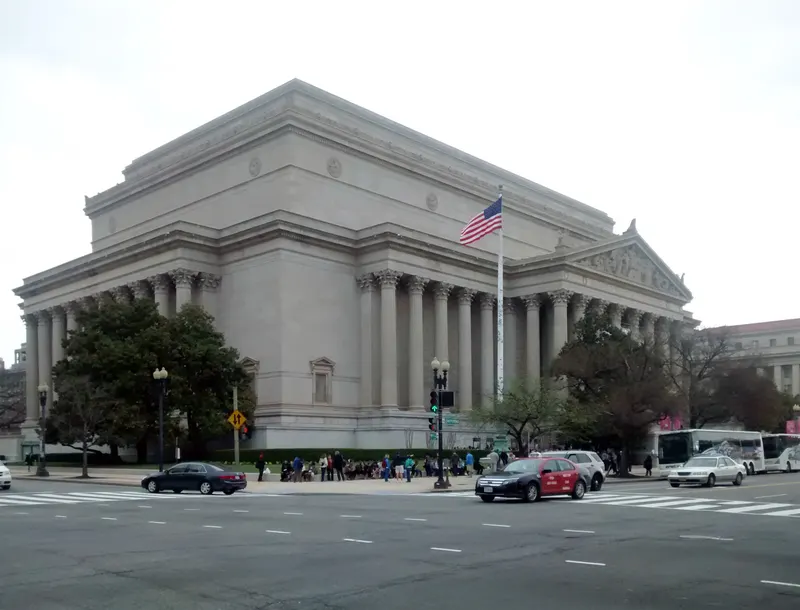
The National Gallery occupies the north side of the Mall between 3rd and 7th Streets, with the U.S. Capitol rising at the eastern end of the lawn and the Smithsonian museums lined up across it. The National Archives is a two-minute walk west, and the Air and Space and Natural History museums are just across the grass — which makes the Gallery one of the easiest sights to thread into a museum day. Because it is free and rarely needs a timed pass, it also works beautifully as a flexible backstop: somewhere to duck into when a sudden downpour, a heatwave or a fully-booked Smithsonian rearranges your plans.
The nearest Metro stations are a short walk away — verify the current best station and any service notices on WMATA. A practical rhythm: lead the morning with something that needs a timed pass while you're fresh, then drift into the Gallery in the early afternoon when the marble halls are cool and quiet, finishing with a slow loop of the Sculpture Garden as the light softens. Check the Gallery's hours before you go; they vary and the buildings close on certain federal holidays.
At a glance
A quick planning summary. The National Gallery of Art occupies two buildings on the north side of the National Mall between 3rd and 7th Streets NW, with the Sculpture Garden a block west across 7th Street. Admission is free with no general ticket; the only money you might spend is on food, a special exhibition, or seasonal ice-skating. Always verify the current hours, which vary by season, and note the buildings close on certain federal holidays.
Plan an hour for a focused highlights visit of one building, or a half-day to do both buildings and the garden at a relaxed pace. The nearest Metro stations are a short walk away — verify the current best station and service on WMATA. Because it's free and rarely needs a timed pass, the Gallery doubles as a flexible backstop for a hot, wet, or over-booked day, and as a graceful late-afternoon stop before dinner in Penn Quarter to the north.
- What: the United States' national art museum, in two linked buildings plus a Sculpture Garden.
- Where: north side of the Mall, 3rd–7th Streets NW; garden across 7th Street.
- Cost: free admission, no general ticket; food, some special exhibitions and winter skating are paid.
- Time needed: an hour for one building's highlights; a half-day for both plus the garden.
- Metro: a short walk from several stations — verify on WMATA.
- Good for: art lovers, couples, solo wanderers, rainy days and heatwaves.
Common questions
Is the National Gallery of Art free? Yes — admission is free every open day, with no general ticket required. Some special exhibitions or events may be ticketed; verify before you go.
Is it a Smithsonian museum? No. The National Gallery is a separate institution founded on Andrew Mellon's 1937 gift, though it sits among the Smithsonians on the Mall and is also free.
How long should I spend? Allow an hour for a focused highlights visit of one building, or a half-day to take in both buildings and the Sculpture Garden at a relaxed pace.
Where is the Leonardo? 'Ginevra de' Benci', the only Leonardo painting in the Americas, hangs in the West Building — confirm it's on view before a special trip, as works occasionally move.
Is the Sculpture Garden ice rink open year-round? No — skating is winter-only and the summer jazz series is its warm-weather counterpart. Both are seasonal; verify the current dates and any fee.
Is it good in the rain? Excellent — two large buildings linked by an indoor concourse, plus cafés, make it one of the Mall's best wet-weather and heatwave plans.

Related guides
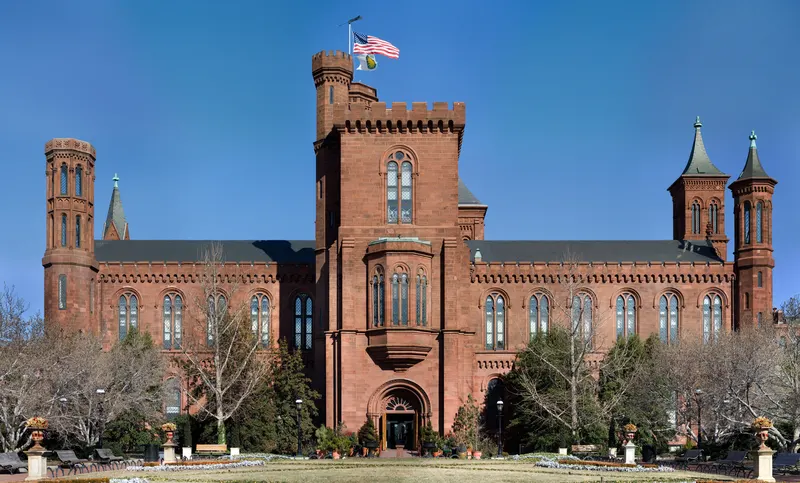
Smithsonian Museums Guide
How to plan a sane day across Washington's free Smithsonian museums — which to prioritise by interest and age, which need free timed-entry passes, how long each really takes, where to eat, and how the buildings line up along the National Mall.
Read guide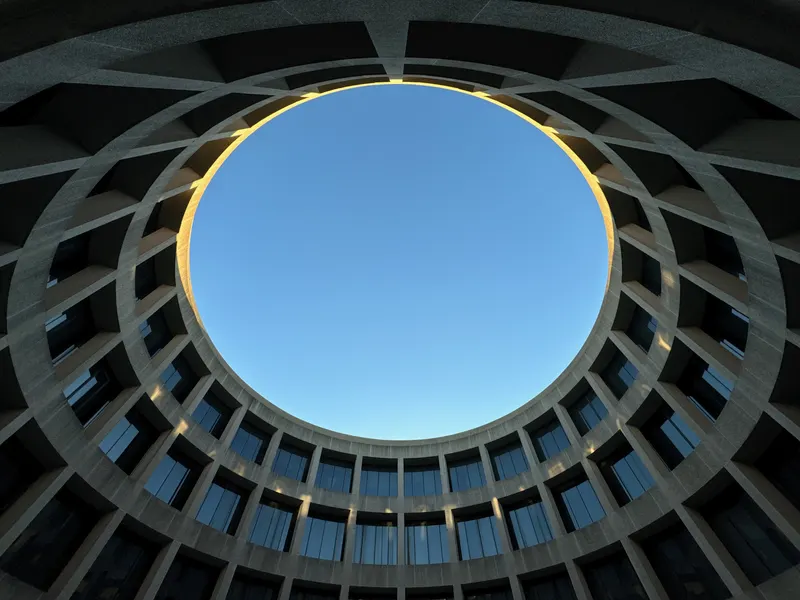
Hirshhorn Museum Guide
How to visit the Hirshhorn Museum and Sculpture Garden in Washington — the Smithsonian's free home for modern and contemporary art, the cylindrical building, the immersive installations that need timed passes, and who should make time for it.
Read guide
Rainy Day in Washington, D.C.
A wet or punishingly hot day is no disaster in Washington — this is a city of free indoor wonders. From the Smithsonian halls and the National Gallery to the National Archives, food halls, galleries and the Kennedy Center, here is a full plan for a rainy day in DC that keeps you dry, warm and barely spending a cent.
Read guideMore in Things to Do
6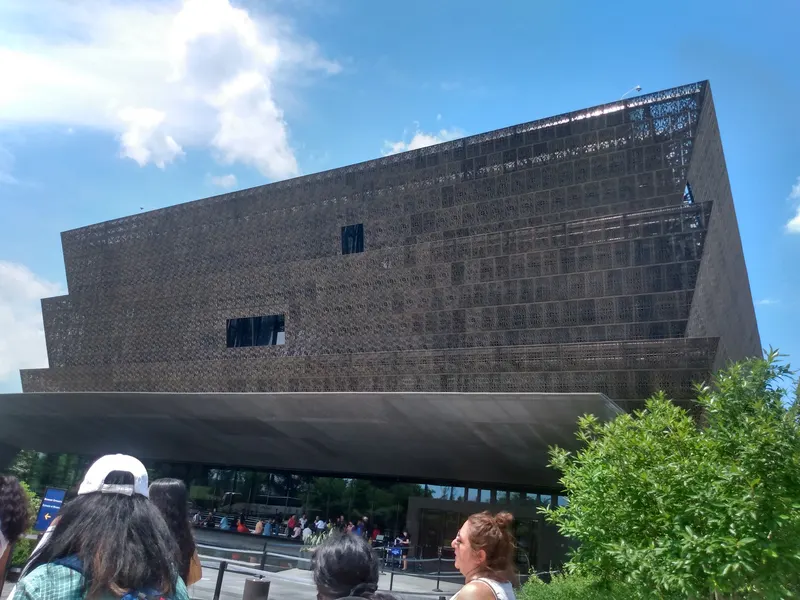
African American History Museum Guide
How to visit the National Museum of African American History & Culture on the Mall — the free timed-entry passes and how to get one, the deep underground history galleries, Sweet Home Café, the lines, how to pace an emotionally heavy visit, and the walk along the Mall.
Read guide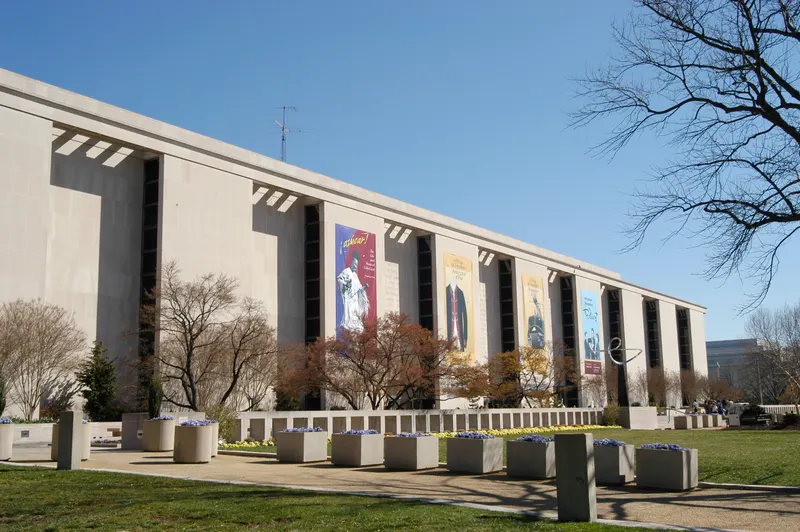
American History Museum Guide
How to visit the National Museum of American History on the Mall — the original Star-Spangled Banner, the First Ladies' gowns, the American presidency, the pop-culture icons, the food-court logistics, and how to time a visit around the school groups.
Read guide
Best Museums in Washington, D.C.
Washington has more world-class museums than any sane trip can hold, and almost all of them are free. This is a guide to the best museums in DC sorted by topic, age, ticket needs, location and rainy-day value — so you can choose two or three with confidence instead of trying to see them all.
Read guide
Best Photography Spots in Washington, D.C.
Where to make great photographs in Washington — the monument reflections, the Tidal Basin blossoms, the Capitol and Lincoln axis, Georgetown's waterfront, hidden rooftops and the golden-hour and blue-hour routes that tie them together.
Read guide
Best Things to Do in Washington, D.C.
A ranked first-trip shortlist of the best things to do in Washington, D.C. — from the National Mall and the free Smithsonian museums to a Capitol tour, the Tidal Basin and Georgetown — built so you can pick a handful and still feel you saw the city.
Read guide
Best Viewpoints in Washington, D.C.
Where to find the best views in Washington — the high monuments and free towers, the rooftop bars and cultural terraces, and the river and hilltop overlooks across the Potomac, ranked by how much effort each one asks.
Read guide