
Washington, D.C. Monuments by Night
An atmospheric, sensible evening route through Washington's floodlit memorials — the Lincoln, the war memorials, the Tidal Basin loop and the Washington Monument — with self-guided and guided-tour options, and honest safety advice.

Photo: Jared Short / Unsplash
- ✓Most Mall memorials are open and floodlit 24 hours a day and staffed by rangers into the evening — seeing them after dark is free and one of the city's great experiences.
- ✓At night the crowds fall away and the lighting transforms the marble; the Lincoln, the Vietnam Wall and the Korean War Memorial are especially powerful.
- ✓The two natural routes are the west-end cluster (Lincoln, Vietnam, Korean, WWII) and the Tidal Basin loop (Jefferson, MLK, FDR) — pick one per night.
- ✓You can walk it yourself, but the memorials are spread over open, dimly lit ground; a guided night tour by bike, trolley or van solves the distance and the dark.
- ✓The Washington Monument and most memorials are lit through the night, but specifics change — verify any closures or lighting works before you go.
Why the monuments are best after dark
If you do only one thing differently from the average visitor in Washington, make it this: see the monuments at night. The memorials of the National Mall were designed to be lit, and after sunset they become something else entirely — the white marble glowing against a dark sky, the inscriptions thrown into relief, the Reflecting Pool holding the light, and, crucially, the daytime crowds almost entirely gone. What is a hot, busy, sprawling lawn at noon becomes quiet, cool and genuinely moving once the floodlights come on. Most of the open-air memorials never close; they are illuminated through the night and staffed by National Park Service rangers into the evening, and there is no charge to walk among them.
For couples especially, this is the most romantic the federal city ever gets. There is something about standing alone at the foot of the Lincoln statue at ten at night, or watching the Jefferson dome mirrored in a still Tidal Basin, that the daytime crush never delivers. This guide lays out the two sensible evening routes, what each memorial does after dark, and how to choose between walking it yourself and joining a tour — plus the honest safety notes that a dark, spread-out park calls for.


Route one — the west-end memorials
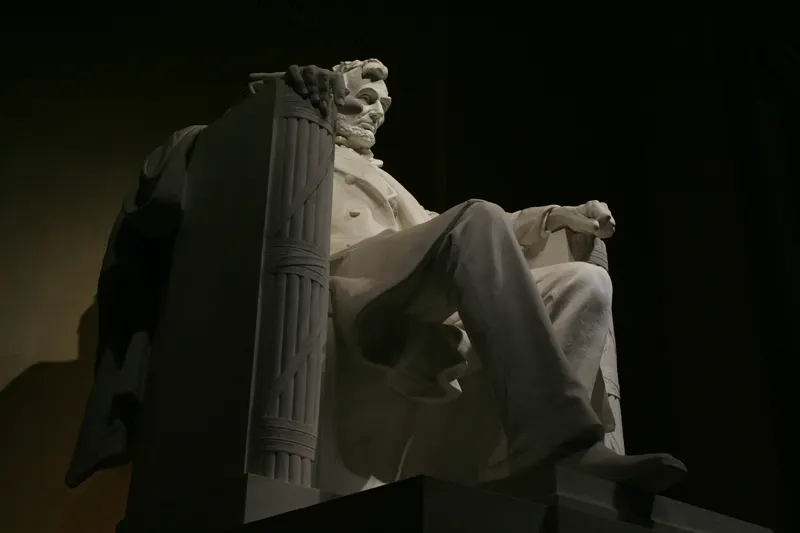
The richest cluster for a night walk sits at the western end of the Mall, around the Lincoln Memorial, and you can see all of it in a compact loop on foot. Begin at the Lincoln Memorial itself: floodlit between its columns, the seated figure of Lincoln is arguably more powerful at night than by day, and the view back down the dark Reflecting Pool to the lit Washington Monument and the distant Capitol is the single best night scene in the city. Take your time on the steps before moving on.
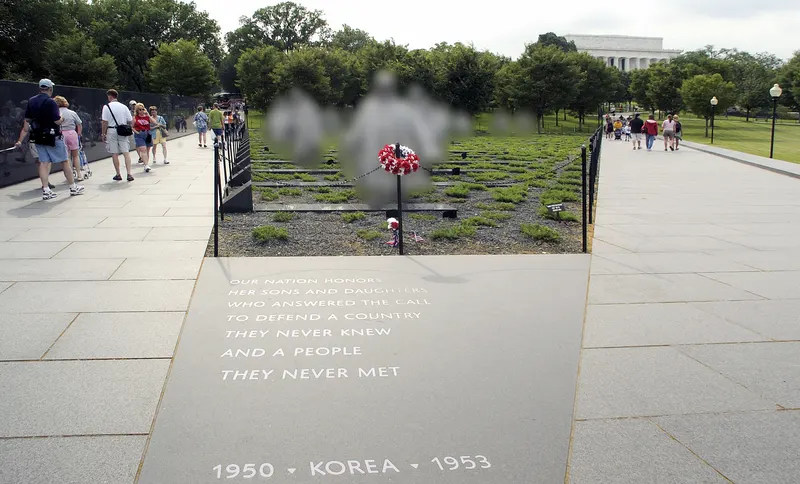
From the Lincoln, the war memorials are a short, quiet walk apart. The Vietnam Veterans Memorial — Maya Lin's black granite Wall — is softly lit and especially solemn after dark; approach it with the same respect you would by day. The Korean War Veterans Memorial, with its column of stainless-steel soldiers advancing through low light, is genuinely eerie and haunting at night, often the highlight people don't expect. Down at the foot of the Reflecting Pool, the World War II Memorial's fountains and lit state pillars make a grand, open finish. The whole loop is well under a mile of walking and best done slowly.
- Lincoln Memorial — floodlit and quiet; the view down the Reflecting Pool to the Monument is the city's best night scene.
- Vietnam Veterans Memorial — the lit black-granite Wall, deeply solemn; visit respectfully.
- Korean War Veterans Memorial — the steel soldiers in low light are eerily powerful after dark, often the surprise favourite.
- World War II Memorial — lit fountains and state pillars; a grand, open end to the loop.
- The whole cluster is under a mile of gentle walking — take it slowly.
Route two — the Tidal Basin loop
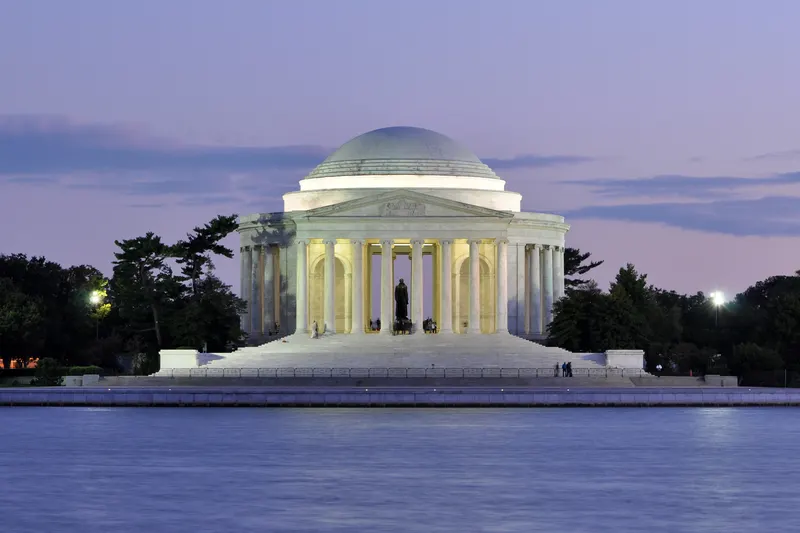
The other great night route swings south around the Tidal Basin, taking in three of the city's most atmospheric memorials with water in the foreground. The Jefferson Memorial is the showpiece: a domed, columned rotunda lit gold and mirrored in the basin, with a standing bronze Jefferson inside — at blue hour, with the dome reflected in still water, it is one of the most beautiful sights in Washington and a photographer's favourite. From there the basin path leads to the Martin Luther King, Jr. Memorial, where the 'Stone of Hope' figure is dramatically lit against the dark, and on to the Franklin Delano Roosevelt Memorial, a sequence of open-air granite rooms with quietly lit waterfalls and quotations that feels especially contemplative when empty.
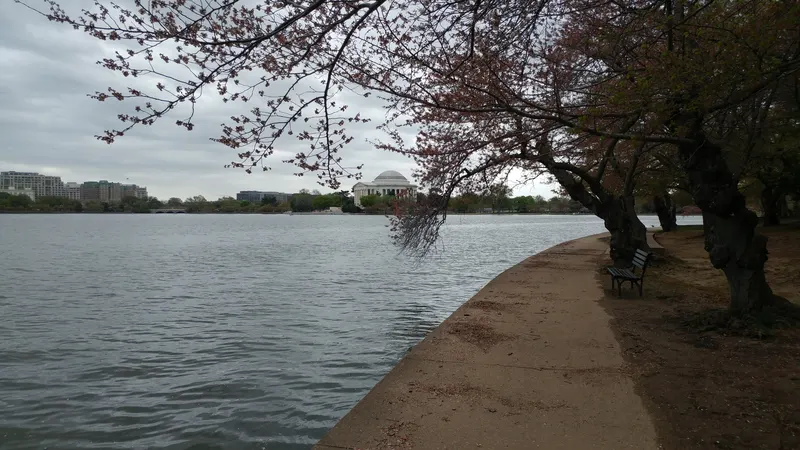
This loop is longer and more spread out than the west-end cluster, and the Tidal Basin path is darker and less trafficked, so it asks for a bit more care — go in company, carry a light, and watch your footing on the unlit stretches. The reward is a string of memorials that each do something different with darkness and water, and a near-guarantee of having them mostly to yourself. If you can only do one of the two routes on foot, the west-end cluster is the safer and more compact choice; save the Tidal Basin loop for a night when you're with others or on a tour.
- Jefferson Memorial — the lit dome mirrored in the Tidal Basin; at blue hour, the city's most photogenic night view.
- Martin Luther King, Jr. Memorial — the 'Stone of Hope' dramatically lit against the dark.
- FDR Memorial — open-air granite rooms with softly lit waterfalls; deeply contemplative when empty.
- Longer, darker and quieter than the west-end loop — go in company and carry a light.
Walk it yourself, or take a tour?
Walking the monuments at night yourself is free, flexible and, for the west-end cluster, very doable — base yourself near the Lincoln Memorial, do the compact loop, and you'll never be far from other people or a ranger. The honest downsides are distance and darkness: the memorials are spread across two miles of open, dimly lit parkland, the Tidal Basin path in particular is quiet at night, and the nearest Metro stations close before the latest trains you might want, so plan your return (a rideshare is often the simplest way home).
That is exactly why guided night tours are so popular here. Operators run evening trips by bike, by open-air trolley, by van and on foot that string the lit memorials together, handle the distances, add context and history, and mean you never have to navigate the dark or worry about getting back. A small-group bike tour at night is a particular DC classic — gliding between floodlit memorials on the car-free Mall paths is genuinely magical. Tours, routes, prices and operators change, so book ahead and verify current offerings; choose a reputable operator and check what's included before you commit.
- Self-guided: free and flexible; best for the compact, busier west-end loop. Plan your way back, as Metro closes before late.
- Guided night tours by bike, trolley, van or on foot handle the distance, the dark and the history — and the way home.
- A small-group night bike tour gliding between lit memorials is a DC classic worth the price for many.
- Operators, routes and prices change — book ahead, pick a reputable company and verify what's included.
Practical and safety notes
A few honest pointers make the night far better. Go at blue hour first — the half-hour after sunset, when the sky still holds colour and the floodlights are on, gives the most beautiful light and the best photographs; full dark is more dramatic but harder to shoot. Dress warmer than the daytime suggests, because the open Mall and the waterside get cool and breezy after dark in every season. Bring water, comfortable shoes and a small light, and if you're photographing, a phone on a small tripod or a steady hand will do for the long exposures the scenes invite.
On safety: the National Mall is patrolled by rangers and U.S. Park Police and is busy and well used into the evening around the popular memorials, so the headline experience is reassuringly normal. But it is still a large, partly unlit park at night, so apply ordinary city sense — stay where there are other people, keep to the lit and trafficked paths, save the most isolated stretches (the far Tidal Basin, the deep edges) for when you're in company or on a tour, keep valuables out of sight, and have your ride home arranged before you set out rather than after. Finally, while the open-air memorials are lit through the night, lighting works and occasional closures do happen, and the Washington Monument grounds and any indoor or staffed elements keep their own hours — verify before you build an evening around a specific stop.
- Aim for blue hour (just after sunset) for the best light and photos; full dark is more dramatic but harder to shoot.
- Dress warmer than the day suggests — the open Mall and waterside are cool and breezy after dark.
- The Mall is patrolled and busy near the popular memorials, but it's a large park: stay on lit, used paths and keep isolated stretches for company or a tour.
- Arrange your ride home before you set out — Metro closes before the latest you may want to stay.
- Lighting works and closures happen and the Monument keeps its own hours — verify before planning around a specific stop.

Related guides

Washington, D.C. Monuments & Memorials Guide
Which of Washington's monuments and memorials to prioritise, the most efficient way to walk them, and when to come for fewer crowds — from the Lincoln and Jefferson to the war memorials and the Tidal Basin.
Read guide
Best Sunset Spots in Washington, D.C.
Where to watch the sun go down in Washington — golden-hour viewpoints around the Mall and Tidal Basin, riverfront vantages on the Potomac, rooftop bars with monument views, and the elevated spots most visitors miss.
Read guide
Best Washington, D.C. Tours
When a tour is genuinely worth it in Washington and when the city is better free and self-guided — monument night tours, bike and Segway loops, food and neighbourhood walks, official Capitol and government-building tours, and the day trips that need a coach.
Read guideMore in Things to Do
6
African American History Museum Guide
How to visit the National Museum of African American History & Culture on the Mall — the free timed-entry passes and how to get one, the deep underground history galleries, Sweet Home Café, the lines, how to pace an emotionally heavy visit, and the walk along the Mall.
Read guide
American History Museum Guide
How to visit the National Museum of American History on the Mall — the original Star-Spangled Banner, the First Ladies' gowns, the American presidency, the pop-culture icons, the food-court logistics, and how to time a visit around the school groups.
Read guide
Best Museums in Washington, D.C.
Washington has more world-class museums than any sane trip can hold, and almost all of them are free. This is a guide to the best museums in DC sorted by topic, age, ticket needs, location and rainy-day value — so you can choose two or three with confidence instead of trying to see them all.
Read guide
Best Photography Spots in Washington, D.C.
Where to make great photographs in Washington — the monument reflections, the Tidal Basin blossoms, the Capitol and Lincoln axis, Georgetown's waterfront, hidden rooftops and the golden-hour and blue-hour routes that tie them together.
Read guide
Best Things to Do in Washington, D.C.
A ranked first-trip shortlist of the best things to do in Washington, D.C. — from the National Mall and the free Smithsonian museums to a Capitol tour, the Tidal Basin and Georgetown — built so you can pick a handful and still feel you saw the city.
Read guide
Best Viewpoints in Washington, D.C.
Where to find the best views in Washington — the high monuments and free towers, the rooftop bars and cultural terraces, and the river and hilltop overlooks across the Potomac, ranked by how much effort each one asks.
Read guide