
Portrait Gallery & American Art Museum Guide
How to visit the National Portrait Gallery and the Smithsonian American Art Museum in Washington — the presidential portraits, the glass-roofed Kogod Courtyard, the late-afternoon hours that suit a Penn Quarter dinner, and why this pair is one of DC's most romantic museum stops.
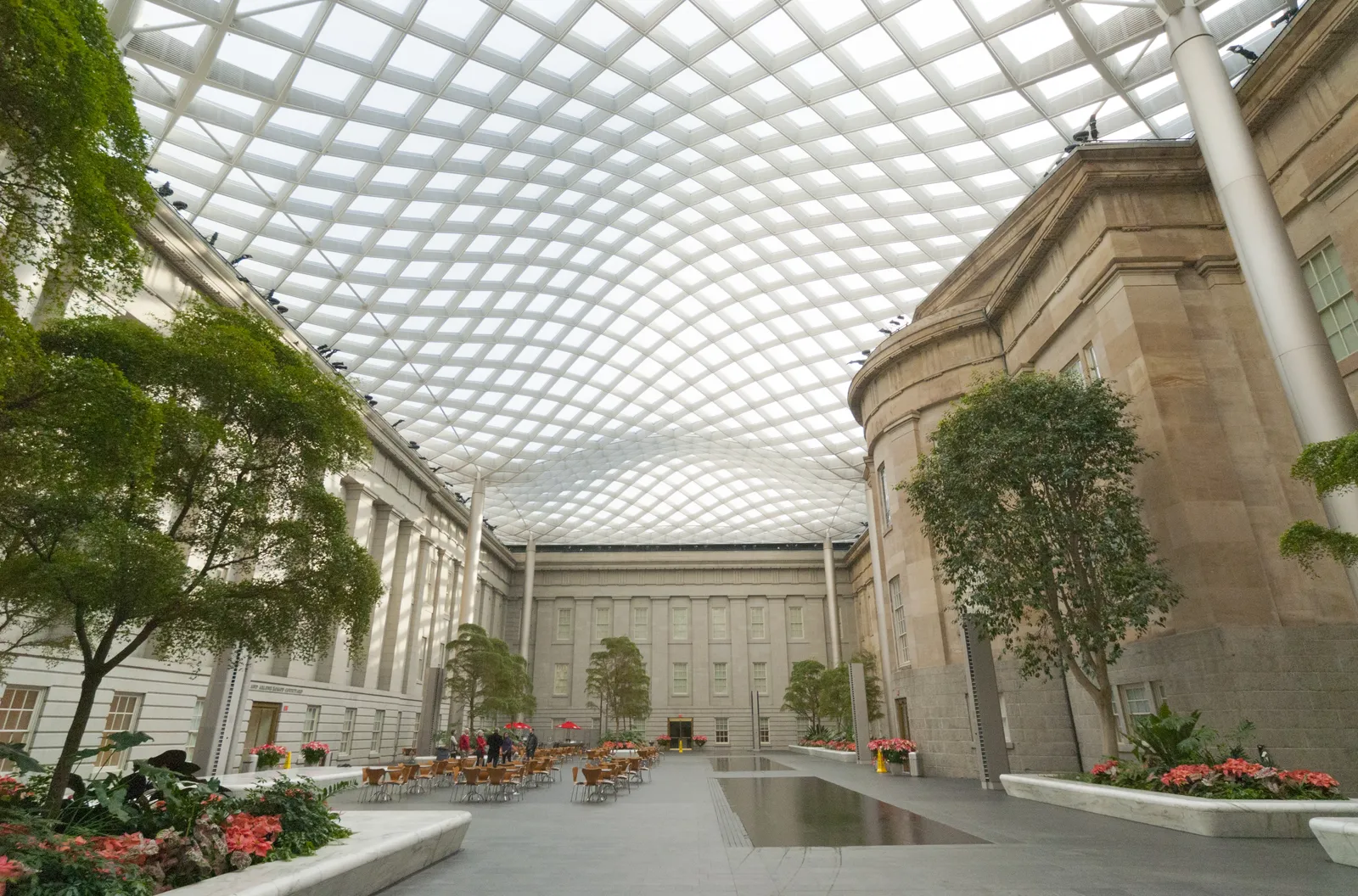
- ✓Two free Smithsonian museums share one grand building in Penn Quarter — the National Portrait Gallery and the Smithsonian American Art Museum — so a single visit gives you both.
- ✓America's Presidents gallery holds an official portrait of every U.S. president — the Portrait Gallery is the only place outside the White House to see a complete set.
- ✓The Kogod Courtyard, roofed by a rippling glass canopy from Foster + Partners, is a free indoor space to sit, with a café — one of the loveliest quiet rooms in the city.
- ✓These museums close later in the day than the Mall museums — verify current hours, but the later closing makes them a natural lead-in to dinner in Penn Quarter.
- ✓It sits at the heart of downtown, steps from the Capital One Arena and Penn Quarter's restaurants, and is one of DC's best rainy-day and date-night plans.
Two great museums under one roof
A few blocks north of the Mall, off the tourist treadmill, the Old Patent Office Building fills an entire downtown block with a Greek Revival temple that once served as a Civil War hospital and the site of Lincoln's second inaugural ball. Today it houses two free Smithsonian museums at once: the National Portrait Gallery and the Smithsonian American Art Museum, sharing the building, the courtyard and a single front door. You can see both in one visit, wander between them without thinking about where one ends and the other begins, and pay nothing for the privilege.
Because it sits in Penn Quarter rather than on the Mall, this pair is quieter and more grown-up than the big-ticket Smithsonians — fewer school groups, more space to breathe, and a sense of having found something the crowds missed. It is one of the city's best museum stops for a couple, a solo afternoon, or anyone who wants art and history without the elbows. The other advantage is timing: these museums typically stay open later than the Mall museums, which makes them an ideal way to round off a day before dinner nearby — verify the current closing time when you plan.

The presidential portraits and the Portrait Gallery
The National Portrait Gallery tells American history through faces — the people who shaped the country, painted, photographed, sculpted and sketched. Its centrepiece is 'America's Presidents', the only complete collection of presidential portraits outside the White House, anchored by the Gilbert Stuart 'Lansdowne' portrait of George Washington — the full-length image that survives in the public memory. The modern presidential portraits, including the widely admired Obama portraits by Kehinde Wiley and Amy Sherald, draw the biggest crowds; their location within the building can change as the gallery evolves, so confirm where they're hanging if you've come specially.
Beyond the presidents, the Portrait Gallery ranges across American life — poets and activists, athletes and entertainers, scientists and outlaws — in a mix of formal portraiture and lively contemporary work. The 'Struggle for Justice' gallery and the rotating special exhibitions give it real depth. It rewards a slow, browsing walk rather than a checklist; this is a museum to read as much as to look at, where each face comes with a story worth the wall text.
- 'America's Presidents' — the only full set of presidential portraits outside the White House, with Stuart's 'Lansdowne' Washington.
- The Obama portraits (Wiley and Sherald) are major draws — verify their current location before a special trip.
- Galleries on justice, sport, science, the arts and American life, plus rotating special exhibitions.
- A museum to read and browse slowly — give it more time than a quick lap.
The American Art Museum and the Kogod Courtyard
Sharing the building is the Smithsonian American Art Museum, the nation's first collection of American art and one of its broadest — folk art and Hudson River School landscapes, American Impressionism, modern and contemporary work, and the spectacular Luce Foundation Center, a visible-storage hall where thousands of objects are packed glass case upon glass case from floor to ceiling. A short walk away (in the museum's other home in the Old Patent Office annex) is the famous, glittering 'Throne of the Third Heaven', the visionary work of janitor-artist James Hampton — confirm its current display location, as installations move.
Binding the two museums together is the Robert and Arlene Kogod Courtyard, the old building's central court roofed in 2007 with an undulating glass-and-steel canopy by Foster + Partners. It is a genuinely beautiful indoor space — light, calm, planted, with a thin scrim of water along the floor and a café at one side — and it is free to sit in even if you never enter a gallery. On a hot, cold or rainy DC day it is one of the most pleasant rooms in the city to rest, read or wait out the weather. For a couple, it is quietly romantic; for a tired family, it is a lifeline.
- Smithsonian American Art Museum: folk art, landscapes, Impressionism, modern and contemporary American work.
- The Luce Foundation Center stacks thousands of artworks in visible storage — a dazzling, browsable bonus.
- The Kogod Courtyard's Foster + Partners glass canopy makes a free, beautiful indoor space with a café.
- Hampton's 'Throne of the Third Heaven' is a highlight — verify its current location.
Hours, rainy days and a Penn Quarter evening
The practical superpower of this pair is its hours. While the Mall museums tend to close in the late afternoon, the Portrait Gallery and American Art Museum typically stay open later — which transforms how you can use them. Instead of a morning rush, you can arrive after the Mall has emptied, spend a calm couple of hours with the art and the courtyard, and walk straight out into Penn Quarter for dinner. Always verify the current closing time, since hours change, but the later finish is the reason this stop pairs so well with an evening out.
It is also one of DC's best wet-weather and heatwave plans: two museums and a glass-roofed courtyard, all indoors, all free, all in one block. The nearest Metro is the Gallery Place / Chinatown station essentially at the door — verify current service on WMATA — and the Capital One Arena, the restaurants of Penn Quarter and the theatres are all within a few minutes' walk. See the art, sit in the courtyard, then choose a table nearby. Few DC days end more gracefully.
- These museums typically close later than the Mall museums — verify, then use the late finish to lead into dinner.
- A near-perfect rainy-day and heatwave plan: two free museums and a covered courtyard in one block.
- Gallery Place / Chinatown Metro is at the door; Penn Quarter restaurants and theatres are a short walk away.
- An easy, low-stress date: art, a café in the courtyard, then a nearby dinner.
At a glance, and planning the visit
Use this as a quick planning summary. Two free Smithsonian museums — the National Portrait Gallery and the Smithsonian American Art Museum — share the Old Patent Office Building, bounded by F, G, 7th and 9th Streets NW in Penn Quarter, with the Kogod Courtyard at its centre. No ticket is needed, and these museums typically keep later hours than the Mall museums, which is their great advantage; always verify the current opening times, as they change with the season.
Allow ninety minutes to two hours to take in the highlights of both museums and the courtyard, longer if you settle into the Luce Center's visible storage or a special exhibition. The Gallery Place / Chinatown Metro station sits essentially at the door, served by several lines — verify the current service on WMATA — and the restaurants and theatres of Penn Quarter are a few minutes' walk away. A reliable plan: arrive in the late afternoon as the Mall empties, give the art a couple of unhurried hours, rest in the courtyard, then walk to dinner nearby.
- What: two free Smithsonian museums (Portrait Gallery + American Art) in one downtown building, plus the Kogod Courtyard.
- Where: the Old Patent Office Building, F/G/7th/9th Streets NW, Penn Quarter.
- Cost: free admission, no general ticket; some special exhibitions may be ticketed — verify.
- Metro: Gallery Place / Chinatown at the door — verify service on WMATA.
- Time needed: 90 minutes to 2 hours for highlights; more for the Luce Center and special shows.
- Hours: typically later than Mall museums — always verify the current closing time.
The building's own history
It's worth knowing what you're standing in, because the Old Patent Office Building is one of the great survivors of nineteenth-century Washington. Begun in the 1830s, it was conceived as a temple to American invention, its halls once filled with the models that inventors were required to submit with their patents — a museum of national ingenuity before the city really had museums. During the Civil War the building was pressed into service as a hospital and barracks, its galleries lined with the wounded; the poet Walt Whitman tended soldiers here, and Clara Barton nursed among the patent cases. In March 1865, with the war all but won, Abraham Lincoln held his second inaugural ball in the great hall upstairs.
A fire in 1877 destroyed part of the collection and the building was rebuilt; in the twentieth century it narrowly escaped demolition for a car park before being saved and handed to the Smithsonian. That layered past — invention, war, mourning, celebration, near-loss and rescue — gives the place a gravity that the bright modern art on its walls plays against beautifully. You are not simply in a museum; you are standing in one of the few downtown buildings that has watched the whole American story pass through its doors. Look up at the vaulted galleries and the curving double staircase, and the history is right there in the stone.
- Built from the 1830s as a temple to American invention, once filled with patent models.
- Served as a Civil War hospital and barracks — Walt Whitman and Clara Barton both tended the wounded here.
- Lincoln held his second inaugural ball in the building's great hall in March 1865.
- Saved from demolition in the twentieth century and given to the Smithsonian — the architecture is part of the visit.
Common questions
Is the National Portrait Gallery free? Yes — both it and the Smithsonian American Art Museum it shares the building with are free Smithsonian museums, with no ticket required. Verify hours before you go.
Are the two museums separate? They share one building (the Old Patent Office Building) and the Kogod Courtyard, so a single visit covers both — you can wander freely between them.
Where are the presidential portraits? In the 'America's Presidents' gallery. The modern portraits, including the Obama portraits, are popular draws — confirm their current location if you've come specially.
How long should I spend? Allow ninety minutes to two hours to see the highlights of both museums and sit in the courtyard; more if you linger over the Luce Center's visible storage.
What's the nearest Metro? Gallery Place / Chinatown is essentially at the door. Verify current service on WMATA.
Is it a good evening plan? Yes — the later closing time (verify) makes it a natural lead-in to dinner in Penn Quarter, and it's one of the city's best rainy-day stops.
Related guides

Downtown & Penn Quarter, Washington, D.C.
The most central place to stay in Washington — Penn Quarter and the surrounding downtown, where the free museums, the big theatres, the arena, the restaurants and four Metro lines all sit within a few walkable blocks of the National Mall.
Read guide
Rainy Day in Washington, D.C.
A wet or punishingly hot day is no disaster in Washington — this is a city of free indoor wonders. From the Smithsonian halls and the National Gallery to the National Archives, food halls, galleries and the Kennedy Center, here is a full plan for a rainy day in DC that keeps you dry, warm and barely spending a cent.
Read guide
Date Night in Washington, D.C.
How to plan a date night in Washington — dinner and cocktails by neighborhood, rooftops with monument views, the Kennedy Center and U Street jazz, plus the free, romantic move of the monuments after dark.
Read guideMore in Things to Do
6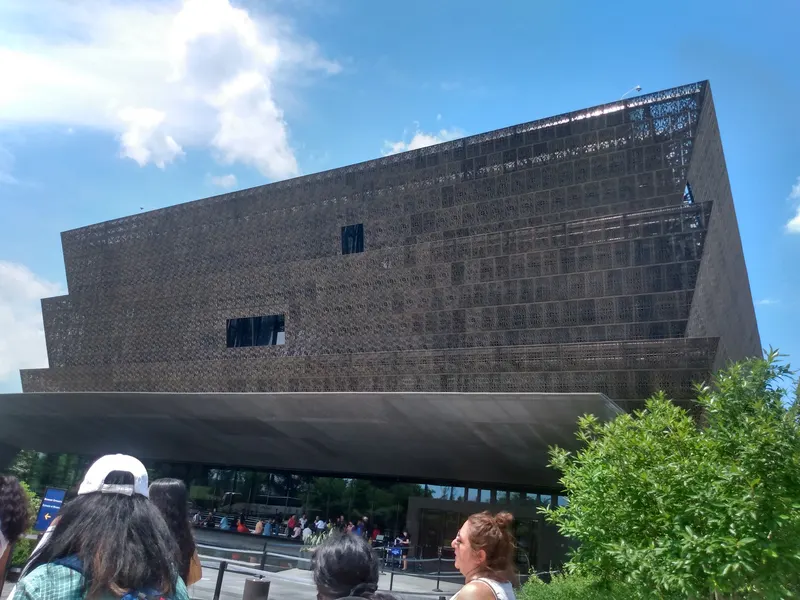
African American History Museum Guide
How to visit the National Museum of African American History & Culture on the Mall — the free timed-entry passes and how to get one, the deep underground history galleries, Sweet Home Café, the lines, how to pace an emotionally heavy visit, and the walk along the Mall.
Read guide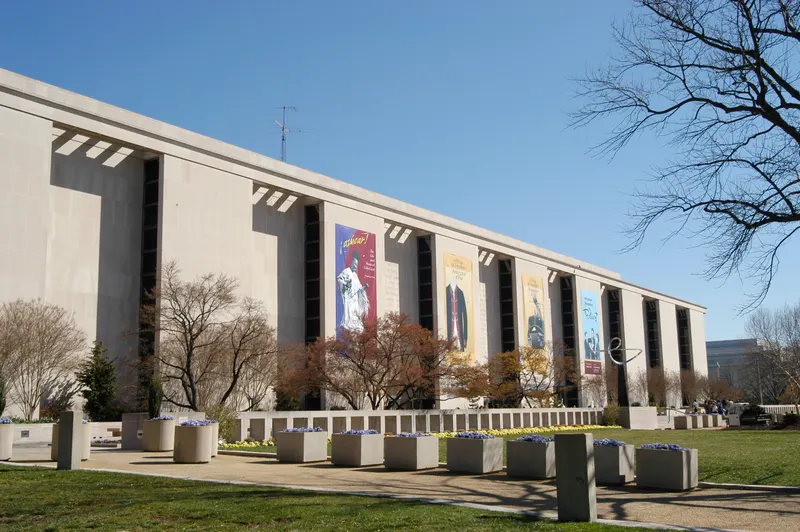
American History Museum Guide
How to visit the National Museum of American History on the Mall — the original Star-Spangled Banner, the First Ladies' gowns, the American presidency, the pop-culture icons, the food-court logistics, and how to time a visit around the school groups.
Read guide
Best Museums in Washington, D.C.
Washington has more world-class museums than any sane trip can hold, and almost all of them are free. This is a guide to the best museums in DC sorted by topic, age, ticket needs, location and rainy-day value — so you can choose two or three with confidence instead of trying to see them all.
Read guide
Best Photography Spots in Washington, D.C.
Where to make great photographs in Washington — the monument reflections, the Tidal Basin blossoms, the Capitol and Lincoln axis, Georgetown's waterfront, hidden rooftops and the golden-hour and blue-hour routes that tie them together.
Read guide
Best Things to Do in Washington, D.C.
A ranked first-trip shortlist of the best things to do in Washington, D.C. — from the National Mall and the free Smithsonian museums to a Capitol tour, the Tidal Basin and Georgetown — built so you can pick a handful and still feel you saw the city.
Read guide
Best Viewpoints in Washington, D.C.
Where to find the best views in Washington — the high monuments and free towers, the rooftop bars and cultural terraces, and the river and hilltop overlooks across the Potomac, ranked by how much effort each one asks.
Read guide