
U.S. Botanic Garden Guide
How to visit the U.S. Botanic Garden beside the Capitol in Washington — the free glass Conservatory, the outdoor gardens, the seasonal displays, why it's a great family and rainy-day stop, and how it fits the Capitol-side route.
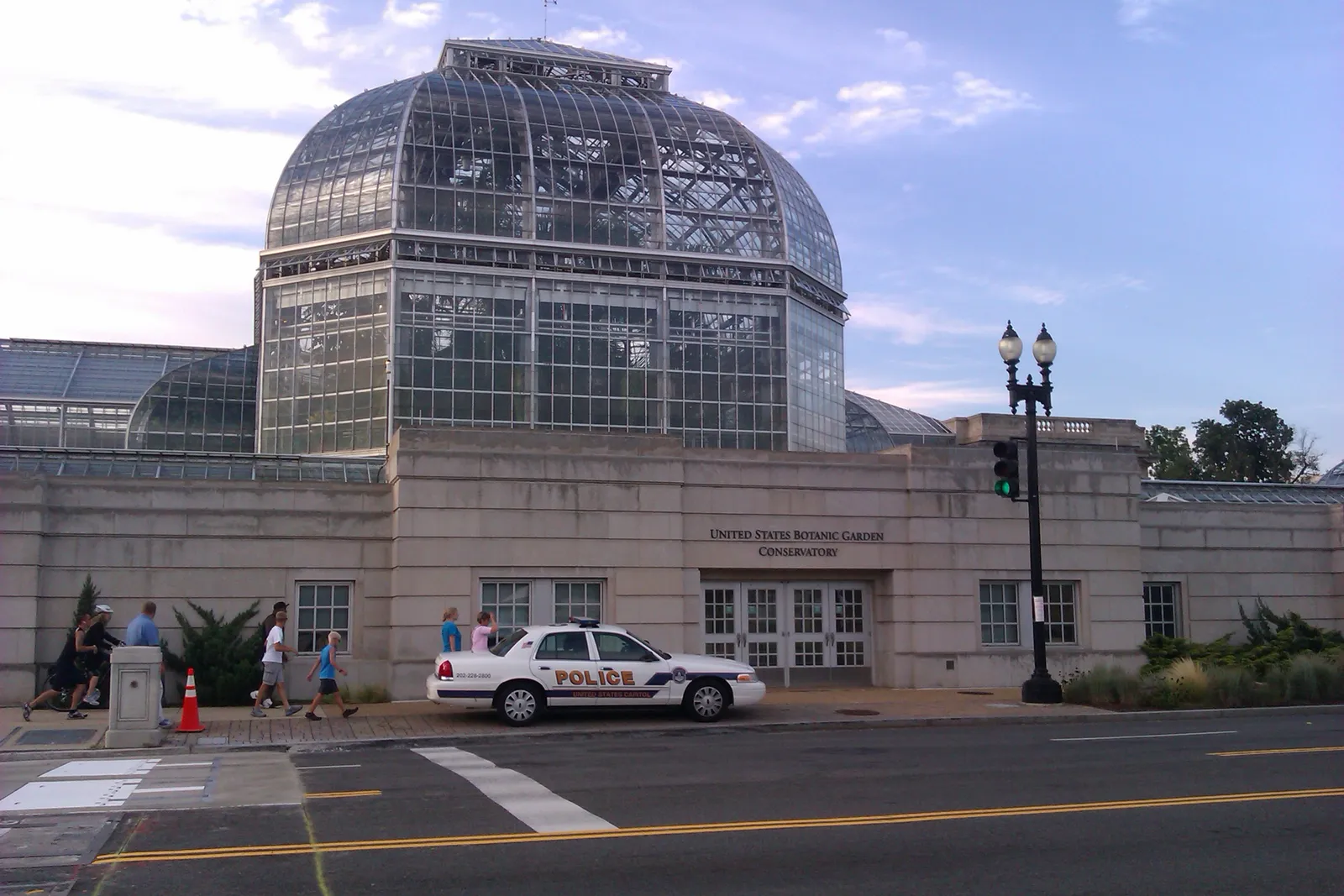
Photo: Daniel Mietchen / Wikimedia Commons · CC0
- ✓The U.S. Botanic Garden is free and sits at the foot of Capitol Hill, on the National Mall's east end — one of the easiest free stops in the city.
- ✓Its centerpiece is a grand glass Conservatory: a series of climate-controlled rooms from a steamy jungle under a tall canopy to a desert house of cacti.
- ✓Outside, Bartholdi Park and the National Garden add open-air planting beds, a rose garden and a fountain — pleasant in fair weather, skippable in bad.
- ✓Because it's mostly indoors and warm, the Conservatory is one of DC's best rainy-day and cold-weather stops, and a welcome break from museum fatigue.
- ✓Seasonal displays — especially the popular holiday model-train show — change through the year, so check the current exhibitions before you go.
A glass garden at the foot of the Capitol
Tucked at the eastern end of the National Mall, right at the foot of Capitol Hill, the United States Botanic Garden is one of those quietly delightful Washington stops that many visitors walk straight past on their way to something grander. They shouldn't. It is one of the oldest botanic gardens in North America, run by the Architect of the Capitol, and it is free — a living museum of plants under glass, with a soaring conservatory you can wander through in any weather. After a morning of marble monuments and stone museum halls, stepping into a warm, green, humming greenhouse is a genuine tonic.
The heart of it is the Conservatory, a grand glass-and-iron greenhouse whose rooms each recreate a different climate and plant world. You move from a tall, dripping jungle room with a canopy walk overhead, to orchids and ferns, to a bone-dry desert house bristling with cacti and succulents — a whole tour of the planet's plant life in a single building, steps from the Capitol. It rarely takes more than an hour, it costs nothing, and it makes a lovely contrast to everything else on the Mall.


Inside the Conservatory
The Conservatory is the reason most people come, and it is arranged as a sequence of rooms you can stroll through at your own pace. The signature space is the Jungle — a tall, glass-roofed tropical room thick with palms and vines, with an elevated walkway letting you look down through the canopy; it is humid, green and a little theatrical, and children love the catwalk view. Around it run more focused rooms: a world of orchids, a fernery, plants of medicinal and economic use, a children's garden in season, and a desert house where the air turns dry and the planting switches to cacti, agaves and succulents.
Because everything is under climate control, the Conservatory is comfortable in any weather and at any time of year — pleasantly warm on a cold day, dry on a wet one, shaded on a scorching one. That makes it both a destination in its own right and one of the most reliable backup plans on the Mall when the weather turns. Allow somewhere between forty-five minutes and an hour to do it justice without rushing; it isn't huge, and that's part of its charm — it's a complete, satisfying visit that won't eat your whole day.
- The Jungle room is the highlight — a tall tropical greenhouse with an overhead canopy walk.
- Other rooms include orchids, ferns, medicinal and useful plants, and a dry desert house of cacti and succulents.
- Everything is climate-controlled — comfortable in heat, cold or rain alike.
- Plan roughly 45 minutes to an hour; it's a complete visit that won't swallow your day.
The outdoor gardens
Beyond the glass, the Botanic Garden spreads outdoors too. Directly outside the Conservatory is the National Garden, an open-air space with planting beds, a rose garden, a lawn and a fountain, designed to show off plants of the mid-Atlantic region and the wider country. Across the street sits Bartholdi Park, a compact demonstration garden built around the ornate cast-iron Bartholdi Fountain — a pretty, often-overlooked pocket of greenery that makes a fine spot to sit for a few minutes between Mall sights.
The outdoor areas are at their best in spring, summer and early autumn, when the beds are in flower and the fountains are running; in winter or bad weather they are easily skipped in favour of the warm Conservatory. If the day is fine, though, threading the indoor and outdoor parts together gives you a varied half-hour-plus of green space at a point on the Mall that is otherwise all stone and open lawn — a small, restful counterpoint right beside the seat of government.
- The National Garden, just outside the Conservatory, has planting beds, a rose garden, a lawn and a fountain.
- Bartholdi Park across the street centres on the ornate cast-iron Bartholdi Fountain — a quiet sit-down spot.
- Outdoor areas shine in spring through early autumn; skip them for the warm Conservatory in winter or rain.
- On a fine day, combine indoor and outdoor parts for a restful green break beside the Capitol.
Seasonal displays and the holiday trains
Part of what keeps the Botanic Garden worth a repeat visit is its changing program of seasonal exhibitions, staged in the Conservatory's flexible spaces. These rotate through the year — spring flower shows, summer themes, autumn displays — so there is often something on top of the permanent collections. The most beloved is the winter holiday show, which traditionally fills the Garden Court and surrounding rooms with festive plantings and an elaborate model-train layout running past miniature buildings, including DC landmarks recreated from plant materials. It is a fixture of the city's December calendar and a hit with families.
Because these displays change and the popular holiday show can draw queues at peak times, it's worth checking the Garden's official site for what's currently on, the show dates, and whether any timed or free reservation applies during busy periods — policies and programming both vary by season. If you're visiting in December specifically for the trains, aim for a weekday or an off-peak hour to enjoy it without the heaviest crowds.
- Seasonal exhibitions rotate through the year on top of the permanent plant collections.
- The winter holiday show — festive plantings plus an elaborate model-train layout with DC landmarks — is the highlight.
- Check the official site for current displays, dates and any busy-period reservation rules before you go.
- Visiting for the December trains? Aim for a weekday or off-peak hour to dodge the crowds.
Family value and the rainy-day case
The Botanic Garden punches above its weight for families and for anyone caught out by the weather. It's free, it's short, it's warm, and the jungle canopy walk, the desert cacti and the seasonal trains give children a sequence of distinct, easy-to-grasp rooms to move through — a refreshing change from the scale and seriousness of the Mall museums. It also works as a palate-cleanser between heavier stops: half an hour among the orchids resets everyone before the next big building.
It is, just as importantly, one of the city's strongest bad-weather options. When rain or summer heat scuppers a monument walk, the Conservatory offers a complete, comfortable, no-cost indoor visit a short distance from the rest of the Mall — and it pairs naturally with the nearby indoor museums for a full wet-weather day. Keep it in your back pocket as the flexible stop you can drop into or out of depending on how the day and the sky are behaving.

When to go and how long to stay
Part of the Botanic Garden's appeal is how forgiving it is to fit in. Because the Conservatory is compact and the visit is short, you can drop in almost any time of day without derailing a Mall itinerary — there's no timed ticket to plan around for general admission, and no need to commit a whole morning. The mornings are quietest before the Mall crowds drift east, while late afternoon catches softer light through the glass; either works, and the indoor climate means the weather outside barely matters to your comfort once you're through the doors.
Season changes the balance between indoors and out. In spring and early autumn the outdoor National Garden and Bartholdi Park are at their flowering best, so allow a little extra time to wander them alongside the Conservatory. In high summer the cool, humid jungle room is a welcome refuge from the heat; in winter, the Conservatory's warmth and the holiday show make it a destination in its own right while the outdoor beds rest. As a rule of thumb, plan around an hour for the Conservatory alone, or closer to ninety minutes if the gardens are in flower and you want to take your time.
- No timed ticket is needed for general admission — drop in any time without reworking your Mall plan.
- Mornings are quietest; late afternoon gives softer light through the glass. The indoor climate makes the weather irrelevant.
- Spring and early autumn favour the outdoor gardens; summer and winter favour the warm Conservatory.
- Budget about an hour for the Conservatory, or ~90 minutes if you add the gardens in bloom.
Where it sits, and the Capitol-side route
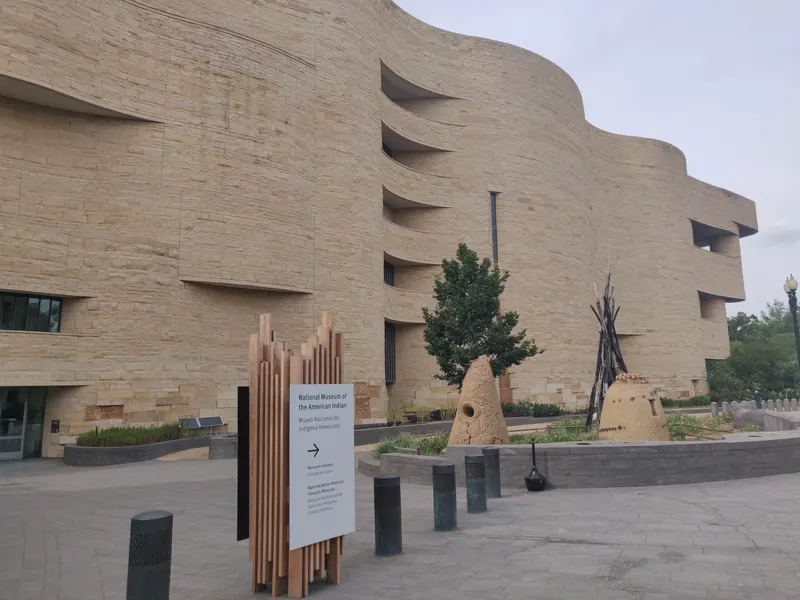
The Botanic Garden's location is half its appeal: it stands at the southwest foot of the Capitol grounds, at the eastern end of the National Mall, which makes it a natural bookend to a Capitol Hill morning. A common, sensible route is to tour or view the Capitol, walk down to the Botanic Garden's Conservatory, and then carry on west along the Mall to the Smithsonian museums — with the National Museum of the American Indian, whose architecture and curving stonework make a striking neighbour, just across the way. Verify the nearest Metro station and any service changes on WMATA; the whole eastern-Mall cluster is comfortably walkable.
Because admission is free and the visit is short, the Garden slots into almost any Mall plan without commitment — duck in for the jungle and the cacti when you pass, linger longer if the seasonal show is on, and step back out into the city when you're ready. It asks very little and gives back a warm, green, quietly memorable half-hour at one of the busiest, hardest-edged corners of the capital.


Related guides
National Museum of the American Indian Guide
How to visit the National Museum of the American Indian in Washington — the curved limestone architecture, the Native-told exhibitions, the Mitsitam Native Foods Café, who it suits, and how to pair it with the Capitol-side sights nearby.
Read guide
U.S. Capitol Tour Guide
How to tour the United States Capitol — booking a free pass through the Capitol Visitor Center or your member of Congress, what the guided tour covers (the Rotunda, the old Hall, the Crypt), how to clear security, and how to add the Library of Congress and a House or Senate gallery visit.
Read guide
Rainy Day in Washington, D.C.
A wet or punishingly hot day is no disaster in Washington — this is a city of free indoor wonders. From the Smithsonian halls and the National Gallery to the National Archives, food halls, galleries and the Kennedy Center, here is a full plan for a rainy day in DC that keeps you dry, warm and barely spending a cent.
Read guideMore in Things to Do
6
African American History Museum Guide
How to visit the National Museum of African American History & Culture on the Mall — the free timed-entry passes and how to get one, the deep underground history galleries, Sweet Home Café, the lines, how to pace an emotionally heavy visit, and the walk along the Mall.
Read guide
American History Museum Guide
How to visit the National Museum of American History on the Mall — the original Star-Spangled Banner, the First Ladies' gowns, the American presidency, the pop-culture icons, the food-court logistics, and how to time a visit around the school groups.
Read guide
Best Museums in Washington, D.C.
Washington has more world-class museums than any sane trip can hold, and almost all of them are free. This is a guide to the best museums in DC sorted by topic, age, ticket needs, location and rainy-day value — so you can choose two or three with confidence instead of trying to see them all.
Read guide
Best Photography Spots in Washington, D.C.
Where to make great photographs in Washington — the monument reflections, the Tidal Basin blossoms, the Capitol and Lincoln axis, Georgetown's waterfront, hidden rooftops and the golden-hour and blue-hour routes that tie them together.
Read guide
Best Things to Do in Washington, D.C.
A ranked first-trip shortlist of the best things to do in Washington, D.C. — from the National Mall and the free Smithsonian museums to a Capitol tour, the Tidal Basin and Georgetown — built so you can pick a handful and still feel you saw the city.
Read guide
Best Viewpoints in Washington, D.C.
Where to find the best views in Washington — the high monuments and free towers, the rooftop bars and cultural terraces, and the river and hilltop overlooks across the Potomac, ranked by how much effort each one asks.
Read guide