Vietnam Veterans Memorial Guide
A respectful guide to the Vietnam Veterans Memorial on the National Mall — Maya Lin's black-granite Wall, how to find a name, the Three Servicemen and Vietnam Women's Memorial statues, the etiquette of visiting, and how to pair it with the Lincoln and Korean War memorials.
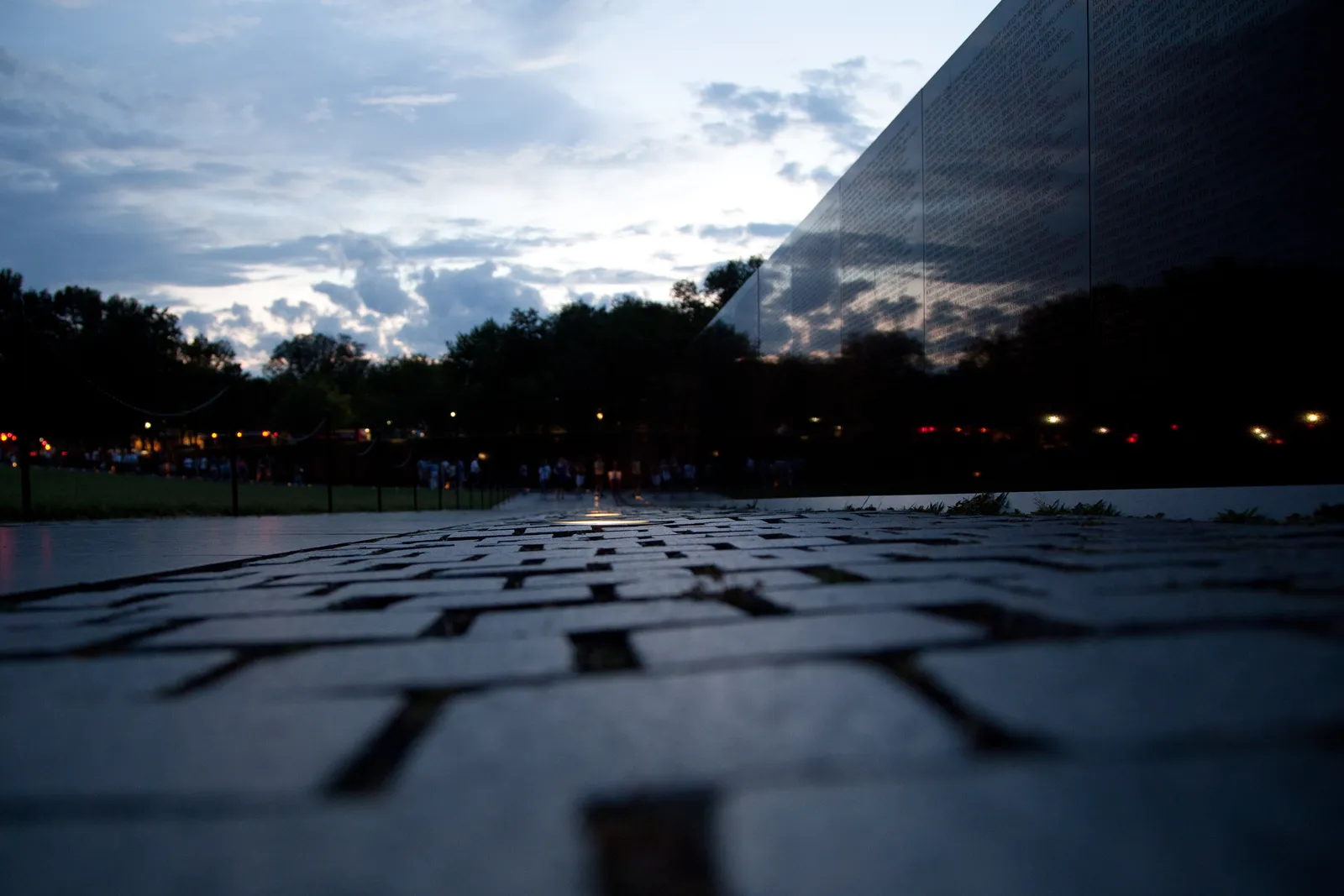
Photo: Almonroth / Wikimedia Commons · CC BY-SA 3.0
- ✓Maya Lin's Wall carries more than 58,000 names of the Americans who died or remain missing from the Vietnam War, in the order they were lost.
- ✓The polished black granite is mirror-bright on purpose — you see yourself, the names and the Washington Monument and Lincoln Memorial reflected together.
- ✓Two later additions complete the site: the Three Servicemen bronze and the Vietnam Women's Memorial.
- ✓It is free, open and lit 24 hours, set quietly into the lawn just north of the Reflecting Pool near the Lincoln Memorial.
- ✓This is a place of mourning first and a monument second — visitors keep their voices low, and many leave letters, photographs and flowers at the base.
A memorial that goes into the earth
The Vietnam Veterans Memorial does almost the opposite of what a war monument usually does. There is no soldier on a pedestal, no triumphal arch, no flag held aloft at its centre. Instead, two long walls of polished black granite are cut into a gentle slope of the Mall, meeting at a shallow V and rising from nothing at each end to about ten feet at the centre. You walk down a path beside it, the names rising over your head as the ground falls away, and then back up into the light. The design was the work of Maya Lin, then a twenty-one-year-old architecture student, whose anonymous competition entry won out of more than 1,400 submissions in 1981.
Lin's choice of reflective black granite was deliberate and, at the time, fiercely debated. Polished to a mirror finish, the Wall shows you your own face among the engraved names, and on a clear day it catches the Washington Monument at one end of the V and the Lincoln Memorial at the other — binding the loss of the war to the wider story of the country. Where many memorials tell you what to feel, this one simply holds the names and lets you bring your own grief or curiosity to them. The result, dedicated in 1982, became one of the most visited and most loved memorials in Washington.
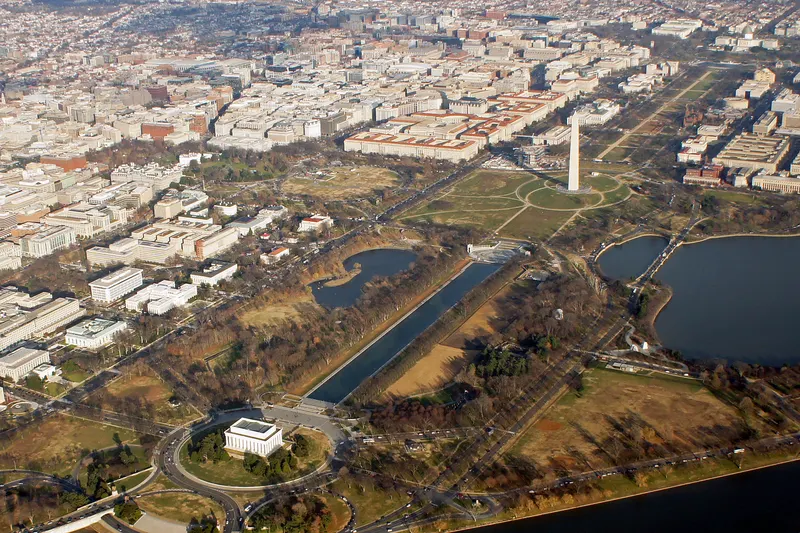
It sits in the trees just north of the Lincoln Memorial Reflecting Pool, a short walk from the Lincoln Memorial steps. Because it is set low and lined with greenery, it is easy to come upon it suddenly — which is part of how it works.

The Wall, and how to read it
The Wall carries more than 58,000 names — the Americans who died in the Vietnam War or remain unaccounted for. They are listed not alphabetically but chronologically, by the date of casualty, beginning at the apex where the two walls meet and reading outward to the east, then resuming at the far western end and reading back in to the apex. The effect is that the war begins and ends at the same point, closing a circle. Names are marked with a small symbol: a diamond beside a confirmed death, a cross beside those still missing. If a missing service member is later confirmed dead, a diamond is superimposed; if one returns alive — which has not yet happened — a circle would be added around the cross.
Finding a specific name is straightforward and worth doing if you have any connection. Directories at each end of the Wall, and the online 'Wall of Faces' run by the memorial's fund, give the panel and line number for every name. National Park Service rangers and volunteers are usually on hand near the apex and will look up a name for you and help you find it. Once you know the panel, the staff can lend you the materials to make a pencil rubbing of the name onto paper to take home — a small ritual that means a great deal to many families.
Whether or not you are looking for someone, walk the full length slowly. The Wall's power is cumulative: the names start small, build to a wall taller than you at the centre, and recede again — a physical sense of the war's mounting and then ebbing cost that a list on a page could never give.
- Names are in chronological order of casualty, beginning and ending at the central apex.
- A diamond marks a confirmed death; a cross marks those still missing in action.
- Use the printed directories on site or the online 'Wall of Faces' to find a panel and line number.
- Rangers and volunteers near the apex will locate names and help with pencil rubbings.

The two statues, and the rest of the site
Maya Lin's Wall was so unlike a traditional memorial that, in the heated debate after its design was chosen, a more conventional element was added nearby. The Three Servicemen — a bronze trio of soldiers by Frederick Hart, unveiled in 1984 — stands a short distance away, looking toward the Wall. The three figures, deliberately diverse in their features, seem to gaze at the names of their fallen comrades, and the statue and the Wall are now understood to speak to each other across the clearing. A flagstaff with the service emblems stands close by.
In 1993 the Vietnam Women's Memorial was added to honour the women, most of them nurses, who served in Vietnam. Glenna Goodacre's bronze shows three uniformed women and a wounded soldier, and it acknowledges a part of the war's service that the original design did not name. It stands a little to the south, near the Three Servicemen, ringed by eight yellowwood trees.
Together the three elements — the Wall, the Three Servicemen and the Women's Memorial — make up the complete memorial. Many visitors see only the Wall and miss the statues entirely, set back as they are among the trees; it is worth the few extra minutes to find both.
Etiquette: how to visit well
More than almost any monument in Washington, the Vietnam Veterans Memorial is a place where people come to grieve. On any given day you may pass a veteran tracing a friend's name, a family at the panel of a father or brother, a school group falling unexpectedly silent. The simplest courtesy is to behave as you would at a graveside: keep your voice low, stay off the grass against the Wall, and give people at the panels room and time. It costs nothing and it is the whole point of the place.
Visitors have left objects at the base of the Wall since the day it opened — letters, photographs, medals, boots, dog tags, a can of beer for a lost friend. The National Park Service collects nearly all of these every day and preserves them; the practice is welcomed, not discouraged. If you leave something, leave it at the base of the relevant panel. Pencil rubbings of a name are likewise encouraged; ask a ranger for paper and a pencil. Photography is fine, including the reflections, but be mindful of the people around you and never pose cheerfully against the names — this is not that kind of backdrop.
It is a site that asks something of its visitors, and meeting that ask is what makes it memorable. Children, given a quiet word of explanation first, almost always rise to it.
The controversy, and why the design won
It is hard, now that the Wall is among the most beloved memorials in America, to remember how bitterly it was opposed at first. When Maya Lin's design was selected in 1981 — chosen anonymously by a jury from over 1,400 entries — some veterans and commentators recoiled. They wanted heroism and a flag, not a black gash in the ground; one critic called it 'a black wall of shame'. The colour, the absence of a traditional statue, the choice of a young, unknown student, even Lin's own background all became flashpoints in a very public fight.
The compromise that resolved it shaped the site you visit today. Rather than alter Lin's Wall, the authorities added the Three Servicemen statue and a flag nearby in 1984, giving the more conventional, figurative memorial that critics had wanted while leaving the Wall intact. Time did the rest. As families and veterans came and found the Wall did exactly what a memorial should — let them grieve, find a name, leave a token — the early anger faded, and the design's restraint came to be seen as its greatest strength. The Vietnam Veterans Memorial is now widely regarded as one of the most successful pieces of public architecture in the country, and it changed how memorials are designed everywhere.
Knowing that history deepens a visit. The Wall and the statues that face it are not just two parts of one site; they are a record of a country arguing about how to remember a divisive war, and ultimately finding room for more than one answer.

When to go, and how to pair it
The Wall is open and lit through the night, and it is at its quietest and most powerful in the early morning and after dark, when the crowds thin and the low lighting along the path takes over. Midday in summer brings the largest groups and the least solitude. Whenever you come, allow more time than you expect — most people plan a few minutes and stay much longer.
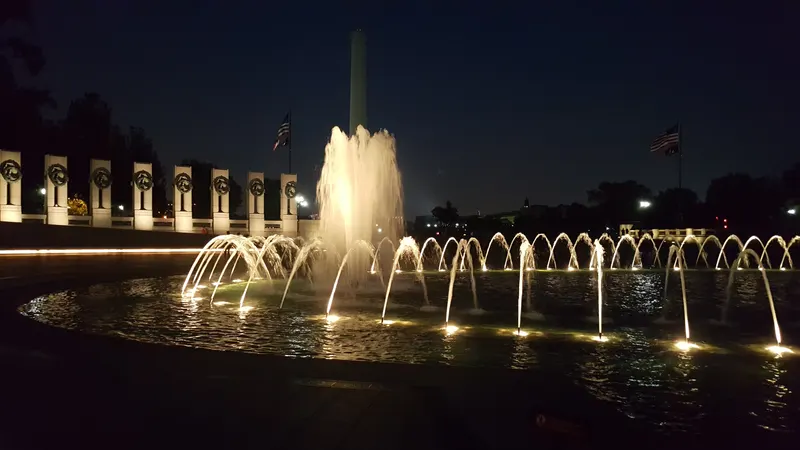
It pairs into the Mall's memorial cluster with no effort. The Lincoln Memorial is a short walk to the west; the Korean War Veterans Memorial sits across the Reflecting Pool to the south, and the World War II Memorial closes the east end of the pool. A slow loop of all four, ideally at the edges of the day, is one of the best things you can do on the Mall and costs nothing. Save the Vietnam Wall for last in the loop if you can — it is the one that stays with you.
Practical notes: the memorial is step-free along a paved path and accessible to wheelchairs. The nearest Metro stations are Foggy Bottom–GWU and Smithsonian, both a walk away across the Mall. Rangers are typically on duty during the day; treat any specific staffed hours as things to verify with the National Park Service before relying on them.


Finding a name before you arrive
If you are coming to find a specific name, a little preparation makes the visit smoother and more meaningful. The memorial fund's online 'Wall of Faces' lists every name on the Wall, with a photograph and biography for many, and gives the panel and line number where each falls. Look up the person before you travel, note the panel (numbered outward from the central apex) and line, and you will walk straight to them rather than searching a wall of more than fifty-eight thousand names in the moment.
On site, printed directories stand at each end of the Wall, and rangers and volunteers near the apex will look up a name for you if you have not done it in advance. They can also supply paper and a pencil so you can take a rubbing of the name — gently laying the paper over the engraving and shading across it — which is the keepsake most families want. There is no charge for any of this.
Even if you have no personal connection, taking a moment to read the directory, or to look up a name from your own home town, turns the Wall from an abstract field of letters into something specific and human. That shift is exactly what Maya Lin's design was built to produce.

At a glance
Location: just north of the Reflecting Pool, near the Lincoln Memorial, on the National Mall.
Cost: free. Open 24 hours and lit at night; rangers usually on duty daytime (verify seasonal hours with NPS).
Time needed: 30–60 minutes; longer if you are finding a name.
Three elements: Maya Lin's Wall (dedicated 1982, 58,000+ names), the Three Servicemen bronze (1984) and the Vietnam Women's Memorial (1993).
Nearest Metro: Foggy Bottom–GWU or Smithsonian. Step-free paved access.
Related guides
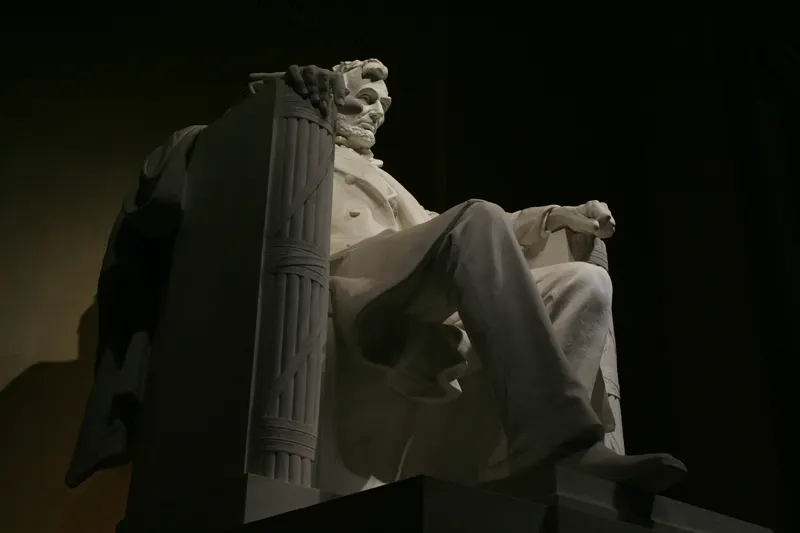
Lincoln Memorial Guide, Washington, D.C.
When to visit the Lincoln Memorial, the views from its steps, how to reach it by Metro, the Reflecting Pool route and what to notice inside — the marble statue, the Gettysburg Address and the history made on these steps.
Read guide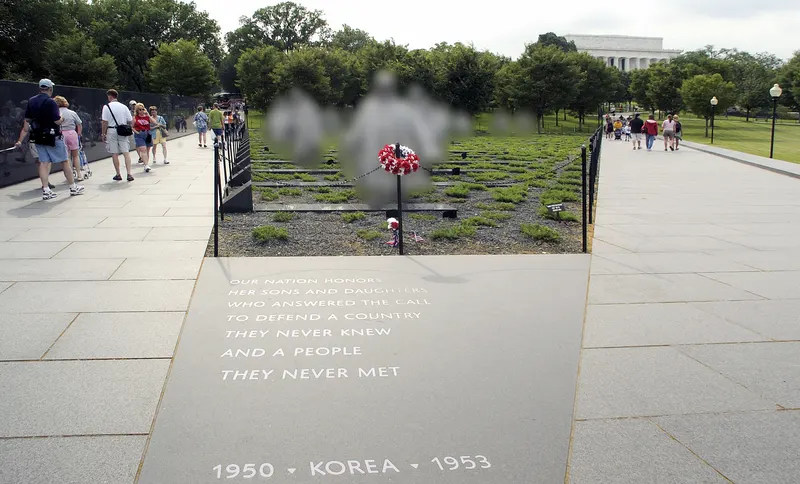
Korean War Veterans Memorial Guide
What to see at the Korean War Veterans Memorial on the National Mall — the column of nineteen stainless-steel soldiers, the etched granite mural wall, the Pool of Remembrance and the new Wall of Remembrance, why it is unforgettable after dark, and how to pair it with Lincoln and the Vietnam Wall.
Read guide
Washington, D.C. Monuments & Memorials Guide
Which of Washington's monuments and memorials to prioritise, the most efficient way to walk them, and when to come for fewer crowds — from the Lincoln and Jefferson to the war memorials and the Tidal Basin.
Read guide