
Washington Monument Guide
How to visit the Washington Monument — the free timed-entry ticket strategy, security, the view from the top, the best times to go and the backup plans when it is closed.
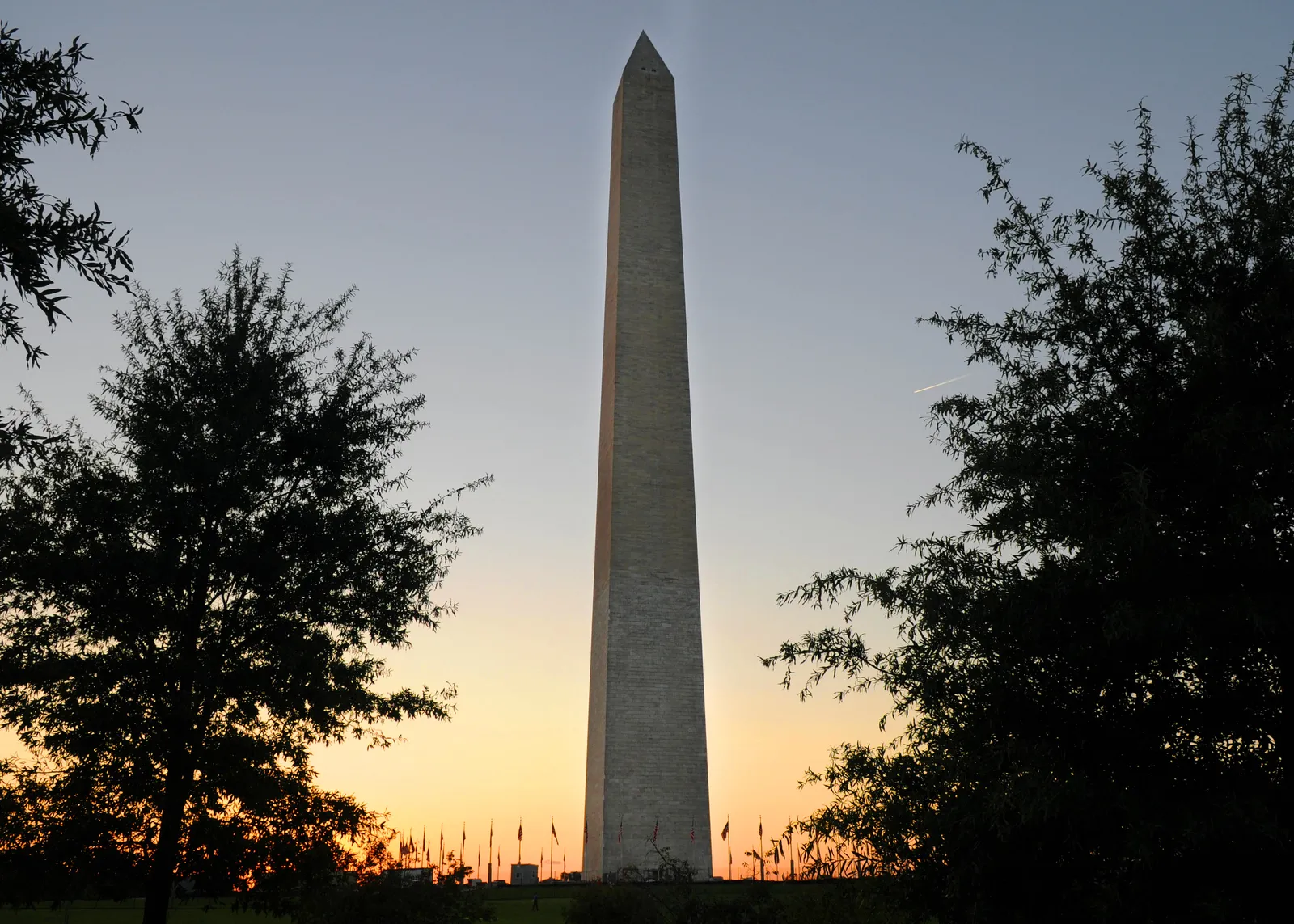
Photo: Andrea Kennedy / Wikimedia Commons · CC BY-SA 4.0
- ✓At 555 feet, the Washington Monument is the tallest structure in the city — by local custom, nothing is built to overshadow it.
- ✓Going up is free, but it needs a timed-entry ticket: a small fee covers the online booking service, or you can queue for same-day passes on the day.
- ✓Look closely about a third of the way up and you'll see the marble change colour — the build stalled for over twenty years, and the second batch of stone never quite matched.
- ✓The observation level sits near 500 feet, with small windows facing all four directions — the Capitol one way, the Lincoln Memorial and the White House the others.
- ✓The grassy circle around the base is one of the best free spots in the city to watch the sun set behind the Lincoln Memorial.
The needle at the centre of the city
Stand anywhere on the National Mall and the Washington Monument is your compass. The pale marble obelisk rises 555 feet from a low grassy hill at the heart of the lawn, halfway between the Capitol and the Lincoln Memorial, and almost everything in this part of the city is arranged in relation to it. It is the tallest structure in Washington — and tall buildings here are kept deliberately low, so the obelisk reads cleanly against the sky from miles away.
It honours George Washington, the first president and the commander who won the Revolution, and its form is plain on purpose: no statue, no figure, just a clean Egyptian-style obelisk that lets the scale do the talking. Construction began in 1848, stalled for more than twenty years over money and the Civil War, and finished in the 1880s — which is why the stone changes colour about a third of the way up, where the first marble ran out and the later quarry never matched it. Once you notice the seam you can't unsee it, and it is one of the quiet pleasures of standing at the base.
Most visitors photograph the monument from a distance and never go inside — and that is a perfectly good plan, because the obelisk is more striking as a silhouette than the view from the top is essential. But riding the elevator to near the summit is a memorable thing to do on a clear day, and because it's free, it's worth attempting if the timing works out.


At a glance
A quick orientation before you plan the visit. Treat the volatile details — fees, exact release times, opening hours — as things to confirm on the National Park Service page the week you travel, because they shift with season and staffing.
- What it is: a 555-foot marble obelisk honouring George Washington, the first U.S. president, at the centre of the National Mall.
- Cost: free to go up, but a timed-entry ticket is required; only an online booking carries a small service fee.
- Top: an enclosed observation level near 500 feet, reached by elevator in about a minute.
- Time needed: roughly 30–45 minutes inside, plus the security queue; the exterior is worth lingering over for longer.
- Getting there: a flat walk from the Smithsonian and Federal Triangle Metro stations; it sits dead-centre on the Mall.
- Best for: a clear-day high view, sunset over the Lincoln Memorial from the base, and that classic obelisk photograph.
- Note: closes periodically for repairs, elevator faults and weather — always check status the morning of.
A monument that took forty years
The story of how the obelisk got built is half the interest of standing under it. A private society laid the cornerstone in 1848 and raised the shaft to about 150 feet before the money ran out in the 1850s; political turmoil and then the Civil War left a stubby, unfinished stump on the Mall for the better part of two decades — a national embarrassment that Mark Twain and others mocked at the time. The federal government finally took the project over, the Army Corps of Engineers shored up the foundation, and the monument was completed and capped with a small aluminium tip — then a precious metal — in 1884, opening to the public a few years later.
That long pause is written into the stone. The marble for the second phase came from a different quarry and has weathered differently, so a clear horizontal line marks where the old work stopped and the new began, roughly a third of the way up. When it was finished it was the tallest structure in the world, briefly, until the Eiffel Tower overtook it. It remains, by long-standing local custom and height limits in the District, the tallest thing on the Washington skyline — which is why it reads so cleanly from every direction.
Getting tickets and going up
Going to the top is free, but you cannot simply walk in — entry is by timed ticket, and the easiest route is to reserve online in advance through the National Park Service's ticketing partner. There is a small per-ticket service charge for the convenience of booking ahead (verify the current amount when you book), and tickets are typically released on a rolling schedule — a block well in advance, plus a fresh batch the day before. They go quickly in peak season, so set a reminder for the release time rather than hoping for luck.
If you don't have an advance ticket, there is usually a same-day, walk-up option: a limited number of free timed passes handed out from the lodge at the monument grounds on the morning of, first-come, first-served. In spring and summer that line forms early and the passes can be gone not long after they're released, so treat the walk-up route as a dawn errand, not a midday gamble. Times, release windows and the exact number of passes change, so check the NPS Washington Monument page before you build a day around it.
Inside, the elevator climbs to the observation level near 500 feet in about a minute. Small windows face all four directions: the Capitol down the green spine of the Mall, the Lincoln Memorial and Reflecting Pool the opposite way, the White House to the north and the Jefferson Memorial across the Tidal Basin to the south. A short museum level just below shows the history of the build and the commemorative stones set into the interior walls. The whole visit up top is brief — this is a quick, high look at the city, not a lingering one.
- Book ahead online for peace of mind (small service fee applies — verify the amount and release schedule when booking).
- No advance ticket? Aim for the same-day walk-up passes early in the morning, first-come, first-served.
- Bring photo ID for the ticket holder and pack light — there's an airport-style security screening to clear.
- Large bags, food and drink are not allowed up; check current prohibited-item rules on the NPS page before you arrive.
- The visit up top is short — plan maybe 30–45 minutes from security to back outside, longer if there's a queue.
Security, closures and what slows you down
The Washington Monument is run by the National Park Service and screened like a federal building. Everyone passes through a security checkpoint at the entrance with metal detectors and bag X-ray, so the practical bottleneck is rarely the elevator — it's the line to get in. Travel light, leave the big backpack at the hotel, and you'll move through faster.
It is also a structure that closes more often than most. Over the years it has shut for earthquake repairs, for an elevator-modernisation project, and for shorter unplanned stretches when the elevator faults. Weather can close it too — the observation level is high and exposed, and lightning in the area will pause operations. None of this is reason to skip the monument, since the best of it is the exterior, but it is reason to check the NPS status page the morning of and to keep a backup in your pocket.
- Closures happen — for elevator faults, maintenance, weather and the occasional longer repair project. Always check status the day you plan to go.
- Security screening is the real wait; the fewer and smaller your bags, the quicker you're through.
- If it's closed or sold out, you lose nothing essential — the obelisk is a sight to look at, not just to climb.
Best time to visit — and the view from the ground
For the obelisk itself, the magic hours are the edges of the day. At sunset the white marble catches a warm wash of light and the whole shaft glows; after dark it is floodlit and visible across the city. The grassy circle of flagpoles around the base is free, never closes, and is one of the finest spots in Washington to watch the sun drop behind the Lincoln Memorial — bring a blanket and you have an evening's plan that costs nothing.
If you are going up, a clear morning gives the cleanest long views before the day's haze builds, and the lines for same-day passes are freshest then. Avoid the middle of a hot summer afternoon, when the Mall bakes, the haze flattens the distance and the queues are at their worst. Spring and autumn are the kindest seasons all round, and a spring visit pairs naturally with the cherry blossoms ringing the Tidal Basin just to the south.
However you time it, treat the monument as the centre of a loop rather than a single stop. From the base it is a short, flat walk west to the World War II Memorial and the Lincoln, south to the Jefferson and the Tidal Basin, and east toward the Smithsonian museums — so the obelisk is less a destination than the hinge the whole Mall turns on.

Common questions
Is the Washington Monument free? Yes — admission to the top is free, but it requires a timed-entry ticket. The only cost is a small service fee if you reserve online in advance; same-day walk-up passes are free. Verify the current fee when you book.
Can you go inside without a ticket? No. Both advance and same-day entry are by timed ticket, and there is no general walk-in admission. If you have no ticket, the same-day pass line is your route in.
How tall is it, and how high do you go? The monument stands 555 feet. The elevator carries you to an observation level near 500 feet, with windows on all four sides.
How long does a visit take? Plan roughly 30–45 minutes once you're inside, plus whatever the security line adds. The view itself is a quick stop.
What if it's closed? The monument closes periodically for repairs, elevator issues and weather. Check the NPS status the morning of your visit, and remember the exterior — the part most people remember — is there to enjoy from the lawn regardless.
Sources

Related guides

Washington Monument Tickets
How Washington Monument tickets actually work — booking online ahead, same-day walk-up passes, what they cost, when they're released and the backup viewpoints if you miss out.
Read guide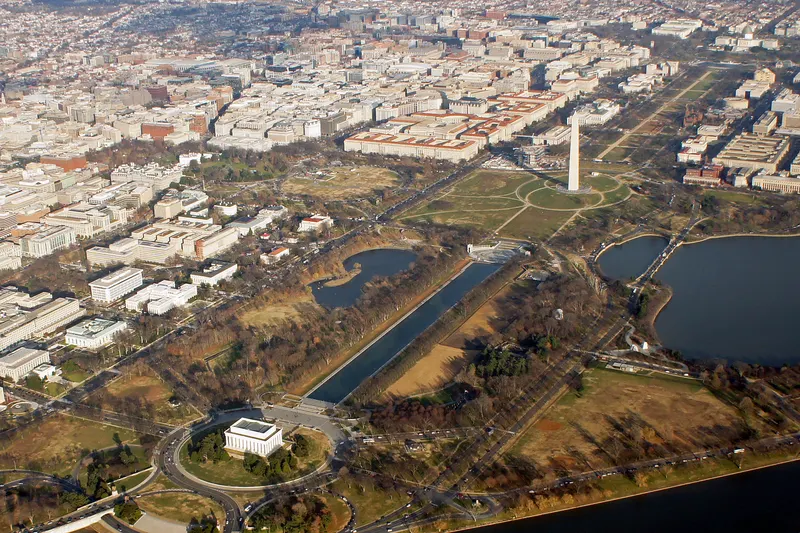
National Mall Guide, Washington, D.C.
How to plan the National Mall by section — the real walking distances, where the monuments and museum stops sit, and where to find shade, food, bathrooms, the nearest Metro and the best night routes.
Read guide
Best Viewpoints in Washington, D.C.
Where to find the best views in Washington — the high monuments and free towers, the rooftop bars and cultural terraces, and the river and hilltop overlooks across the Potomac, ranked by how much effort each one asks.
Read guideMore in Things to Do
6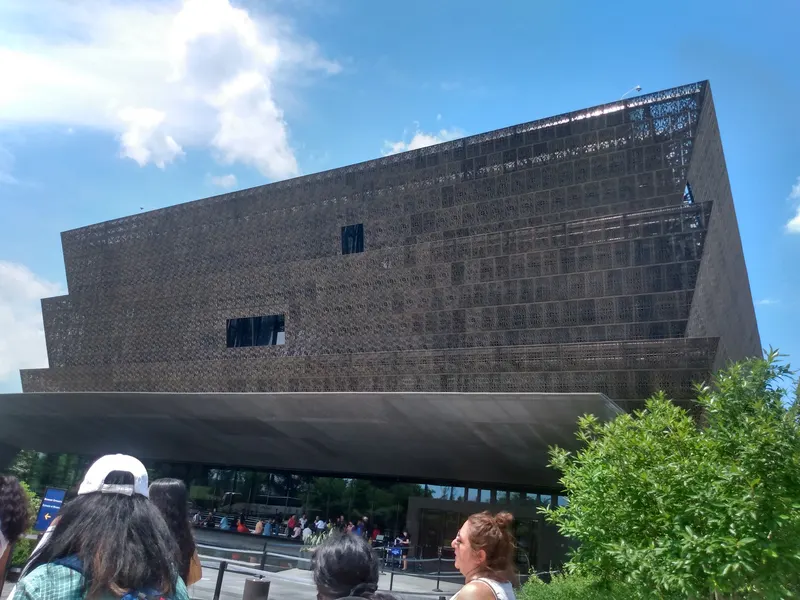
African American History Museum Guide
How to visit the National Museum of African American History & Culture on the Mall — the free timed-entry passes and how to get one, the deep underground history galleries, Sweet Home Café, the lines, how to pace an emotionally heavy visit, and the walk along the Mall.
Read guide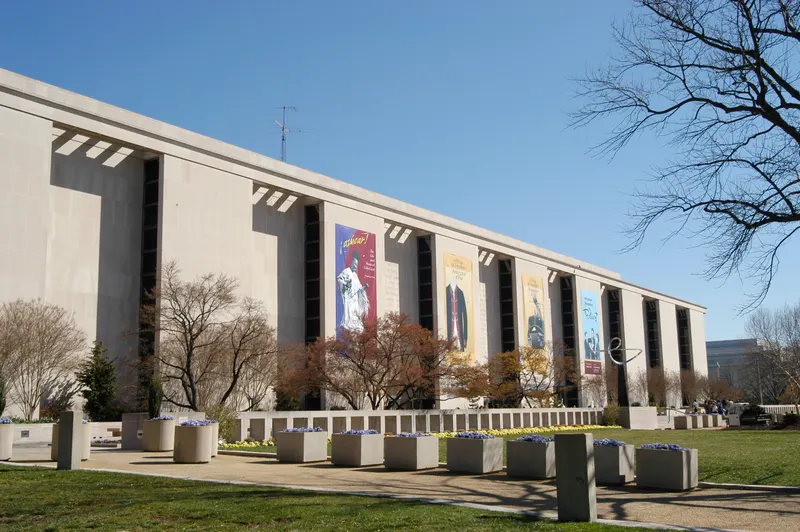
American History Museum Guide
How to visit the National Museum of American History on the Mall — the original Star-Spangled Banner, the First Ladies' gowns, the American presidency, the pop-culture icons, the food-court logistics, and how to time a visit around the school groups.
Read guide
Best Museums in Washington, D.C.
Washington has more world-class museums than any sane trip can hold, and almost all of them are free. This is a guide to the best museums in DC sorted by topic, age, ticket needs, location and rainy-day value — so you can choose two or three with confidence instead of trying to see them all.
Read guide
Best Photography Spots in Washington, D.C.
Where to make great photographs in Washington — the monument reflections, the Tidal Basin blossoms, the Capitol and Lincoln axis, Georgetown's waterfront, hidden rooftops and the golden-hour and blue-hour routes that tie them together.
Read guide
Best Things to Do in Washington, D.C.
A ranked first-trip shortlist of the best things to do in Washington, D.C. — from the National Mall and the free Smithsonian museums to a Capitol tour, the Tidal Basin and Georgetown — built so you can pick a handful and still feel you saw the city.
Read guide
Best Washington, D.C. Tours
When a tour is genuinely worth it in Washington and when the city is better free and self-guided — monument night tours, bike and Segway loops, food and neighbourhood walks, official Capitol and government-building tours, and the day trips that need a coach.
Read guide