Washington, D.C. Events Calendar
The year in Washington — when the cherry blossoms bloom, where to be for July 4th fireworks, Pride, the Smithsonian Folklife Festival, JazzFest and the holiday lights. A month-by-month guide to the city's free festivals and seasonal events.

Photo: Connor Gan / Unsplash
- ✓Washington runs an unusually rich, mostly free events calendar — the great civic set-pieces happen on the National Mall, open to everyone.
- ✓Spring is dominated by the National Cherry Blossom Festival around the Tidal Basin; summer by July 4th on the Mall and the Smithsonian Folklife Festival.
- ✓June brings Capital Pride, one of the country's larger Pride celebrations, with a parade and festival through the city.
- ✓Autumn quietens down to Veterans Day at Arlington; winter lights up with the National Christmas Tree and holiday markets.
- ✓Almost every headline event is free to attend — but exact dates shift each year, so verify the current schedule before you book around one.
A city built for public gathering
Washington was designed as a stage for the public, and its events calendar shows it. The National Mall — the two-mile lawn between the Capitol and the Lincoln Memorial — is the country's town square, and the biggest moments of the year play out on it for free: the cherry-blossom crowds in spring, the Independence Day fireworks in summer, the Folklife tents in late June and July. Few major capitals hand over their grandest spaces to free public celebration quite so completely.
This page is the map to that calendar. Below, the year runs month by month, from the spring bloom-watch through the summer set-pieces to the autumn lull and the winter lights, with links to the deeper guides for the events worth planning a whole trip around. One rule applies throughout: dates move every year. The cherry-blossom festival floats with the weather; Pride, Folklife and the rest follow their own annual schedules. Treat every date here as a pattern, not a promise, and verify the current year before you commit.
Spring: the cherry blossoms and the festival
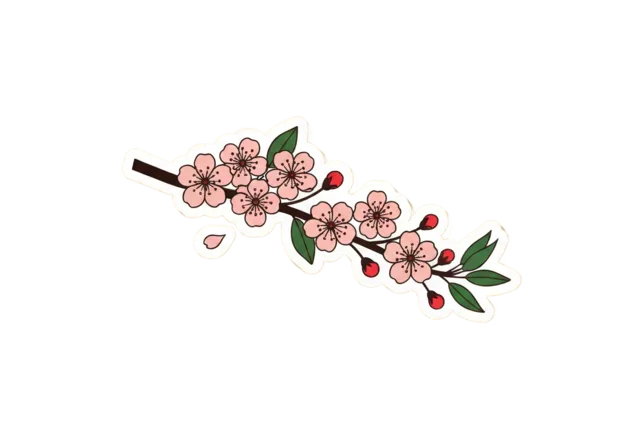
Spring is the loudest season on the calendar, and it belongs to the cherry blossoms. The trees — descendants of a 1912 gift of 3,020 from the city of Tokyo — ring the Tidal Basin and draw well over a million visitors, and the National Cherry Blossom Festival builds a weeks-long programme of events around them: a parade, the Blossom Kite Festival on the grounds of the Washington Monument, cultural performances and more. The National Park Service tracks the season toward 'peak bloom' — the day roughly 70% of the Yoshino blossoms open — which usually lands in late March or early April but shifts every year with the weather.
Because the bloom floats, spring is the season to plan most carefully. Watch the NPS forecast, build flexibility into your dates, and go at dawn for the quiet Tidal Basin. The festival's events run on fixed calendar dates that may or may not coincide with the actual peak — sometimes the trees flower early and the parade meets bare branches, sometimes late and the city is pink for weeks. April also brings Emancipation Day, a DC public holiday, and the Smithsonian's spring programming gathers pace.


Early summer: Pride and Memorial Day
Late May opens the summer season with Memorial Day weekend — the unofficial start of summer, marked by ceremonies at Arlington National Cemetery, the National Memorial Day Parade along Constitution Avenue, and a concert on the Capitol's west lawn. It is also the year's first big crowd surge, so book ahead if your dates fall over the long weekend.
June belongs to Capital Pride, one of the larger Pride celebrations in the United States, with a parade and a street festival that fill the city — historically centred on the Dupont Circle and Logan Circle neighborhoods and the downtown blocks. It's a high-energy, welcoming weekend, and the surrounding bars, restaurants and venues run their own programming around it. As with everything here, the exact dates and route move year to year, so check the current schedule.


High summer: July 4th and Folklife
Independence Day is the biggest single day on the Mall. The Fourth of July brings a daytime parade along Constitution Avenue, a concert, and — the headline — a fireworks display launched over the Mall and the monuments, watched by hundreds of thousands from the lawn. It is free, spectacular and intense: expect heavy crowds, full security screening at access points, road closures and packed Metro trains. Arrive early, travel light, and pick your viewing spot well in advance; the verified access and bag rules change year to year.
Bracketing the holiday is the Smithsonian Folklife Festival, a free, open-air celebration of living cultural traditions that fills the Mall with tents, music, craft and food, typically across late June and into early July. It's one of the most rewarding free events of the year and far calmer than the Fourth itself. The catch through high summer is the weather: DC's July and August are hot and humid, so plan outdoor events for the morning and evening and keep water and shade in mind.


Late summer and early autumn
After the Fourth, the calendar eases. Late summer is quieter — hot, humid and lower on marquee events — which makes it a value window if you can take the heat. The DC JazzFest brings days of performances across the city's venues and neighborhoods (historically over the late summer, with the schedule set each year), a good reason to range beyond the Mall into the music scene of U Street and beyond.
Early autumn is one of the loveliest, most underrated times to be in Washington: the humidity breaks, the light softens, and the weather turns genuinely comfortable for long days outdoors, all without a single dominating event to crowd the city. The neighborhood festival season and the Smithsonian's autumn programming fill the gap. It's the season to build a trip around the monuments and museums themselves rather than any one event.

Free by design
What sets Washington's calendar apart isn't just the scale of its events — it's that almost all of the headline ones cost nothing. The cherry-blossom festival, the Folklife tents, the July 4th fireworks, the Memorial Day and Veterans Day ceremonies, the National Christmas Tree and the holiday markets are free to attend, because the city's grandest spaces are public ground. You can build an entire trip around the year's biggest moments without buying a single ticket.
The cost, where it exists, is logistical rather than financial: the crowds, the security and the early starts. The events that do charge — some festival add-ons, theatre and concert performances, the occasional ticketed gala — are the exception, and they sit alongside a free core that never disappears. Even on a sold-out, shoulder-to-shoulder festival weekend, the monuments stay open and the museums (holidays aside) stay free, so the city always has a calmer, cheaper plan a few blocks off the main event.


Late autumn: Veterans Day
November quietens the city further. Its fixed point is Veterans Day on the 11th, observed with a central ceremony and wreath-laying at Arlington National Cemetery and gatherings at the war memorials on the Mall — moving to witness and free to attend, though it brings crowds and added security around the ceremonies. Thanksgiving, on the fourth Thursday, closes most museums and federal sites for the day but otherwise leaves the city calm.
With the autumn-foliage rush past and the holiday lights not yet up, late November is the calmest stretch of the events year and one of the best-value times to visit. The free museums are at their quietest, and the first holiday decorations begin to appear in the final week — a soft prelude to December.


Winter: the holiday lights
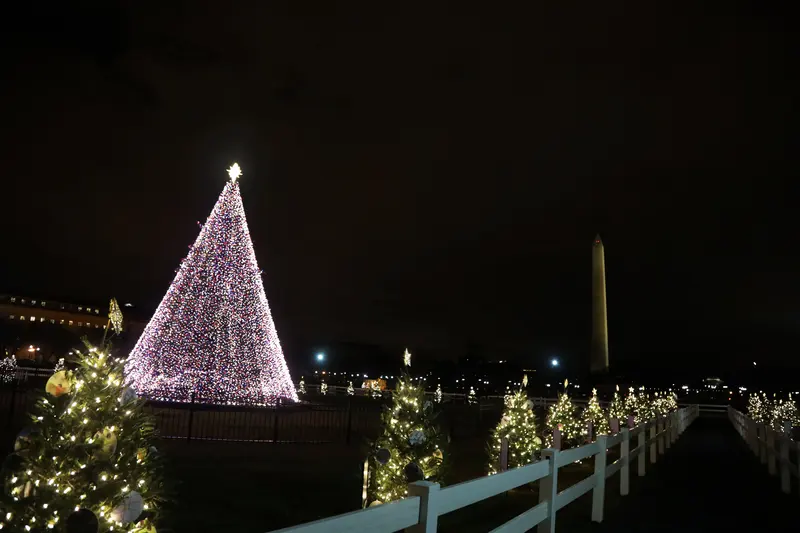
December lights the city up. The centrepiece is the National Christmas Tree on the Ellipse, just south of the White House, ringed by a path of smaller state and territory trees — a free, walkable display lit each year in early December. Around it, holiday markets, outdoor ice rinks and light installations open across the neighborhoods, and the theatres and the Kennedy Center run a full season of festive performances. It's the warmest, most charming version of the city, set against genuine winter cold.
The crowd and price curve splits the month: early and mid-December are calm and good value with the lights already up; the final week around Christmas and New Year fills the city. New Year's Eve brings gatherings and some road closures. January and February that follow are the year's coldest, quietest and cheapest months — the deep off-season — before March restarts the cycle with the first stirrings of the bloom watch.

Planning around an event
Two practical habits make event-season Washington easy. First, verify the year's dates before you book anything — every headline event here floats or follows an annual schedule, and a cherry-blossom trip in particular can miss the peak entirely if you lock dates too early. Second, lean on the Metro: the big Mall events bring road closures, full parking lots and tight security, and the rail network is by far the calmest way in and out.
For the largest set-pieces — the Fourth of July above all — expect security screening, bag restrictions and access rules that change year to year, so check the official guidance close to the date. And remember that the free spine of the city never closes: even on the busiest event days, the monuments stay open and the museums (holidays aside) stay free, so there's always a calmer plan available a few blocks off the crowds.
One more habit worth forming: match the event to the season's weather. The cherry blossoms and the autumn festivals fall in the mild, comfortable shoulders of the year; the Fourth of July and Folklife land in genuine summer heat and humidity, so plan those for the cooler ends of the day and carry water; and the winter lights mean real cold and short daylight. The most enjoyable event-season trips are the ones that respect the weather as much as the calendar.
- Verify the current year's dates and routes for any event before booking around it.
- Travel by Metro on big event days — roads close, lots fill and security tightens.
- For the Fourth of July, check the year's access, bag and screening rules in advance.
- Cherry-blossom dates float with the weather — build in flexible days and watch the NPS forecast.
- Almost every headline event is free; the monuments stay open even on the busiest days.


Related guides

Washington, D.C. Cherry Blossoms Guide
When the Tidal Basin turns pink — how peak bloom works, the best routes and viewpoints, when to beat the crowds, the festival events, where to stay and the alternate bloom spots beyond the Tidal Basin. The complete guide to the DC cherry blossoms.
Read guide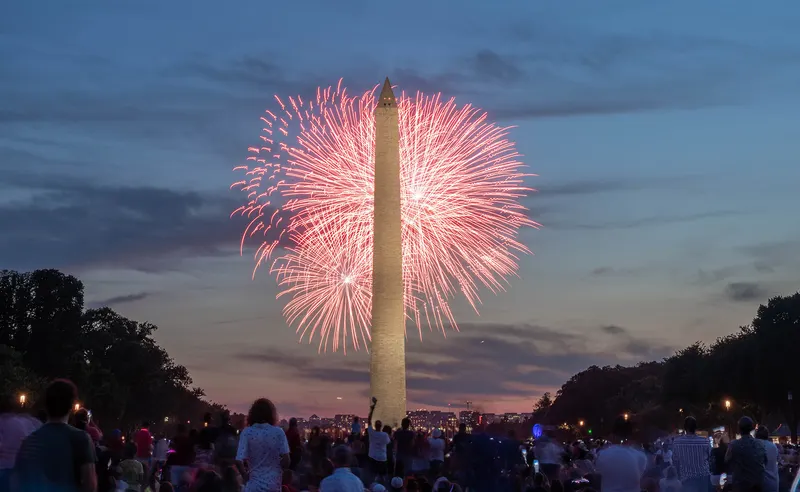
Fourth of July in Washington, D.C.
How to do Independence Day in the capital — the parade, the concert and the big fireworks over the National Mall — plus the security, closures, Metro reality and heat-smart planning, with calmer ways to watch if the crowds aren't for you.
Read guide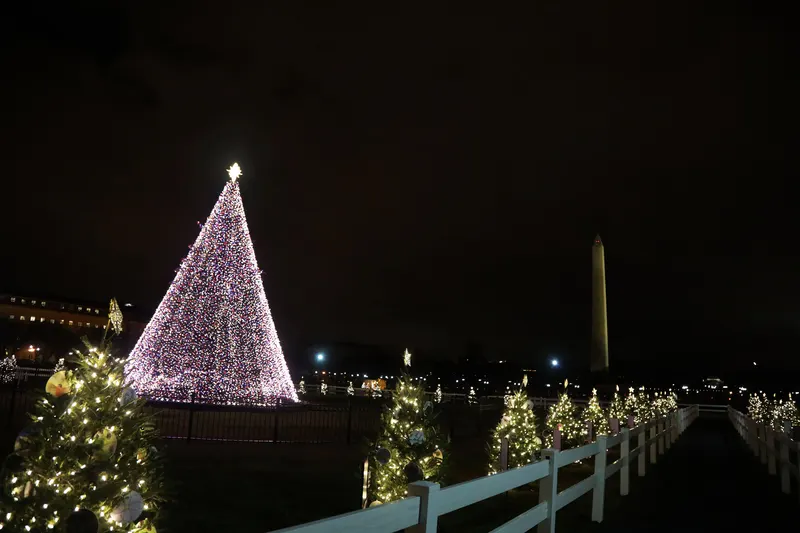
National Christmas Tree, Washington, D.C.
How to see the National Christmas Tree on the Ellipse — the lighting ceremony, the Pathway of Peace state trees, the model-train circle, the free nightly display through the holidays, and how it fits with the White House views and a December trip.
Read guideMore in Things to Do
6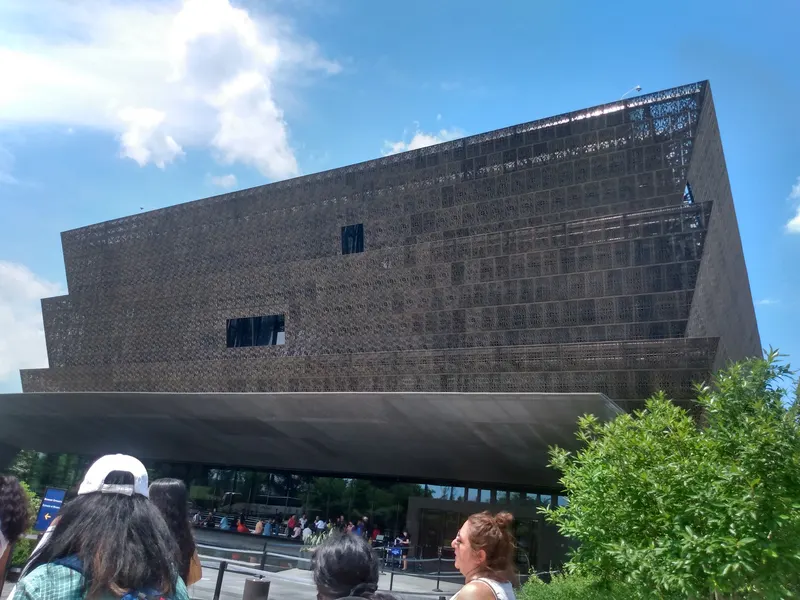
African American History Museum Guide
How to visit the National Museum of African American History & Culture on the Mall — the free timed-entry passes and how to get one, the deep underground history galleries, Sweet Home Café, the lines, how to pace an emotionally heavy visit, and the walk along the Mall.
Read guide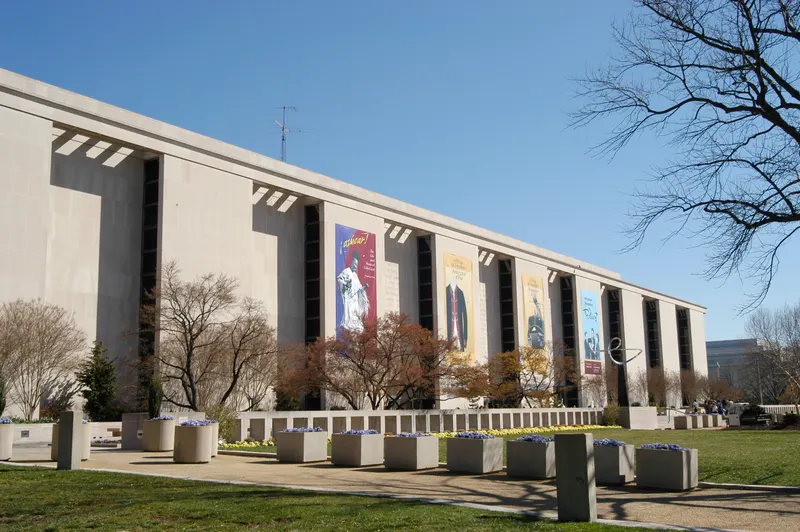
American History Museum Guide
How to visit the National Museum of American History on the Mall — the original Star-Spangled Banner, the First Ladies' gowns, the American presidency, the pop-culture icons, the food-court logistics, and how to time a visit around the school groups.
Read guide
Best Museums in Washington, D.C.
Washington has more world-class museums than any sane trip can hold, and almost all of them are free. This is a guide to the best museums in DC sorted by topic, age, ticket needs, location and rainy-day value — so you can choose two or three with confidence instead of trying to see them all.
Read guide
Best Photography Spots in Washington, D.C.
Where to make great photographs in Washington — the monument reflections, the Tidal Basin blossoms, the Capitol and Lincoln axis, Georgetown's waterfront, hidden rooftops and the golden-hour and blue-hour routes that tie them together.
Read guide
Best Things to Do in Washington, D.C.
A ranked first-trip shortlist of the best things to do in Washington, D.C. — from the National Mall and the free Smithsonian museums to a Capitol tour, the Tidal Basin and Georgetown — built so you can pick a handful and still feel you saw the city.
Read guide
Best Viewpoints in Washington, D.C.
Where to find the best views in Washington — the high monuments and free towers, the rooftop bars and cultural terraces, and the river and hilltop overlooks across the Potomac, ranked by how much effort each one asks.
Read guide