
Holocaust Museum Guide
How to plan a visit to the United States Holocaust Memorial Museum in Washington — free admission, the timed-entry passes the Permanent Exhibition requires in busy season, realistic age guidance, what to expect, and how to visit with the care the subject deserves.
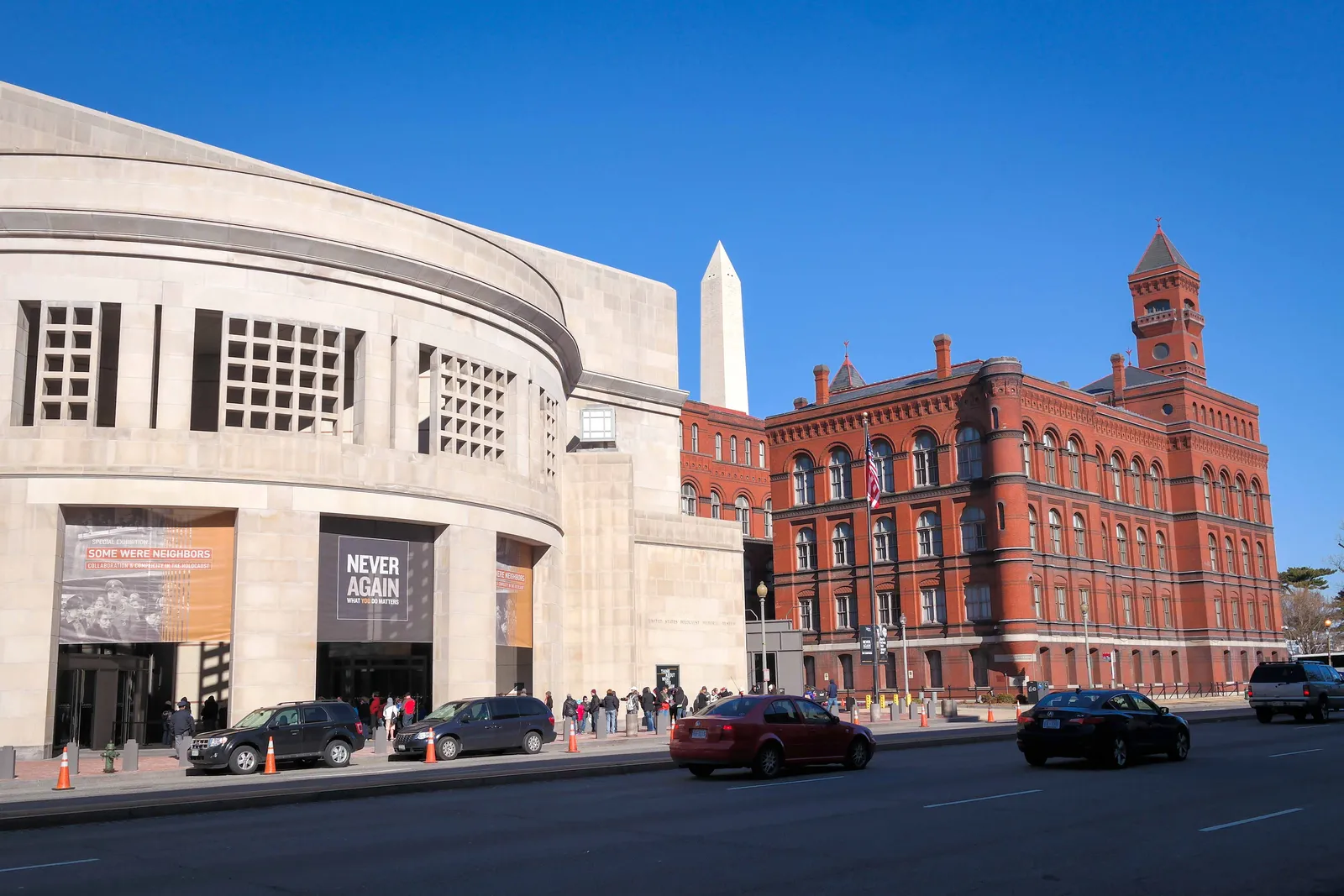
Photo: Smash the Iron Cage / Wikimedia Commons · CC BY-SA 4.0
- ✓Admission to the United States Holocaust Memorial Museum is free. In the busy season, the main Permanent Exhibition uses free timed-entry passes — book ahead online, as same-day passes can run out.
- ✓The Permanent Exhibition is a sustained, emotionally demanding three-floor narrative of the Holocaust; allow two to three hours and the emotional space to take it in.
- ✓The museum advises that the Permanent Exhibition is not recommended for children under a certain age; younger visitors have a separate, gentler exhibition — verify the current age guidance.
- ✓This is a memorial and a place of testimony, not a typical sightseeing stop — quiet, respectful behaviour is expected throughout, and photography is restricted in parts.
- ✓It sits just south of the Mall near the Washington Monument, but plan it as its own visit rather than squeezing it between lighter sights.
A memorial, not a sightseeing stop
The United States Holocaust Memorial Museum is one of the most powerful institutions in Washington, and it asks to be approached differently from the city's other museums. It is the nation's official memorial to the millions of people murdered in the Holocaust, and a living institution of education and testimony — its mission is that visitors leave changed, and resolved that such crimes never recur. The building itself, just off the Mall, is designed to unsettle: skewed brickwork, exposed steel and a stark central hall, the Hall of Witness, evoke the architecture of the camps without imitating it. From the moment you enter, you understand this is not an ordinary museum day.
We offer this guide in that spirit: practical help with the things you genuinely need to plan — tickets, timing, age guidance — delivered with the seriousness the subject demands. The museum is free, profoundly worthwhile, and visited by people from all over the world, including many on school trips and family visits. Going in prepared, both logistically and emotionally, lets you give it the attention it deserves. This is a place to slow down, not to tick off.

Free admission and the timed-entry passes
Admission is free. The thing to know is that the museum's main Permanent Exhibition uses free timed-entry passes during the busy season — typically the spring and summer months, when the city fills with visitors and school groups. Passes are released online in advance, with a limited number sometimes held back for same-day release; in peak periods they can run out, so reserving ahead is by far the safest plan. Outside the busy season, the Permanent Exhibition is often open without passes. Because the system and the exact dates change, verify the current pass requirement and how to book before you travel.
Other parts of the museum — including the special exhibitions, the Hall of Remembrance and the children's exhibition — generally do not require the Permanent Exhibition pass, so even if you can't secure one, there is meaningful experience available. There may be a small per-pass service fee when you reserve online in advance; verify the current arrangement. Whatever route you take, allow time for airport-style security screening on entry, travel light, and check the museum's hours, which vary by season and around certain holidays.
- Admission is free; the main Permanent Exhibition uses free timed passes in the busy season (typically spring–summer).
- Reserve passes online ahead of time — same-day passes are limited and can run out in peak periods.
- Other exhibitions usually don't need the Permanent Exhibition pass; verify which require entry.
- A small advance-reservation service fee may apply — verify the current arrangement.
- Expect security screening; pack light and check seasonal hours and holiday closures.
What the Permanent Exhibition asks of you
The Permanent Exhibition is the heart of the museum: a self-guided journey across three floors that traces the Holocaust chronologically, from the rise of Nazism and the erosion of rights, through persecution, ghettos and the machinery of mass murder, to liberation and its aftermath. It uses original artefacts, photographs, film and personal testimony, and it does not soften what happened. Most visitors find it deeply affecting; many find parts of it overwhelming. Allow two to three hours, and allow the emotional room to absorb it — this is not an exhibition to rush, and it is entirely normal to need to pause.
Plan accordingly. Don't schedule something light and giddy immediately afterward; give yourself time to sit, in the museum's Hall of Remembrance or quietly outside, before moving on. There are benches and quieter spaces throughout. If at any point it becomes too much, it is completely acceptable to step out — staff are accustomed to this and there is no obligation to see every panel. The point is not endurance; it is understanding.
- A self-guided, three-floor chronological narrative of the Holocaust, using original artefacts and personal testimony.
- Allow two to three hours, and emotional space — most visitors find it profoundly moving.
- Pause when you need to; the Hall of Remembrance offers a quiet place to sit afterward.
- Don't plan a light, high-spirited activity immediately after — leave room to decompress.
Visiting with children and teenagers
Age is the most important planning question for families. The museum advises that the main Permanent Exhibition is intended for older visitors and is not recommended for younger children, because of the graphic and disturbing nature of its content — verify the current recommended minimum age, which the museum publishes. For families with younger children, the museum offers a separate, age-appropriate exhibition ('Remember the Children: Daniel's Story') that tells the history of the period through one child's experience with care and at a gentler register. This is the right starting point for many families.
For teenagers and older students, the Permanent Exhibition can be one of the most important things they see in Washington, but prepare them for its weight and plan to talk afterward. School and youth groups are a major part of the museum's audience, and there is excellent guidance for educators and parents on the museum's website. Whatever the ages in your party, decide in advance who will see what, and treat the visit as a shared, considered experience rather than a default stop on a packed Mall day.
- The Permanent Exhibition is not recommended for younger children — verify the museum's current recommended minimum age.
- Families with younger children have a separate, gentler exhibition ('Remember the Children: Daniel's Story').
- For teens, it can be deeply formative — prepare them beforehand and talk it through afterward.
- The museum publishes guidance for educators and parents; review it before a school or family visit.

Etiquette, location and planning the day
Behave as you would in any place of mourning. Quiet, respectful conduct is expected throughout; phones should be silenced, and photography is restricted in parts of the exhibition — follow the posted rules and staff direction, and don't photograph other visitors. This is a memorial to real people, many of whose names, faces and belongings are present in the galleries, and the atmosphere reflects that. Approach it with the gravity it asks for and you'll find it one of the most meaningful experiences the capital offers.
The museum stands just south of the National Mall, a short walk from the Washington Monument, with the nearest Metro a brief walk away — verify the current best station and any service notices on WMATA. But resist the urge to slot it between lighter sights. The most respectful and rewarding plan is to give it its own block of the day, with nothing demanding scheduled right after, so you can leave at your own pace and carry what you've seen quietly into the rest of your visit. Check the current hours before you go; they vary by season.
- Quiet, respectful conduct throughout; silence phones and follow the photography restrictions and staff direction.
- It sits just south of the Mall near the Washington Monument; the nearest Metro is a short walk — verify on WMATA.
- Give it its own block of the day, with nothing demanding planned immediately after.
- Verify the current seasonal hours and any holiday closures before you go.
At a glance
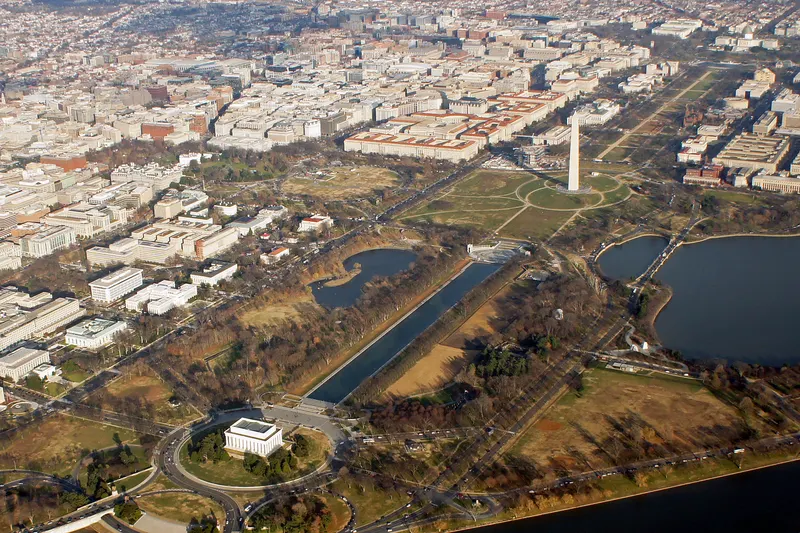
A quick planning summary. The United States Holocaust Memorial Museum stands just south of the National Mall near the Washington Monument, between Raoul Wallenberg Place SW and 14th Street SW. Admission is free, but in the busy season the main Permanent Exhibition uses free timed-entry passes — reserve them online ahead of time, as same-day passes are limited and can run out. A small advance-reservation service fee may apply; verify the current arrangement. Always check the seasonal hours and any holiday closures before you go.
Allow two to three hours for the Permanent Exhibition alone, plus time afterward to sit and decompress; other galleries add to that. The museum advises the Permanent Exhibition is not recommended for younger children — verify the current minimum age — while a separate, gentler exhibition serves families with young children. The nearest Metro is a short walk away; verify the best station and service on WMATA. Most importantly, give this museum its own block of the day, with nothing light scheduled immediately after.
- What: the nation's official Holocaust memorial and museum of education and testimony.
- Where: just south of the Mall near the Washington Monument, off 14th Street SW.
- Cost: free admission; the Permanent Exhibition needs a free timed pass in busy season — reserve ahead.
- Time needed: two to three hours for the Permanent Exhibition, plus time to decompress.
- Ages: the Permanent Exhibition isn't recommended for younger children — verify the minimum age; a gentler exhibition exists for families.
- Metro: a short walk away — verify on WMATA. Plan it as its own block of the day.
Common questions
Is the Holocaust Museum free? Yes — admission is free. The main Permanent Exhibition uses free timed-entry passes in the busy season; reserve ahead online, as same-day passes are limited. Verify current requirements.
Do I need a ticket or pass? In peak season you need a free timed pass for the Permanent Exhibition; outside it, the exhibition is often open without one. Other exhibitions usually don't require it. Verify before you go.
How long does a visit take? Allow two to three hours for the Permanent Exhibition, plus time afterward to decompress. Other galleries add to that.
Is it suitable for children? The Permanent Exhibition isn't recommended for younger children — verify the current minimum age. A separate, gentler exhibition is designed for families with young children.
Can I take photographs? Photography is restricted in parts of the exhibition. Follow the posted rules and staff direction, and don't photograph other visitors.
How should I plan the day around it? Give it its own block, with nothing light and giddy scheduled immediately after, so you can leave at your own pace.

Related guides
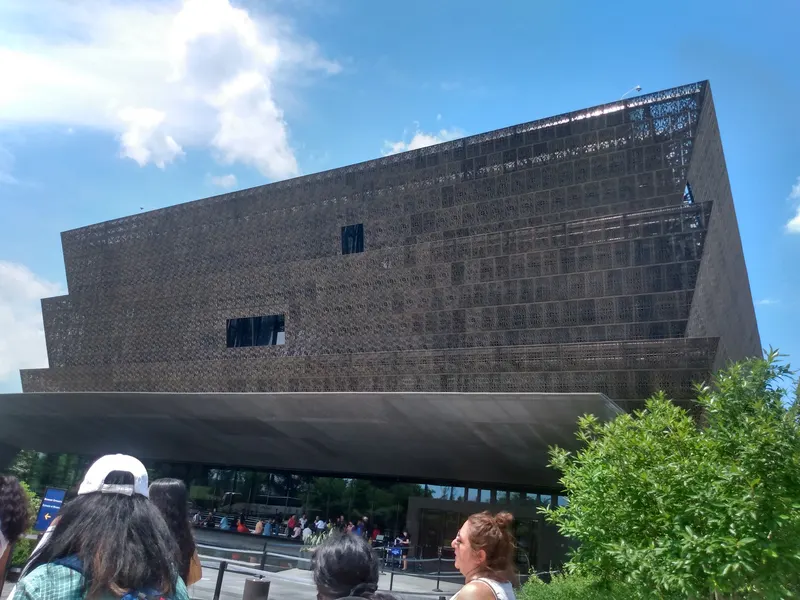
African American History Museum Guide
How to visit the National Museum of African American History & Culture on the Mall — the free timed-entry passes and how to get one, the deep underground history galleries, Sweet Home Café, the lines, how to pace an emotionally heavy visit, and the walk along the Mall.
Read guide
Washington, D.C. Museums Itinerary
How to plan a museum-heavy day in Washington, D.C. without fatigue, duplicated themes or a missed timed pass — a strategy for pacing the world's densest concentration of free museums. Pick two or three buildings, go deep on a few rooms each, book the passes that need booking, and leave the rest for next time, because the museums are free and trying to 'do' them all is the fastest way to ruin the trip.
Read guide
Washington, D.C. School Trip Planning
A planning guide for teachers and group leaders bringing a school trip to Washington, D.C. — chaperone ratios and headcounts, group timing on the National Mall, museum and memorial etiquette, motor-coach logistics, security screening and student-friendly routes that keep a large group moving.
Read guideMore in Things to Do
6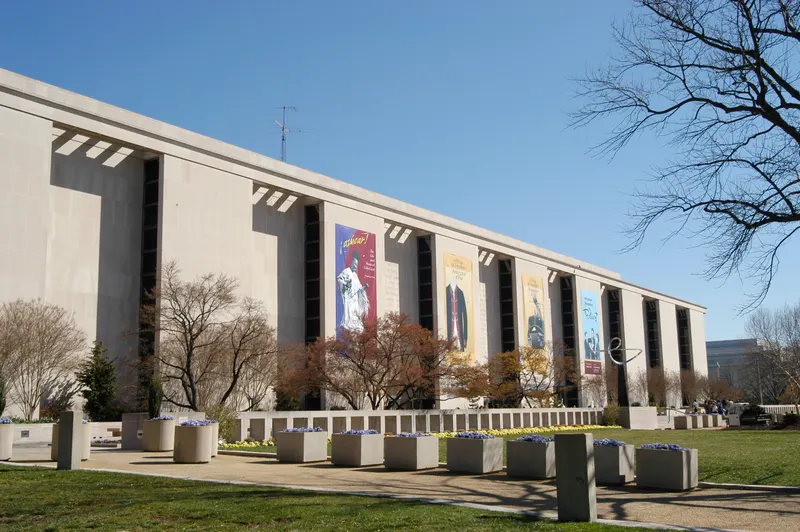
American History Museum Guide
How to visit the National Museum of American History on the Mall — the original Star-Spangled Banner, the First Ladies' gowns, the American presidency, the pop-culture icons, the food-court logistics, and how to time a visit around the school groups.
Read guide
Best Museums in Washington, D.C.
Washington has more world-class museums than any sane trip can hold, and almost all of them are free. This is a guide to the best museums in DC sorted by topic, age, ticket needs, location and rainy-day value — so you can choose two or three with confidence instead of trying to see them all.
Read guide
Best Photography Spots in Washington, D.C.
Where to make great photographs in Washington — the monument reflections, the Tidal Basin blossoms, the Capitol and Lincoln axis, Georgetown's waterfront, hidden rooftops and the golden-hour and blue-hour routes that tie them together.
Read guide
Best Things to Do in Washington, D.C.
A ranked first-trip shortlist of the best things to do in Washington, D.C. — from the National Mall and the free Smithsonian museums to a Capitol tour, the Tidal Basin and Georgetown — built so you can pick a handful and still feel you saw the city.
Read guide
Best Viewpoints in Washington, D.C.
Where to find the best views in Washington — the high monuments and free towers, the rooftop bars and cultural terraces, and the river and hilltop overlooks across the Potomac, ranked by how much effort each one asks.
Read guide
Best Washington, D.C. Tours
When a tour is genuinely worth it in Washington and when the city is better free and self-guided — monument night tours, bike and Segway loops, food and neighbourhood walks, official Capitol and government-building tours, and the day trips that need a coach.
Read guide