
Two Days in Washington, D.C.
A balanced 48-hour Washington, D.C. itinerary — the National Mall monuments and the war memorials, two or three free Smithsonian museums, a Capitol tour on the Hill, the Tidal Basin and Georgetown, with a monuments-at-night finish and dinner off the lawn.

Photo: Caleb Perez / Unsplash
- ✓Two days is enough to see the headline monuments, two or three museums and a government building without rushing.
- ✓Day one is the western Mall — Lincoln, the war memorials, the Washington Monument and two Smithsonian museums.
- ✓Day two heads east to Capitol Hill for a free Capitol tour, then loops the Tidal Basin and ends in Georgetown.
- ✓Alternate outdoor monuments with indoor museums to avoid burning out by mid-afternoon.
- ✓Keep one evening for the monuments after dark — lit, quiet and the best free hour in the city.
How to use this two-day plan
Two days is the sweet spot for a first visit to Washington. It is long enough to walk the National Mall properly, choose two or three of the free Smithsonian museums, take a Capitol tour and still leave room for the Tidal Basin, Georgetown and a real dinner away from the lawn. It is short enough that the plan has to be disciplined — which, in a city with more 'must-sees' than any trip can hold, is no bad thing.
The whole itinerary is built on one rule: alternate the marble and the museums. The monuments are outdoor, walkable and at their best at the cool edges of the day; the museums are indoor, vast and best in the middle, out of the heat. Stack all the walking together, or all the museums together, and you flag by mid-afternoon. Alternate them and you will see far more and enjoy it. Almost everything below is free, so the real currency of these two days is energy and time, not money — spend both deliberately.
Treat the timings as a rhythm, not a schedule. Anchor each day around a Metro station and a base near it, keep one evening for the lit-up Mall, and let the order flex around the weather and your legs. If you have only the weekend, the same plan works Friday-to-Sunday; if a third day appears, the trip opens up considerably.

Day 1, morning — The western Mall and the war memorials
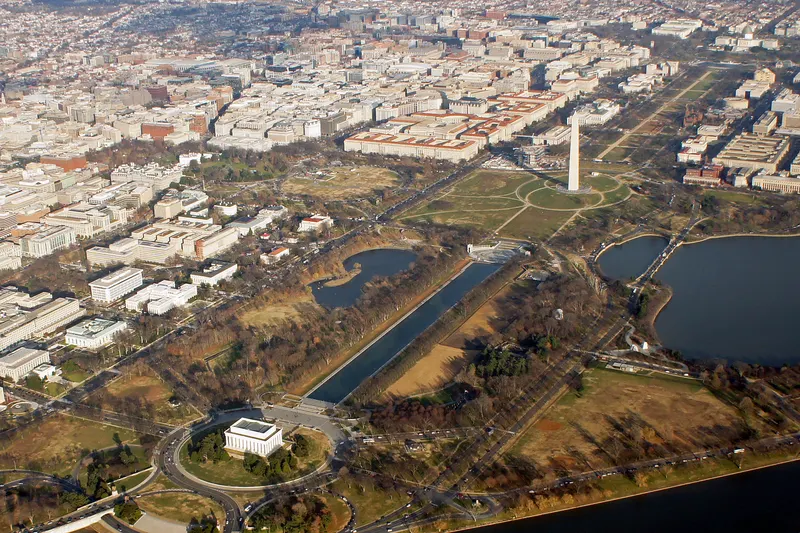
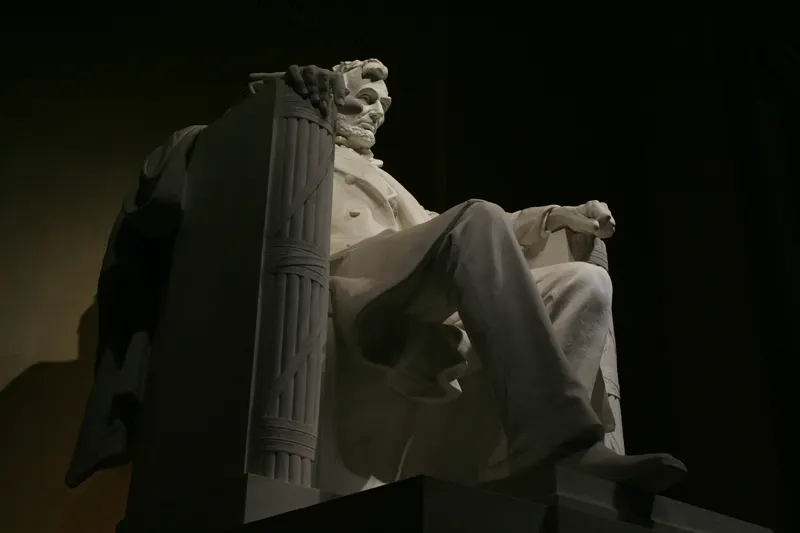
Start at the Lincoln Memorial, ideally before the day heats up. Climb the steps to the seated marble Lincoln, then turn and look east down the Reflecting Pool to the Washington Monument and, beyond it, the Capitol dome two miles away. This single sightline is the city's whole argument made visible, and standing in it for the first time is the moment most visitors fall for DC. There is no ticket and no schedule here — just a direction of travel.
From the Lincoln steps, the western war memorials sit close enough to fold into one slow loop. The Vietnam Veterans Memorial Wall is cut quietly into the north lawn; the Korean War Veterans Memorial, with its steel soldiers in the field, lies to the south; and the World War II Memorial closes the east end of the Reflecting Pool with its fountains and state pillars. Walking all of these takes a gentle hour or so, all free, all on roughly one line — which is why the Lincoln-to-Monument stretch is the single most efficient morning in the city.
Carry water and wear real walking shoes. The Mall is wide open with little shade, and summer here is genuinely hot and humid, so a morning start beats a midday one every time. There are restrooms and snack kiosks near the memorials, but the food on the Mall itself is forgettable — save your appetite for a neighbourhood lunch.
A word on direction of travel. Most visitors walk the Mall east-to-west and end at Lincoln, but starting at Lincoln and working east has two quiet advantages: you get the city's single best view — the long axis down the Reflecting Pool — at the very start, while your eyes are fresh, and you finish the morning's walking pointed back toward the museums and your lunch, rather than stranded at the far western end. Either way, the western memorials are the dense cluster, so give them the early energy and treat the long central lawn as a stroll, not a slog.
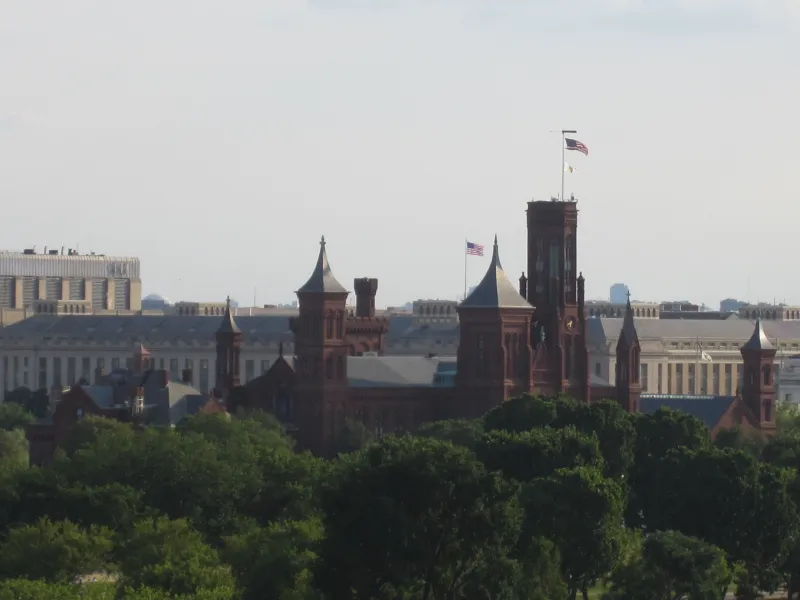
If the morning runs long or legs tire, the Mall has good fallbacks: the Smithsonian Carousel near the Castle, benches in the shade of the elms, and the option to cut a stretch short by ducking into the first museum early. Nothing here has to be completed — the point of the morning is the western memorials and the sightline, and everything else is a bonus.

Day 1, midday — Two Smithsonian museums
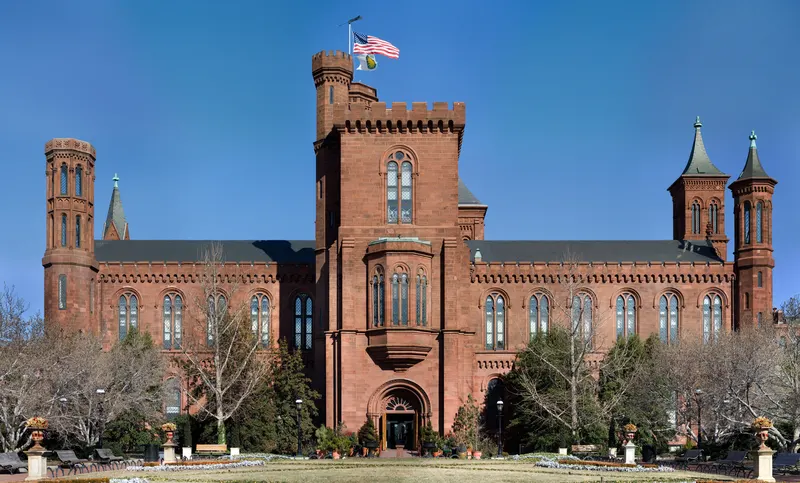
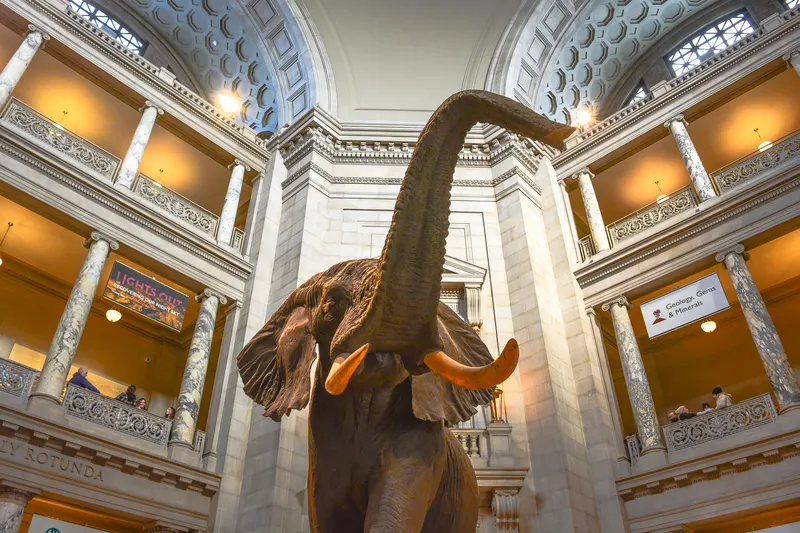
By late morning, move indoors and out of the heat. The Smithsonian museums cluster along the Mall between the Washington Monument and the Capitol, and the discipline that makes them enjoyable is simple: choose two, not a marathon, and within each pick a few specific things to see rather than trying to 'do' the whole building. They are free and they will still be here next time, so there is nothing to prove by staying until closing.
A reliable pairing for a first day is the National Museum of Natural History — the dinosaurs, the mammals and the Hope Diamond — followed by the National Museum of American History, which keeps the original Star-Spangled Banner and the First Ladies' gowns. Both sit on the Mall's north side within a short walk of each other. If your interests run to flight, the National Air and Space Museum is on the south side; note that it has been undergoing a long renovation and uses free timed-entry passes, so check availability and book online before you go (verify close to your trip).
Take a real lunch break between the two museums rather than powering through. The museum cafés are convenient but pricey and crowded; an alternative is to walk a few blocks north into the Penn Quarter / Downtown grid, eat properly, and come back. Either way, build in the pause — museum fatigue is the single most common way a good DC day goes wrong.
How to choose your two is mostly a question of who you are travelling with. Families with younger children tend to do best with Natural History and Air and Space; travellers drawn to the American story gravitate to American History and, if you have the appetite for something heavier, the National Museum of African American History and Culture (free timed passes — book ahead). Art lovers should swap one out for the National Gallery of Art, also free and just across the lawn, with its famous Sculpture Garden. Whatever you pick, resist the urge to add a third — two done well, with a proper lunch between them, beats three done in a rush.
Inside each museum, the discipline is the same: pick the two or three things you actually came for — the Hope Diamond, the dinosaurs, the Star-Spangled Banner — see them properly, and let the rest go. These buildings are designed to be inexhaustible. Trying to see everything is not thoroughness, it is exhaustion, and it is the surest way to arrive at the second museum already spent.
Day 1, evening — Monuments after dark
If you do one thing that separates a good DC trip from a great one, make it the monuments at night, and the first evening is the time to do it while the layout is fresh. Most of the Mall's memorials never close and are floodlit after dark. The crowds fall away, the marble glows, and the Lincoln Memorial looking back down a black-and-gold Reflecting Pool is one of the most moving sights in the country.
Have dinner first in a neighbourhood off the lawn — Penn Quarter and Downtown are the closest, with the most choice — then come back to the Mall as the light goes. A blue-hour loop of the western memorials (Lincoln, Vietnam, Korean War, World War II) makes a single walkable evening. The core is well-lit and well-travelled after dark, but it is still a large open park, so stick to the busy paths and keep your group together.
If you would rather not navigate the dark on foot, a night monuments tour by bike, trolley or small coach covers the ground and adds the stories. Whichever way you do it, this one evening is the memory most people carry home.


Day 2, morning — Capitol Hill and a government tour
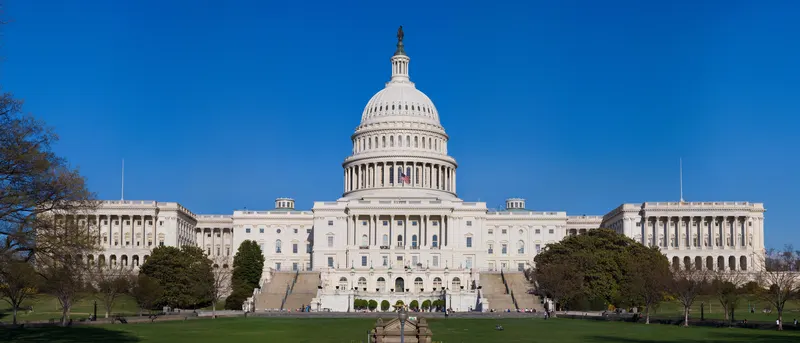
Give the second morning to Capitol Hill, the eastern anchor of the Mall and the one place where DC stops being a museum of itself and becomes a working seat of government. Of all the buildings open to visitors, the United States Capitol is the most rewarding and the easiest to arrange. Free guided tours leave from the underground Capitol Visitor Center and take you through the soaring Rotunda, under the dome and into National Statuary Hall. Reserve a free pass online in advance; U.S. residents can also book through their senator or representative, sometimes with gallery access. Build in time to clear airport-style security.
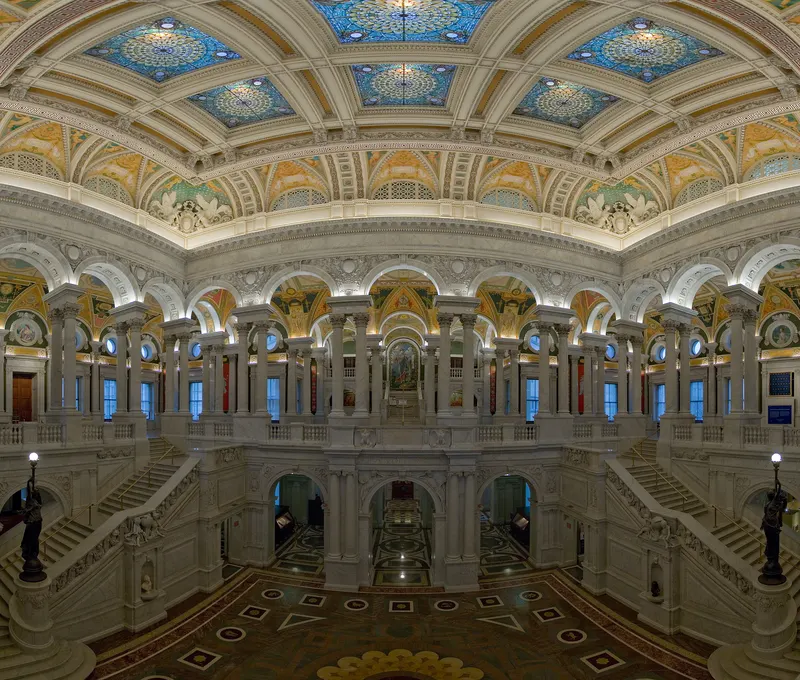
Capitol Hill's other two giants sit within a block. The Library of Congress's Thomas Jefferson Building is one of the most beautiful interiors in America, and uses free timed-entry passes for its most popular spaces (verify); the Supreme Court is across the street, open to visitors on weekdays with courtroom lectures when the Court is not in session. You can fold one or both into the same morning without moving far.
When you have had your fill of the Hill, Eastern Market is a short walk southeast — a 19th-century public market with weekend stalls and good breakfast options — making an easy, low-pressure lunch before the afternoon's outdoor stretch.

Day 2, afternoon — The Tidal Basin and the western memorials
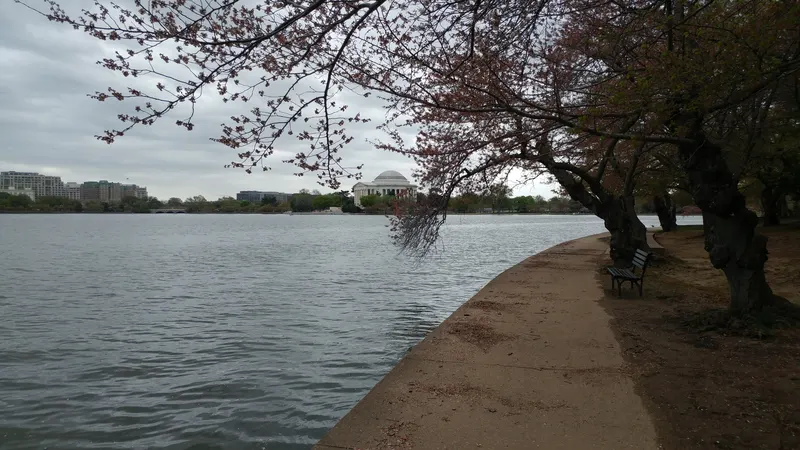
Spend the early afternoon walking the Tidal Basin, the curved inlet southwest of the Washington Monument that ties together three of the city's most affecting memorials. The Jefferson Memorial sits at the south end, domed and columned and mirrored in the water; the Franklin Delano Roosevelt Memorial unfolds along the west bank as a sequence of outdoor rooms with waterfalls and quotes; and the Martin Luther King Jr. Memorial rises from the north bank, the Stone of Hope facing out across the water. The full loop is a flat couple of miles and pairs three monuments with the prettiest stretch of waterfront in central DC.
If you are here in late March or early April, this is also where the cherry blossoms ring the water — the single most beautiful and most crowded week of the DC year. The National Park Service tracks the bloom and publishes a forecast; treat any date as guidance, not a guarantee, and go at dawn if you want the trees to yourself. In paddle-boat season you can rent a boat on the Basin (verify hours and pricing on site).
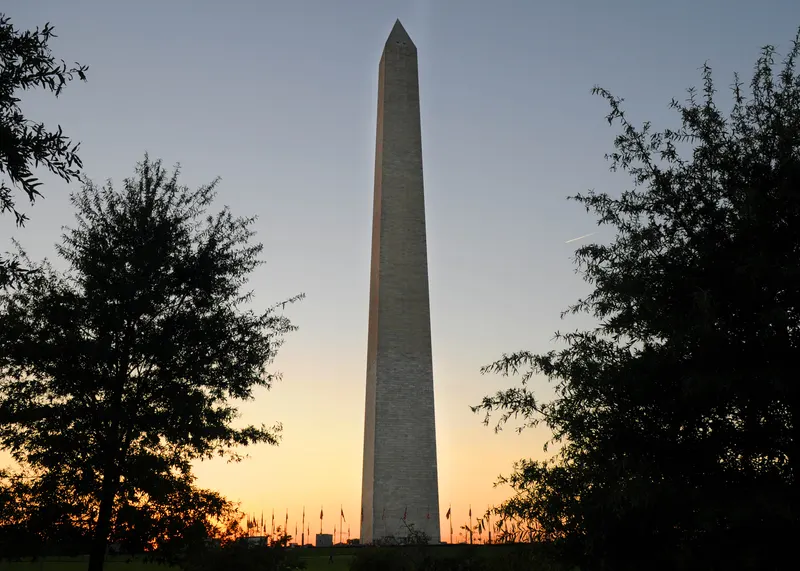
From the Basin you are within easy reach of the Washington Monument itself, should you want to go up — entry uses free timed tickets (with a small online reservation fee) that go quickly, so book ahead if the view matters to you. If not, the ground-level approach is free and the views from the surrounding lawn are reward enough.

Day 2, evening — Georgetown and dinner
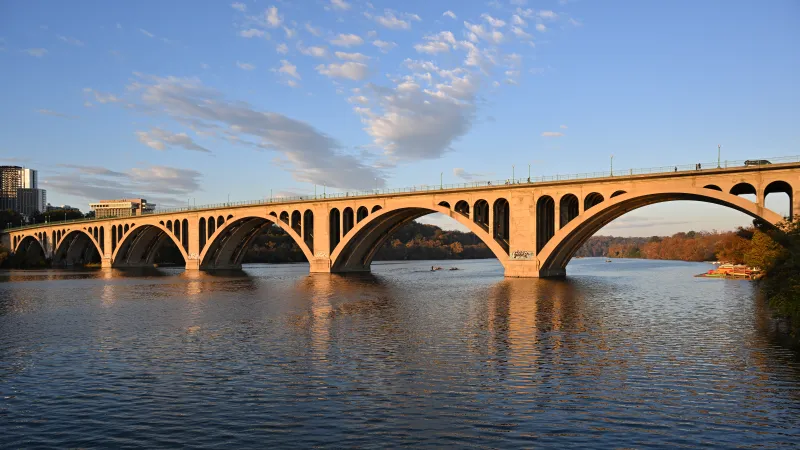
End the trip in Georgetown, the city's oldest and prettiest quarter and the rare DC neighbourhood that has nothing to do with politics. Cobbled side streets and federal rowhouses climb above a waterfront on the Potomac; the C&O Canal towpath runs leafy and unhurried behind M Street; and the shopping, cafés and restaurants give you a softer, more human-scaled close to two intense days of marble and museums.
Georgetown's one catch is transit: it has no Metro station of its own. From the Mall, the simplest approaches are a bus, a rideshare, or the DC Circulator (verify current routes and service). Once there, everything is walkable. For dinner, the waterfront and M Street hold everything from casual to special-occasion; book ahead on weekends.
If you would rather not finish across town, a perfectly good alternative is to keep the last evening near your hotel and the Mall, with a final after-dark walk past the Washington Monument. Either way, the principle holds: two well-paced days, the marble and the museums alternated, one lit-up evening kept aside, and a proper dinner to close. Do that and even a short trip leaves you feeling you saw the city rather than just ticked it off.

Getting around and where to base yourself
Two things make Washington easy: the Metro and the grid. Six colour-coded Metrorail lines fan out from the centre to the Mall, the neighbourhoods and the airports, and a single SmarTrip card covers both rail and bus. On a 48-hour trip you do not need a car and will rarely want one — parking near the Mall is scarce and expensive, while the rail puts almost everything in this plan within a short ride. Tap in, tap out, and let the train carry the distances your legs would otherwise pay for.
The street grid is just as logical once you see it. The Capitol is the zero point; lettered streets run east-west, numbered streets north-south, and the state-named avenues cut diagonally across both. The one catch is that addresses repeat in all four quadrants — NW, NE, SW, SE — so always read the suffix before you set off, especially when finding a restaurant for dinner.
For a two-day trip, base yourself near a Metro station and as close to the Mall as your budget allows. The western Mall edge around Foggy Bottom keeps the monuments and museums on foot; Penn Quarter and Downtown put you among restaurants and a livelier evening, still walkable to the lawn; Capitol Hill is handy for day two's start. Georgetown is the prettiest base but has no Metro stop of its own, which is a real cost on a short, fast trip — lovely to visit, less practical to sleep in.


Variations and common mistakes
This plan is a frame, not a cage, and a few sensible swaps make it fit almost anyone. Rain or extreme heat? Front-load the museums and the indoor sights — the Capitol, the Library of Congress, the National Gallery — and save the outdoor monuments for the cooler, drier window. Travelling with a government-building obsessive? Move the Capitol tour to day one's afternoon and the museums to day two. Here for the cherry blossoms? Flip the Tidal Basin to the very first thing on day one, at dawn, before the crowds, and let everything else fall in behind it.
The mistakes are predictable, which makes them easy to avoid. The biggest is trying to add a fourth or fifth museum: every visitor over-estimates how many vast buildings they can enjoy in a day, and the ones who love DC most are the ones who chose a handful and gave each room. The second is stacking all the walking or all the indoors together rather than alternating, which front-loads the fatigue. The third is missing the monuments after dark — the single most memorable hour in the city, and the easiest to skip when you are tired. The fourth is under-using the Metro: DC is bigger on the ground than it looks, and a two-day trip is too short to spend it footsore between sights that a single rail ride connects.
One more: do not try to 'finish' the city. Two days cannot, and is not meant to. The aim is to see the heart of Washington well and leave wanting the third day — which, conveniently, the city is more than able to fill.


At a glance — planning your 48 hours
A quick planning summary for two days in Washington. The plan assumes a base near a Metro station, ideally on the Mall's edge or in the Downtown / Penn Quarter grid, so both days start with a short walk or one rail ride. Almost everything here is free; the few exceptions are a Washington Monument ticket, paddle boats, any paid tour and your meals.
Reserve only what genuinely needs it: a free Capitol tour pass, free timed-entry passes for Air and Space and (if you want it) the Library of Congress, and a Washington Monument ticket if the view matters. Sort those before you arrive, double-check any volatile hours or ticketing on the official sites close to your trip, and keep the rest of your time loose.
- Length: two full days (works equally as a Friday-to-Sunday weekend).
- Day 1: western Mall and war memorials, two Smithsonian museums, monuments after dark.
- Day 2: Capitol tour and the Hill, the Tidal Basin loop, Georgetown and dinner.
- Cost: largely free; budget for meals, one tour and an optional Monument ticket.
- Book ahead: free Capitol pass; timed passes for Air and Space; Washington Monument ticket.
- Golden rule: alternate outdoor monuments with indoor museums, and keep one night for the lit-up Mall.
- Verify before you go: museum hours, timed-pass availability, Georgetown transit and paddle-boat season.



Related guides

Washington, D.C. Itineraries
Ready-made plans for Washington, D.C. — from a tight one day on the National Mall to a full long weekend, plus tailored routes for families, museum lovers, budgets and the cherry-blossom season.
Read guide
One Day in Washington, D.C.
A realistic single-day route through the capital — the western monuments early, one Smithsonian museum at midday, the Mall's headline sights, Capitol views and the monuments lit at dusk, all walkable and free.
Read guide
Three Days in Washington, D.C.
A deeper three-day Washington, D.C. itinerary — the National Mall monuments and free Smithsonian museums, a Capitol tour and the founding documents at the Archives, the Tidal Basin and Georgetown, plus a flexible third day for a neighbourhood or a day trip to Mount Vernon, Old Town Alexandria or Arlington.
Read guideMore in Itineraries
6
A Washington, D.C. Itinerary with Kids
A family-paced Washington, D.C. itinerary — short museum blocks at the free Smithsonians, the dinosaurs and the Hope Diamond, the National Zoo, the Mall carousel, plenty of food and bathroom breaks, stroller notes and fewer long walks, built so children and parents both enjoy the day.
Read guide
A Weekend in Washington, D.C.
A Friday-to-Sunday Washington, D.C. weekend — where to base yourself, an arrival-night monuments walk, a full Saturday of the Mall, museums and a Capitol tour, a Sunday of brunch, the Tidal Basin and a neighbourhood, built around Metro access and slower evenings.
Read guide
Four Days in Washington, D.C.
An unhurried four-day Washington, D.C. itinerary — the Mall monuments and free Smithsonian museums, a Capitol tour and the founding documents, the Tidal Basin and Georgetown, then deeper museums, fuller neighbourhoods and a relaxed day trip to Arlington, Old Town Alexandria or Mount Vernon, with slower evenings throughout.
Read guide
Low-Walking Washington, D.C. Itinerary
A gentler way to see Washington, D.C. — a low-walking itinerary built for limited mobility, seniors, hot days and anyone who wants to avoid the long, exposed Mall marches. It leans on the Metro, on drop-offs and rideshare, on the few seated and short-distance options, and on the simple truth that the museums and many monuments can be seen well without crossing two miles of lawn on foot.
Read guide
Luxury Washington, D.C. Itinerary
Washington wears luxury quietly — grand historic hotels a block from the White House, chef's-counter tasting menus, private after-hours tours and a rooftop city of monument views. This is a high-end Washington, D.C. itinerary that pairs the free, world-class sights with the polish, ease and access that make the difference: where to stay, where to dine, what to book privately and how to fold in Mount Vernon in style.
Read guide
Summer Washington, D.C. Itinerary
How to plan Washington, D.C. in the heat — a summer itinerary that front-loads the monuments at dawn, retreats into the free, air-conditioned Smithsonian museums through the worst of the afternoon, and saves the neighborhoods, the waterfront and the lit memorials for the long evening. Built around shade, water and timing rather than a checklist, because in a DC July the schedule matters more than the sights.
Read guide